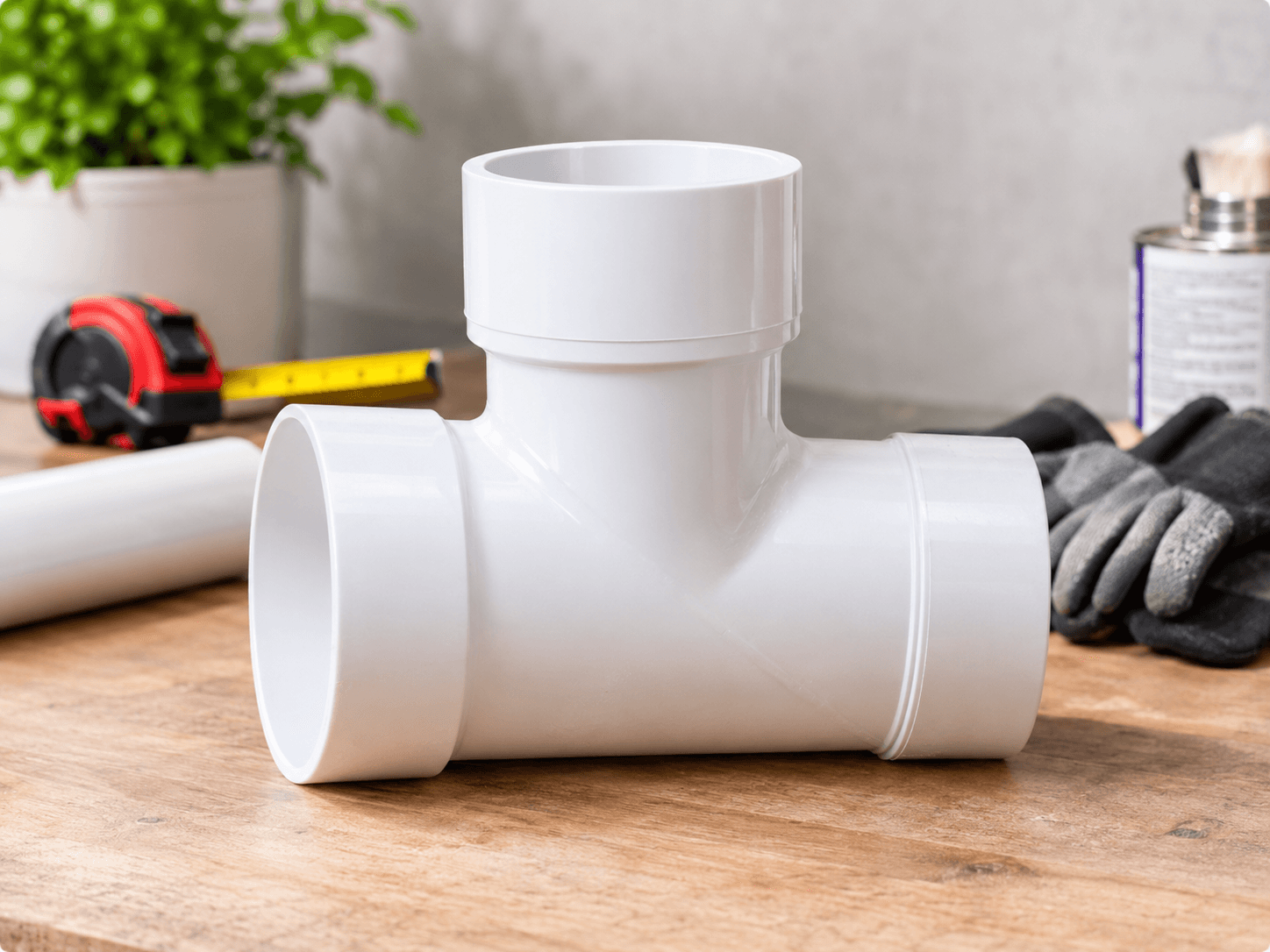
Kneel in front of a bathroom vanity, look past the trap, and trace the drain pipe to the spot where it disappears into the wall. Somewhere in there, or in the basement below, a small T-shaped fitting joins that drain to a bigger vertical pipe. Plumbers call it a san tee. Most homeowners have never heard of one, which is fine until a sink starts gurgling or a quote mentions replacing it.
So, what is a sanitary tee, and why does it get its own name when it looks like any other T? The short answer is a curve you can't see from the outside. The longer answer, including which way it faces and where plumbing code says it can't go, is below.
What Is a Sanitary Tee?
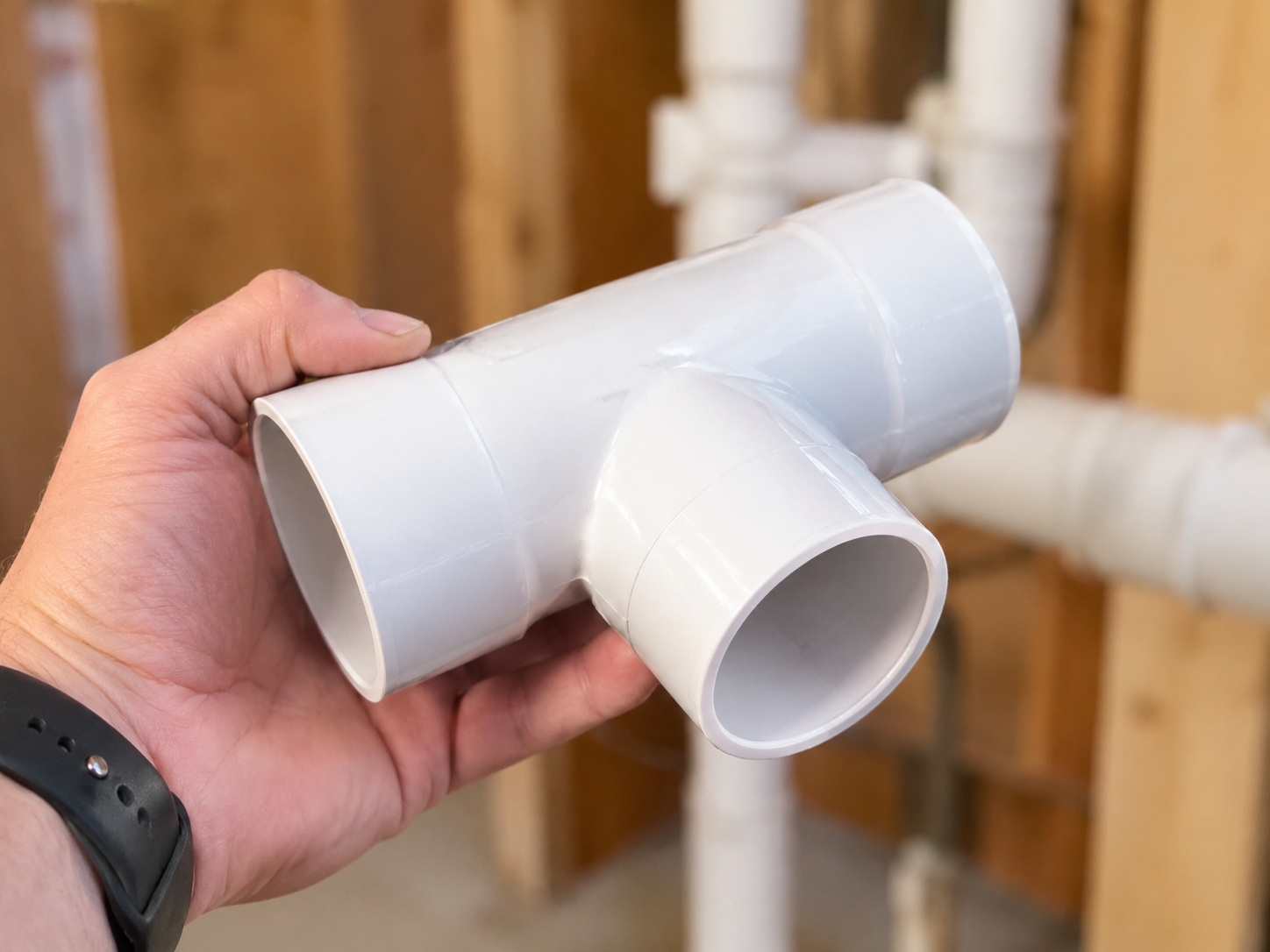
A sanitary tee is a T-shaped fitting used in drain, waste and vent (DWV) pipes. The straight section runs through, and the side branch joins it with a gentle curve instead of a sharp corner. That curve is the whole point. It lets water and waste turn into the main pipe without slamming into a wall.
You'll find sanitary tees in white PVC, black ABS and, in older homes, cast iron. Sizes run from 1½ inches for a small sink drain up to 4 inches for a main stack, and reducing versions exist too, like a 3-inch body with a 2-inch branch. They're for drains and vents only. Water supply lines use completely different tees.
One warning about the name. Food, dairy and pharmaceutical plants also use "sanitary tee" for polished stainless fittings that clamp together. If you searched what is a sanitary tee and landed on one of those pages, that's a different product. This guide covers the plastic and cast iron fittings in a house.
How a Sanitary Tee Works
To see what a sanitary tee is actually doing inside the wall, think about merging onto a highway. A long on-ramp lets you match speed and slide in. A stop sign at a right angle would be a mess. Wastewater behaves the same way.
When a sink drains, the water runs through a nearly flat trap arm and then has to drop into a vertical pipe. In a sanitary tee, the branch curves downward in the direction the water is already heading, so it carries solids along instead of letting them pile up at the corner. A standard tee has a hard 90-degree corner inside. Water hits it, slows down, and drops whatever it's carrying. Give that a few years, and you get a clog that keeps coming back at the same spot.
The tee also gives air somewhere to go. Drains need vents so water can flow without siphoning the trap dry, and the straight run of a tee makes a convenient place to tie one in.
What Is a Sanitary Tee Used For in a Home?
Mostly one job: a horizontal drain meeting a vertical one. Typical spots include:
A bathroom sink or tub drain entering a wall stack
A washing machine drain joining the stack
A second-floor bathroom branch tying into the main vertical drain
Some vent connections, although the rules for these vary
The International Plumbing Code (IPC) is clear about direction. Its fitting table, Table 706.3, allows a sanitary tee for horizontal-to-vertical changes only. The Uniform Plumbing Code (UPC), used in several western states, also lists the sanitary tee for horizontal drains entering a stack. Local amendments apply either way, so your building department has the final word.
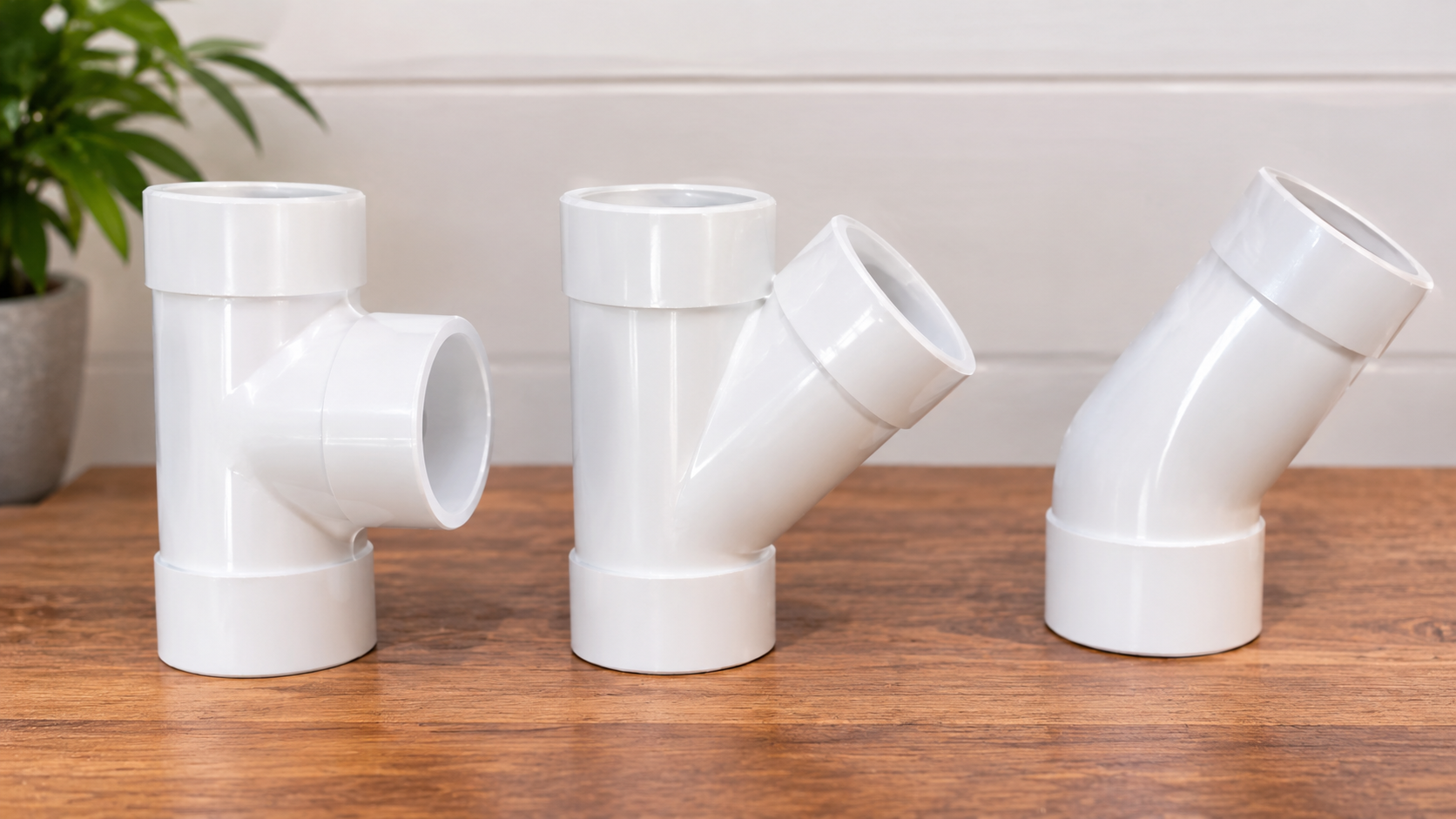
Sanitary Tee vs. Wye vs. Vent Tee
These fittings look related and get mixed up all the time. Here's how they differ.
Fitting | What it looks like | Where it works |
Sanitary tee | T with a curved side inlet | A horizontal branch entering a vertical drain |
Wye | Y with a 45-degree branch | Works for every turn: into a stack, out of a stack, or sideways between two horizontal lines |
Combination wye and eighth bend | A wye and a bend in one piece | Same as a wye, with a gentler turn into the vertical |
Long-sweep quarter bend | A wide, gradual 90-degree elbow | Any change of direction in a drain |
Standard (vent) tee | Sharp 90-degree corner | Vent pipes that carry only air, never waste |
The takeaway: when one drain has to run into another sideways, or turn from vertical back to horizontal, a sanitary tee isn't the answer. Those jobs call for a wye, or for a wye and an eighth bend molded into one fitting.
Which Way Does a Sanitary Tee Face?
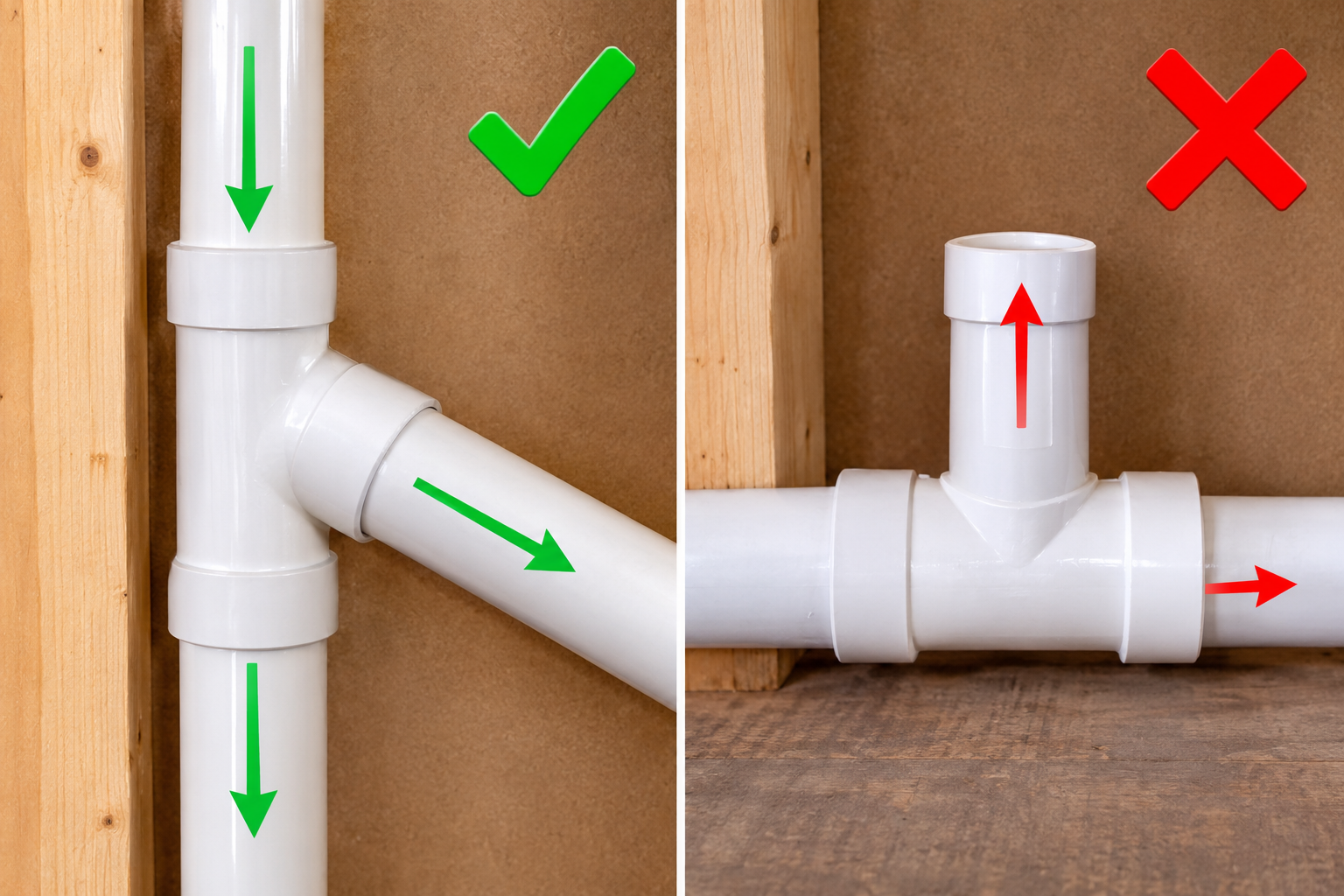
For a drain, the curve points down, with the flow. The straight run stands vertical, and the branch comes in from the side and sweeps downward. Laid on its back in a horizontal waste line, the same fitting turns into a speed bump, because the curve now sends water across the pipe instead of along it.
Vents are murkier. Some plumbers install the tee so the curve guides air upward toward the roof. Codes don't agree on whether a sanitary tee can be a vent takeoff from a horizontal drain, and Louisiana's code flatly bans it. If you're venting anything, ask your local inspector which pattern they accept before you glue a single joint.
Then there's the double sanitary tee, which has two inlets facing each other. It's handy for back-to-back fixtures on opposite sides of a wall. The IPC won't let one receive back-to-back toilets, though, unless each toilet outlet sits at least 18 inches of horizontal pipe away from the fitting.
Mistakes That Show Up Later as Slow Drains and Gurgles
Wrong fitting choices rarely announce themselves on day one. They show up as symptoms. Every item here has other possible causes, so treat each one as a lead, not a diagnosis.
Tee laid on its back in a horizontal line. A slow drain at one spot and repeat clogs.
Standard tee on a waste line. Solids catch the corner. Old DIY additions are the usual suspect.
A missing or blocked vent. Gurgling fixtures. Our guide to plumbing vent problems explains what's happening up on the roof, and the kitchen sink gurgling guide and what it means when the sink gurgles as you flush the toilet cover the symptoms.
ABS and PVC joined without the right cement. Joints can weep or fail.
No cleanout access. Not a fitting error exactly, but it turns a ten-minute clog into a wall demolition.
Older houses have their own quirks. If yours has cast iron or galvanized pipe, read about plumbing issues in older homes before you start cutting. If the trouble might be the main line instead, check the signs of a failing sewer line. And if backups are the worry, here's what a backwater valve does.
What to Buy and What It Costs
Match the material to what's already in the wall: white PVC to PVC, black ABS to ABS. If you have to join the two, use cement made for transitions. For sink drains, 1½-inch and 2-inch tees cover most jobs, while 3-inch and 4-inch sizes serve stacks and toilets. Buy the same wall thickness as your pipe and hub-style ends unless you're working with no-hub cast iron couplings.
The fitting itself is cheap, often single digits for common 2-inch plastic sizes. What costs money is access: opening drywall, cutting out the old fitting, supporting the pipe, holding the right slope, patching the wall and sometimes pulling a permit. That's how one small tee ends up inside a much bigger quote.
Can You Replace One Yourself?
Swapping a tee in an open basement ceiling is a reasonable weekend job if you're comfortable with a saw, primer and cement and can keep the pipe sloped. Cutting into a wall stack is a different story. A mistake means sewage inside a wall, and many areas require a permit and inspection for drain changes. If you're unsure which way the fitting should face, or the pipe runs through finished space, hire a plumber. Our guide on how to hire a plumber covers what to check before, during and after the job.
FAQ
What is a sanitary tee in simple terms? A T-shaped drain fitting whose side branch curves with the flow, used where a horizontal drain meets a vertical one.
What is a sanitary tee fitting made of? PVC, ABS or cast iron, depending on the age and type of your plumbing.
What is a sanitary tee used for besides drains? Some codes also allow one in vent piping, usually with the curve guiding air upward. Vent rules vary by jurisdiction, so check locally.
How can I tell if a fitting is a sanitary tee? Look into the branch opening. A sanitary tee has a visible curve inside, while a standard tee has a sharp corner. Many fittings also have molded markings for size and material.
Can I use a regular tee instead? Not on a waste line. A standard tee has a sharp inside corner and belongs on vent lines that carry only air.
Can a sanitary tee go on its side? Not to join two horizontal drains. Use a wye or a combination wye and eighth bend there.
The Short Version
Next time someone asks what is a sanitary tee, you can say it's a T with a curved branch, made for drains turning from horizontal to vertical. Point the curve with the water, never lay it on its back, and let a wye handle anything sideways. When you're unsure, ask your inspector.
About Mubashir Yaqoob
Mubashir Yaqoob researches and writes practical home repair guides for Home Repair Manual, focused on translating technical roofing, plumbing, and maintenance information into clear advice for homeowners.
View all posts by Mubashir Yaqoob