
Open the crawl space hatch after a week of rain, and you'll know within seconds. Either the floor is dry, and dusty, or there's a dark sheen of water, a musty smell, and a vapor barrier floating like a tarp on a pond. Most people stand there with a flashlight and no idea whether this is normal.
This guide to choosing and installing a sump pump for crawl space protection starts with the question most pages skip: do you actually need one? Then it covers what the system includes, how to choose a pump, the install order that works in a tight space, real costs and the routine that keeps it running.
Sump Pump for Crawl Space: Do You Actually Need One?
A sump pump is not a cure for every damp crawl space. It removes water that collects in a basin, and nothing else. Score your crawl space with these six questions, one point for each yes. This is a rule of thumb, not a diagnosis:
Do you see standing water or wet soil more than a day after rain?
Does the vapor barrier have puddles, or has water run under it?
Do you see water marks or mineral lines on the foundation walls?
Is there a musty smell, mold or rotting wood?
Does the ground slope toward the house, or is the crawl space lower than the yard outside?
Has water come back after you fixed gutters and downspouts?
Zero or one point usually means a drainage or humidity fix is enough. Two or three suggests a drainage system, and four or more points to a pump system, often with a sealed liner. Water that appears only after a heavy storm is different from water that never leaves, and a long-running problem calls for a professional assessment.
Before you decide, rule out a plumbing leak. Clear water that appears when it hasn't rained could come from a supply line, a drain or a water heater. Our guide to the signs of a burst pipe under the house shows what to look for, and our checklist on hidden water damage after a plumbing leak helps you tell a leak from groundwater.
What a Crawl Space System Actually Includes
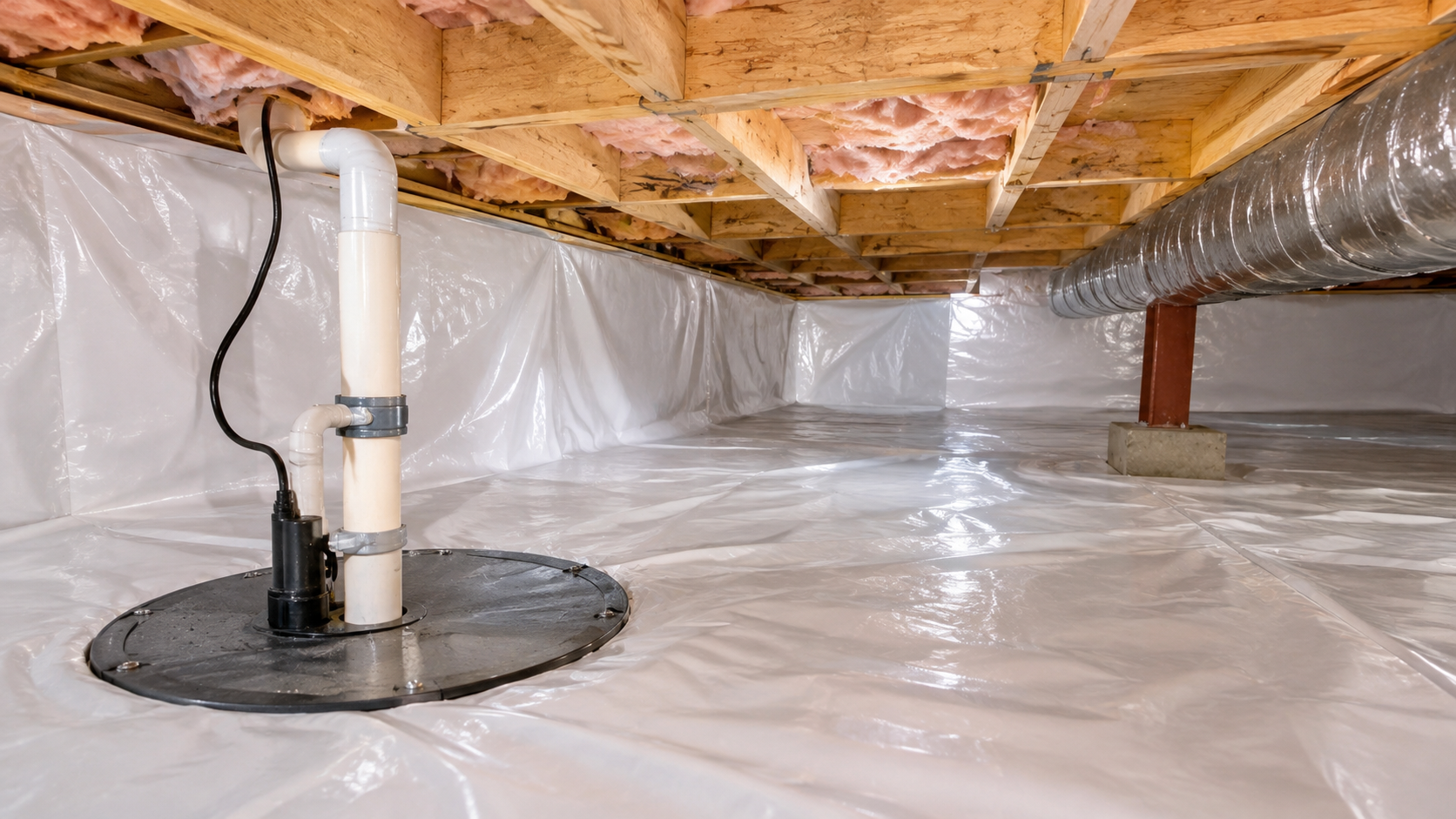
People say "sump pump," but a sump pump for crawl space protection is really a handful of parts that must work together:
The basin or pit. A liner set at the lowest point where water collects. In a dirt floor, digging one may only cost a few hundred dollars, according to This Old House.
The pump. It sits in the basin and lifts water out.
A float switch. As the pit fills, the float lifts and starts the motor.
A check valve. It stops water in the discharge pipe from flowing back into the pit.
A discharge line. The pipe that carries water outside, ideally well away from the foundation.
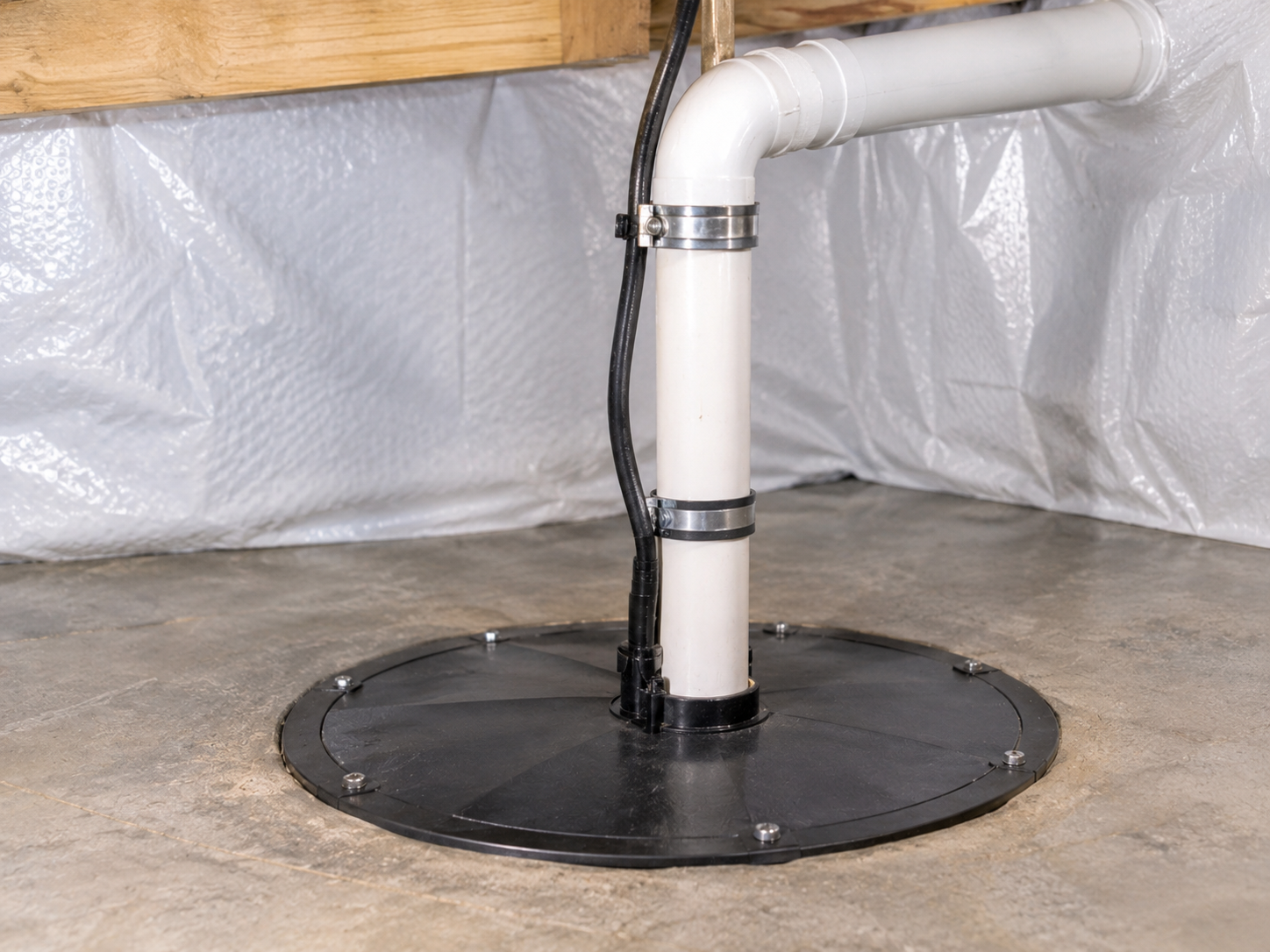
A sealed lid. The U.S. Department of Energy's Building America program says a sump pit should have a gasketed, gas-tight lid, because an open pit lets water vapor, radon and other soil gases into the home.
A backup and an alarm. Battery or water-powered pumps and a high-water alarm cover outages and failures.
If the crawl space has a dirt floor covered by a polyethylene vapor barrier, Building America advises taping the barrier to the rim of the sump so the seal is continuous.
Choosing the Pump: Type, Size and Backup
You'll mostly choose between two styles of sump pump for crawl space installs. Pedestal pumps keep the motor above the water, cost less and are easier to repair, though they're noisier and less powerful. Submersible pumps sit in the water, run quieter and handle more flow, but they cost more and are harder to reach.
Feature | Pedestal | Submersible |
Typical horsepower | 1/3 to 1/2 | Up to 3/4 and beyond |
Flow | Up to about 35 gallons per minute | Up to about 60 |
Lifespan | Up to about 30 years | About 5 to 15 years |
Unit cost | $80 to $800 | $90 to $1,000 |
This Old House notes that most homes need between 1/3 and 3/4 horsepower. In a crawl space, where people rarely hear the noise and space is tight, a submersible pump inside a sealed basin is a common choice.
Backup matters. Storms that fill a crawl space often knock out power. A battery backup alone typically costs $150 to $250, and a primary pump with a backup battery runs $150 to $2,000. A water-powered backup costs about $200 to $900, but it needs municipal water pressure.
How a Sump Pump for Crawl Space Gets Installed, Step by Step
Working in a low, dirty space is why crawl space jobs cost what they do. This is the usual sequence, and it doubles as a checklist for what a quote should include:
Find the low point. Water follows slope, so the pit goes where it naturally collects. Some installers grade the floor toward one corner.
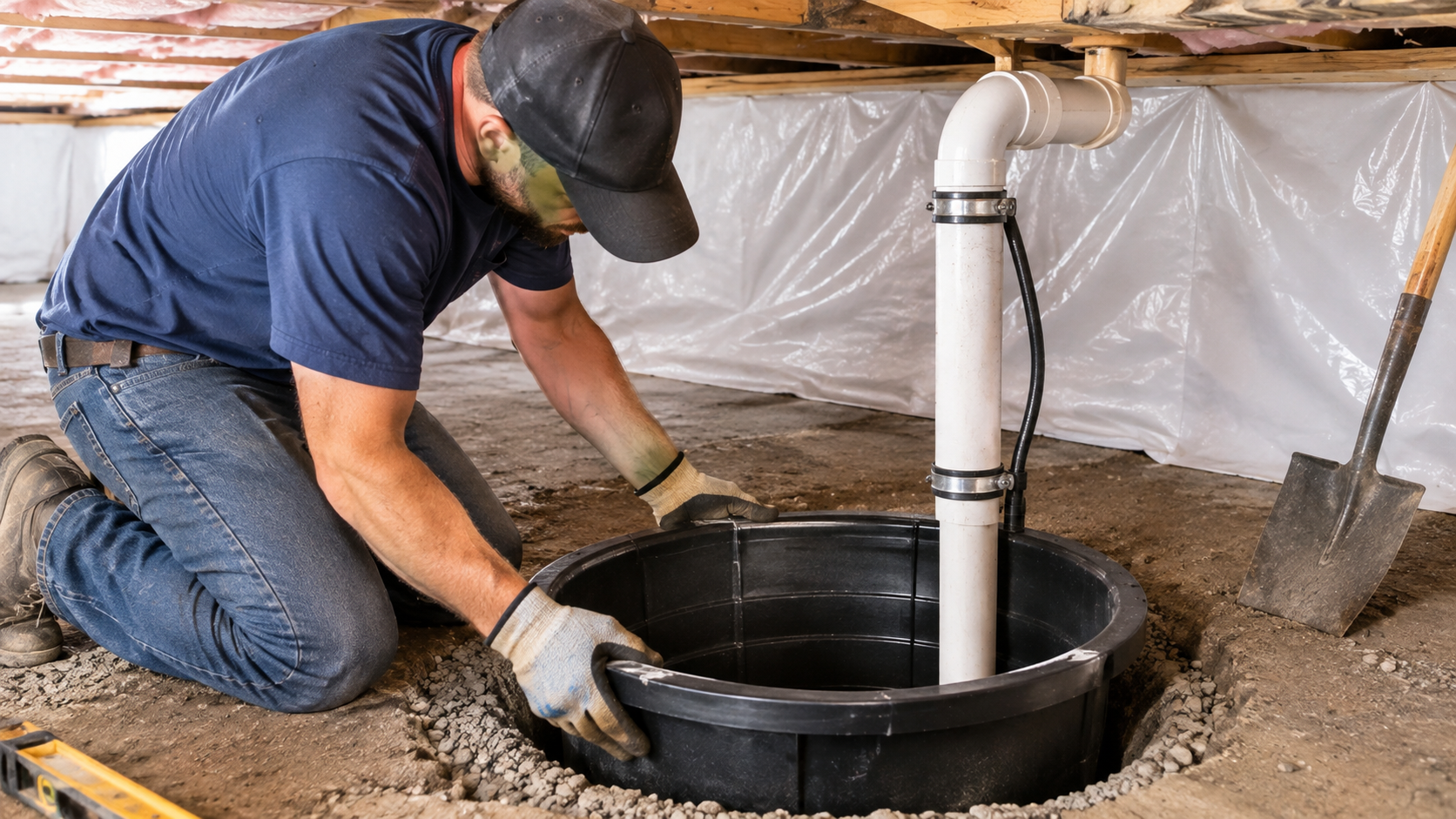
Excavate and set the basin. In a dirt floor, this is easier than cutting concrete. The pit is lined and often set on gravel.
Set the pump and float. The pump sits level, and the float has room to move freely.
Install the check valve and discharge line. The pipe exits through the rim or wall, then runs outside to drain away from the house. Richard Trethewey of This Old House says to send the water as far from the house as you can.
Add power. The pump needs its own GFCI-protected outlet. Electrical work should follow local code.
Close the pit and connect the ground barrier. Use a gasketed lid with grommets around penetrations, and tape the ground barrier to the basin rim.
Test it. Pour water into the basin and watch the pump start, discharge and shut off.
Working in a crawl space has its own risks: low clearance, mold, insects, wiring and wet ground. Hire a licensed plumber or waterproofing contractor for new pits, discharge routing and electrical work, and use our guide on how to hire a plumber to compare quotes.
Don't Skip the Water Source
A sump pump for crawl space protection only moves water that has already arrived. Fix what's sending it first.
Start outside: clean the gutters, extend each downspout so it empties well clear of the foundation, and look at whether the yard tilts toward the house or away from it. Green Building Advisor's crawl space guidance describes grading to one corner for the sump and adding a swale at the perimeter if a lot of water leaks in. If you see cracks, damp walls or mineral lines, our guide on a crack in a basement wall leaking water explains what separates a nuisance from a structural worry.
Also watch humidity. The EPA recommends keeping relative humidity below 60 percent, ideally between 30 and 50 percent, to control mold. A sump pump removes liquid water, but a vapor barrier and sometimes a dehumidifier handle moisture in the air.
What the System Costs
A sump pump for crawl space protection tends to cost less than a pump in a finished basement, yet the tight access and add-ons push the final bill above what many owners expect.
Item | Typical range |
Sump pump installation, national average | About $1,400 (range $500 to $4,000) |
Installation in a crawl space | About $650 to $1,500 |
Replacement in an existing basin | About $350 to $1,000 |
Basin labor | About $500 to $1,200 |
Discharge pipe above ground | About $150 to $400 |
Discharge pipe buried | About $250 to $2,000 |
French drain connected to the pit | About $2,800 to $6,500 |
Battery backup installed | About $1,200 (Bob Vila) |
Ranges come from This Old House (citing Fixr and Angi) and Bob Vila, and your quote will vary. A basic quote may include only the pump, while a thorough one includes the basin, check valve, lid, discharge, wiring, backup and cleanup, so ask what's in it.
Keeping It Running: A Seasonal Routine
Every few months: pour water into the basin and confirm the pump starts and drains.
Every spring and fall: clean the basin, check the float moves freely and inspect the discharge outlet for ice, debris or pests.
Each year: test the battery backup and the alarm.
After big storms: look at the crawl space and the discharge area.
Watch for warning signs: a pump that runs constantly, cycles too often, makes grinding noises or shows rust.
Add the crawl space to your DIY home inspection checklist so it gets checked on a schedule.
Quick Answers
What makes a sump pump for crawl space work different from a basement job? The pump is similar, but the sealed lid, vapor barrier tie-in and tight access make crawl space installs different.
Does moving water out also dry the air down there? No. The pump removes liquid water, and the barrier and dehumidifier handle vapor and humidity.
Do I need a backup? If the crawl space floods during storms, yes. Outages and pump failures are common in bad weather.
Is it a DIY project? Replacing a pump in an existing pit can be. New pits, electrical work and discharge routing are better left to pros.
Does insurance cover it? Usually no, unless damage comes from a covered event, so ask your insurer.
Before You Call an Installer
Score your crawl space, fix gutters and grading, and ask every contractor to quote the same list: basin, pump, check valve, sealed lid, discharge, power, backup and vapor barrier work. A sump pump for crawl space protection is only as good as the water control around it.
About Mubashir Yaqoob
Mubashir Yaqoob researches and writes practical home repair guides for Home Repair Manual, focused on translating technical roofing, plumbing, and maintenance information into clear advice for homeowners.
View all posts by Mubashir Yaqoob