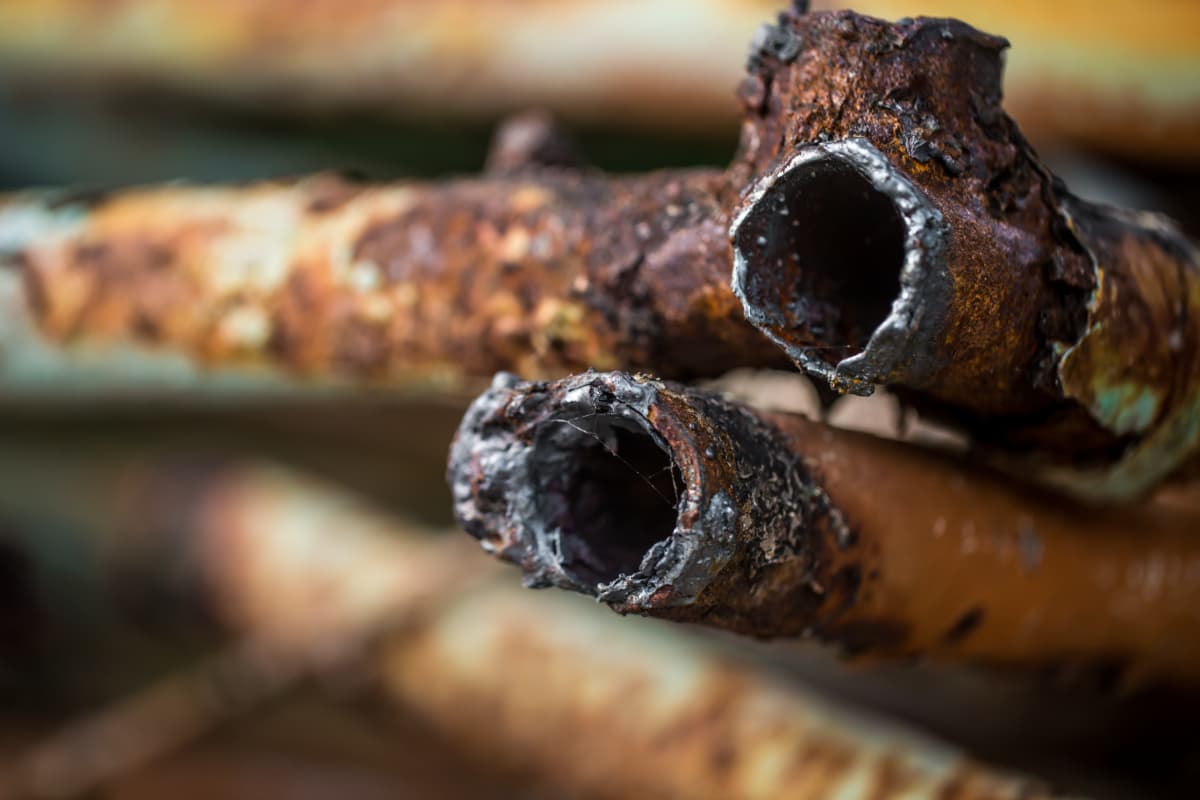
Ever wonder why the water pressure in a 60-year-old house never seems to match a new build, no matter how many fixtures get replaced? Plumbing issues in older homes almost always trace back to one root cause: the pipes were installed for a house and a household that looked nothing like yours does today. A system built in 1955 for a family running one bathroom and a kitchen sink is now expected to handle a dishwasher, a washing machine, two showers, and fixtures that didn't exist when the pipes went in. Age isn't really the enemy here; mismatch is.
Plumbing Issues in Older Homes Start With the Pipes: Here's How to ID Yours
Before diagnosing anything else, it helps to know what you're actually dealing with, and you don't need a plumber for this first step:
Grab a magnet. If it sticks to an exposed pipe, you've got galvanized steel or iron, common in homes built before about 1960 and most prone to internal corrosion.
If the magnet doesn't stick and the pipe is a dull, silvery gray, it's likely copper, used widely from the 1960s through today, and generally the most durable option still found in older homes.
A flexible, off-white or gray plastic pipe is probably polybutylene, installed mostly from the 1970s through the mid-1990s before it fell out of favor because it has a well-documented tendency to become brittle and fail, leading to a major class-action settlement in the late 1990s.
Bright red or blue flexible plastic is PEX, the modern standard, and if you see this, that section of your system has likely already been through a plumbing upgrade.
Knowing which material you're looking at tells you almost everything about your risk level before a plumber ever shows up, and it's the first real step in diagnosing old house plumbing problems accurately instead of guessing.
Why Plumbing Systems Age Worse Than the House Around Them
A house's structure can last a century with basic upkeep, but pipes are a different story they're carrying moving water under pressure every single day, and every outdated pipe issue traces back to a material that has some form of built-in expiration. Galvanized pipes corrosion is the clearest example: it works from the inside out, narrowing the interior diameter until water barely gets through a major contributor to the water pressure issues old homes are known for, and a clear sign of plumbing system aging in action; homeowners restoring WWII-era houses often find pipes that have corroded down to little more than a pencil-sized opening, despite looking completely normal from the outside. Cast iron drain lines crack. Polybutylene degrades from chlorine exposure in municipal water. None of this shows up until it does.
Roughly how long each material lasts before problems typically start:
Pipe Material | Typical Lifespan | Common Failure |
Galvanized steel | 40–60 years | Rust, restricted flow |
Cast iron (drain lines) | 50–75 years | Corrosion, cracking |
Polybutylene | 10–15 years | Sudden pipe failure |
Copper | 50+ years | Pinhole leaks |
Clay (sewer lines) | 50–60 years | Root intrusion |
If you know roughly when your home was built or last repiped, this table alone can tell you whether you're due for a closer look.
The Problems That Show Up Most Often
Most older homes deal with some combination of outdated pipes, worn fixtures, and a drainage system that predates modern appliances. Plumbing system aging rarely announces itself all at once. Once a plumbing system starts showing its age, these are the patterns that repeat across nearly every older home:
Reduced water pressure, usually from mineral buildup and rust narrowing the inside of galvanized pipes over decades one of the most common water pressure issues old homes deal with
Pipe leaks in older homes, often starting at joints and fittings before spreading to the pipe itself
Discolored or rusty water, especially right after the water's been off for a while
Frequent drain clogs, since older drainage systems weren't sized for modern appliance usage like garbage disposals and high-efficiency washing machines
Aging water heaters that struggle to keep up with a household's actual hot water demand, a common but often overlooked piece of the larger plumbing puzzle worth ruling out alongside other water heater troubleshooting if hot water pressure specifically feels weak
When It's the Sewer Line, Not the Pipes Inside the House
One issue deserves its own attention, since it's easy to mistake for a simple drain clog: tree root intrusion into aging sewer lines. Homes built from the early 1900s through the 1970s often have clay or cast iron sewer lines connected in sections with joints, and as those joints age and shift, small gaps open up. Tree roots, drawn to the steady moisture inside the pipe, work their way through those gaps and keep growing once they're in.
The warning signs are distinct from an ordinary clog: multiple drains slowing down around the same time, gurgling sounds from toilets, repeated clogs in the same drain no matter how often it's cleared, or a sewage smell near drains or outside the home. Left alone, root intrusion can eventually collapse a section of pipe entirely. Caught early, most repairs today use trenchless techniques repairing or lining the pipe from the inside rather than digging up the yard, which keeps both the cost and the disruption well below a full pipe excavation.
What Happens If You Just Leave It
Ignoring aging plumbing rarely stays a minor inconvenience. Corroded pipes that started as a pressure annoyance eventually leak sometimes behind a wall or under a floor where nobody notices until real water damage has already happened. That's not a rare edge case, either: the EPA estimates that roughly 9% of homes have leaks significant enough to waste more than 18,000 gallons of water a year, and older plumbing systems make up a disproportionate share of that number. Lead pipes and lead solder, both common before 1986, carry a genuine health consideration; the EPA's Lead and Copper Rule has pushed utilities toward identifying and replacing lead service lines nationally, and if you're unsure what feeds your home, it's worth checking with your local water utility directly rather than guessing. None of this needs to happen all at once, but each of these problems tends to compound rather than plateau.
Fixing It: Patch, Partial Repipe, or Full Replacement
Not every older home needs a full repipe. A single failing section can often be patched or replaced in isolation, especially if the rest of the system is holding up fine. A partial repipe replacing just the sections showing real problems, like a kitchen or bathroom line is a reasonable middle ground when the rest of the house tests fine. This kind of targeted plumbing upgrade often comes up naturally during home renovation plumbing work, since walls are already open. A full repipe becomes the right call when multiple sections are failing, when the home still has polybutylene or lead lines throughout, or when a DIY home inspection turns up pressure or leak issues in more than one part of the house.
What Pipe Replacement Cost Actually Looks Like
Costs vary widely by house size and access difficulty, but general ranges run:
Single section or room repipe: $500–$2,000
Partial whole-house repipe: $2,000–$6,000
Full whole-house repipe (average-size home): $4,000–$15,000+
PEX tends to run cheaper than copper for both material and labor, since it's faster to install and doesn't require soldering a real factor if cost is the deciding consideration between materials for your project.
Living With Older Plumbing Without It Costing You More
If a full repipe isn't in the budget right now, a few habits buy real time: watch your water pressure for gradual drops (a slow decline over months is a corrosion pattern, not a fluke), keep an eye out for pressure changes at specific fixtures as an early warning sign, and build old plumbing maintenance into your normal home maintenance routine rather than waiting for a visible leak to force the issue.
FAQ
How do I know if my old house has bad pipes?
A magnet test identifies galvanized steel instantly; then watch for reduced pressure, discolored water, or recurring leaks.
Is it worth buying a house with old plumbing?
Depends on the material. Galvanized or polybutylene throughout is a real cost factor to negotiate on; mostly copper or PEX is a much smaller concern.
How much does it cost to repipe an entire house?
Typically $4,000–$15,000+ for an average-size home, depending on square footage and access difficulty.
Are polybutylene pipes dangerous?
Not immediately, but they're prone to sudden, often catastrophic failure as they age why many insurers and inspectors flag them specifically.
Should I worry about lead pipes in an older home?
Yes, if built before 1986 check with your local water utility about your service line material.
About Mubashir Yaqoob
Mubashir Yaqoob researches and writes practical home repair guides for Home Repair Manual, focused on translating technical roofing, plumbing, and maintenance information into clear advice for homeowners.
View all posts by Mubashir Yaqoob