A drain clog isn't always one lump of hair or one stray wipe. Often it's a coating: years of grease, scale and soap film narrowing the pipe until even a small plug can't get through. A plain snake punches a hole in that coating. It doesn't scrape the walls.
That's the job a chain knocker was made for. This guide explains what the tool is, when it beats other methods, how to choose the right type and size, how to run it without hurting yourself or your pipes, recognizing when a clog requires advanced intervention.
What a Chain Knocker Is and How It Works
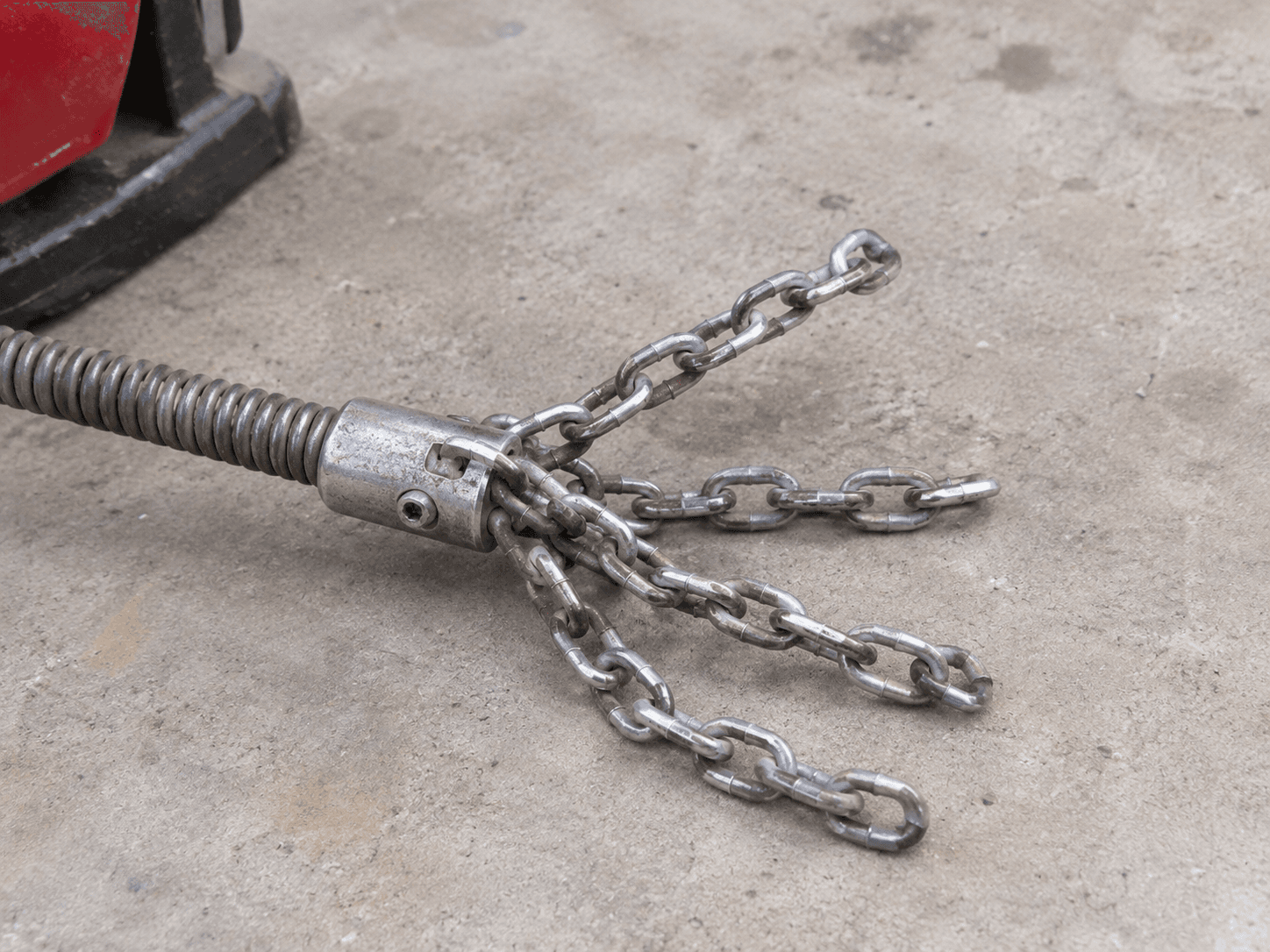
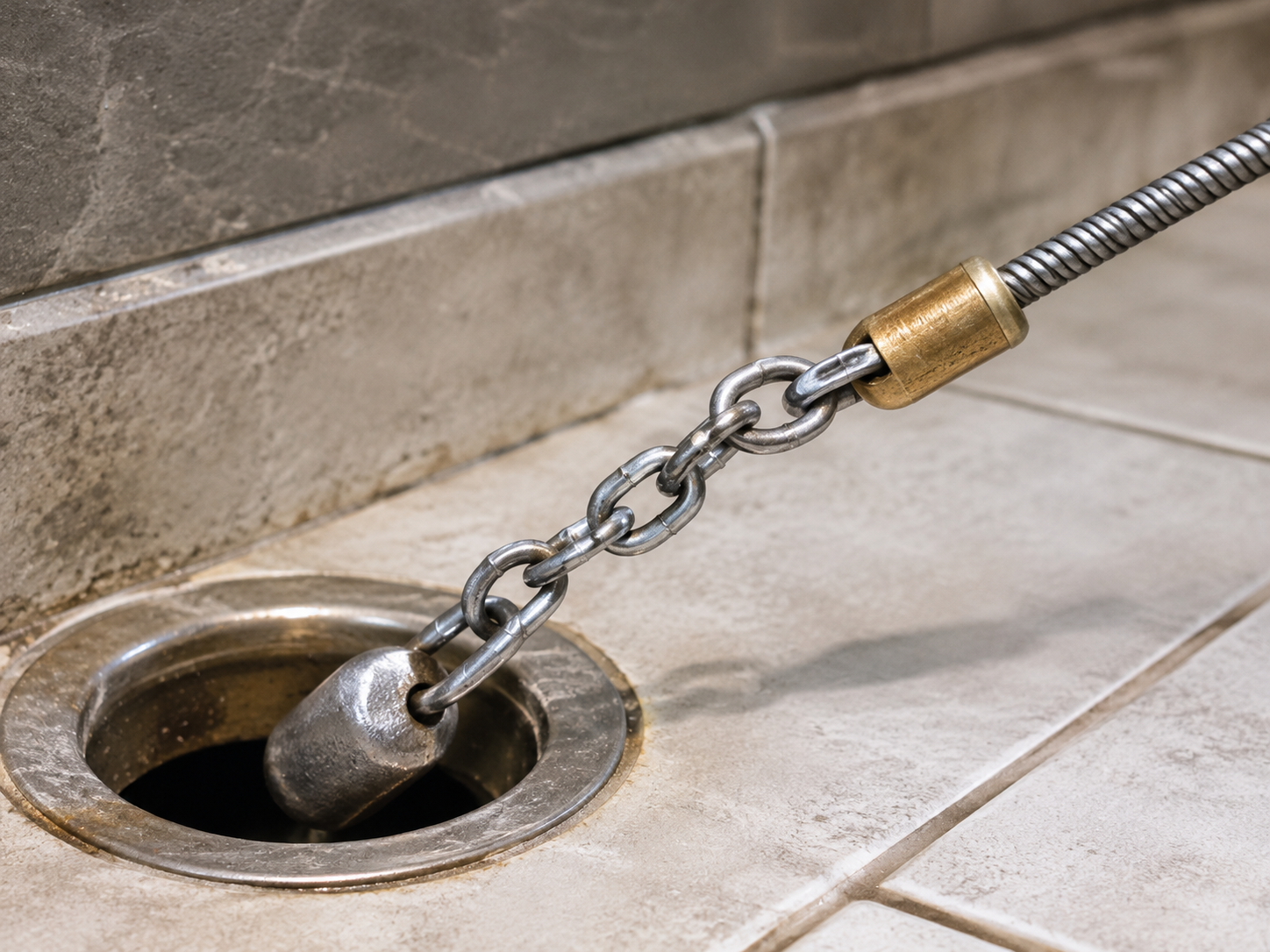
A chain knocker is an attachment that fits on the end of a spinning drain cleaning cable. It has a few short lengths of chain, and as the cable turns, centrifugal force flings the chains outward so they flail against the inside of the pipe. That scours grease, scale, wipes, soft blockages and sometimes roots off the walls, which is why makers describe it as a wall-to-wall clean.
Milwaukee, for example, sells standard versions for its chain snake machines and says they handle grease and soft blockages and can navigate tees and bends. RIDGID lists one for 3-inch to 4-inch drains that removes wipes, grease, soft blockages, scale and roots. European maker Ehle describes heads for tough grease clogs in pipes from roughly 75 mm to 200 mm.
You'll find these heads on machines used by plumbers and drain technicians, from small flexible-shaft units for 1-1/4-inch lines to larger drum machines. They aren't a household gadget, and that shapes everything else in this guide.
When It's the Right Tool, and When It Isn't
Three questions decide it:
What is the clog made of? Grease, scale and soft buildup suit a chain knocker. A solid object, such as a toy or a hunk of mop head, usually needs a retrieval tool or a different cutter.
What is the pipe made of? PVC, clay and old fragile pipe need gentler heads. Milwaukee says its standard heads are best used in PVC, clay or fragile pipes.
Is the pipe the right size? Each head is made for a size range, and using the wrong one can jam or leave the walls untouched.
Two examples show the difference. A kitchen line that clogs every few months with congealed grease, or a 3-inch main narrowed by scale, are both good candidates. A toilet blocked by a toy is not.
If the real problem is a collapsed or cracked pipe, no knocker will fix it. Our guide to the signs your sewer line is failing explains when a clog is really a broken line.
Choosing a Chain Knocker: Size, Type and Pipe Material
Diameter. Ensure the clearing head precisely corresponds to both the pipe width and your machine's cable thickness. Milwaukee's M12 system covers 1-1/4-inch to 2-inch pipes, and its heads come in sizes through 4 inches. Larger drum machines use cables of roughly 16, 22 or 32 millimeters, and the knockers are sized to match.
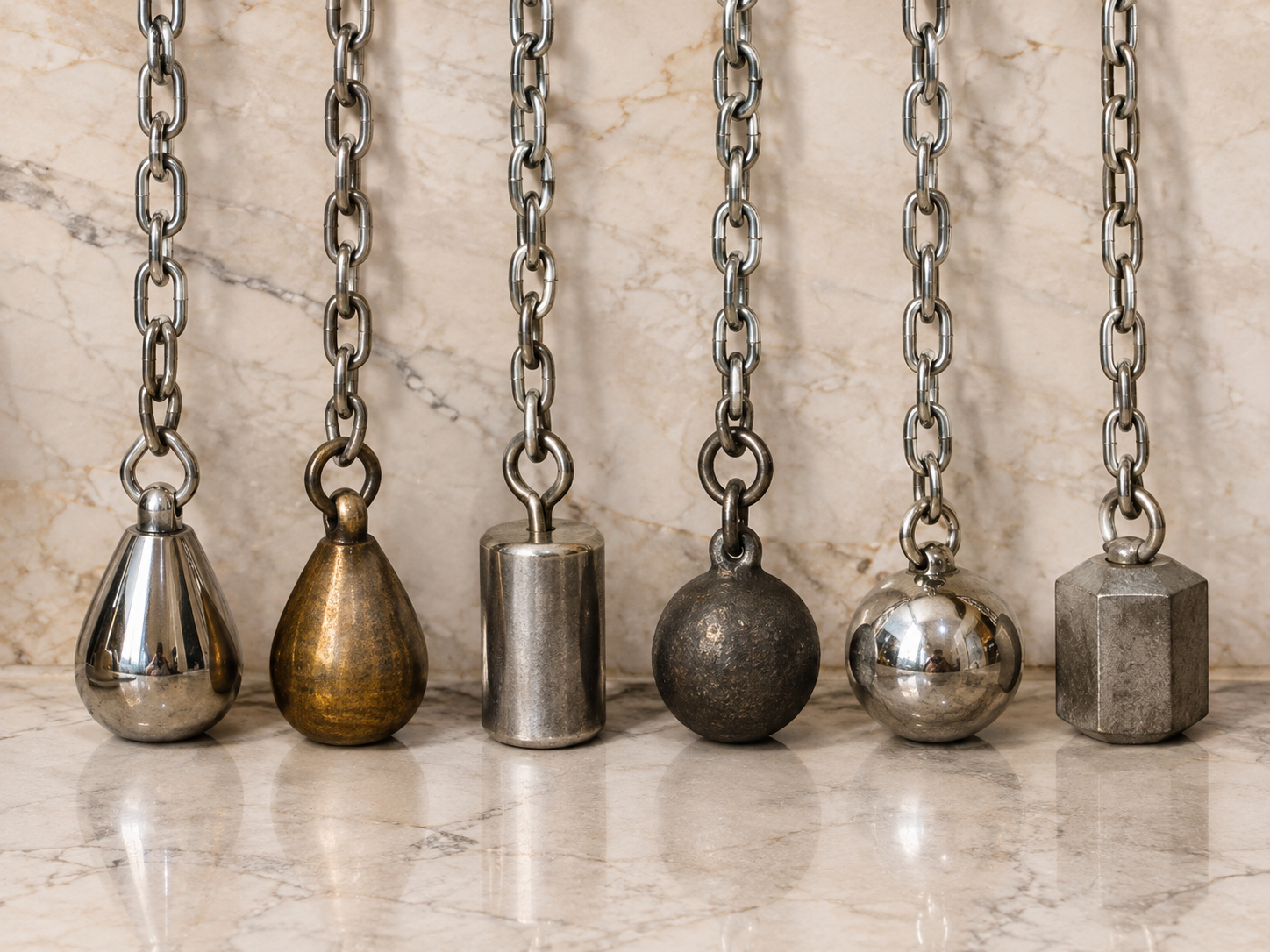
Type. Makers offer several styles:
Type | What it typically does best |
Smooth chain | Gentle wall scouring in softer or fragile pipe |
Spiked chain | More aggressive scraping of buildup |
Carbide chain or carbide grit | Scale and hard deposits |
Ring or combined designs | Tougher jobs, with chains that can be changed |
Material. Plastic and clay need the least aggressive option. Cast iron and steel tolerate more, though old, scaled or corroded iron can still be thin. When you aren't sure, a camera inspection first is cheap insurance, and our guide to plumbing issues in older homes explains why old pipe deserves caution.
How to Run One Safely
Always follow the manual for your machine. These steps reflect what the major drain machine manuals say:
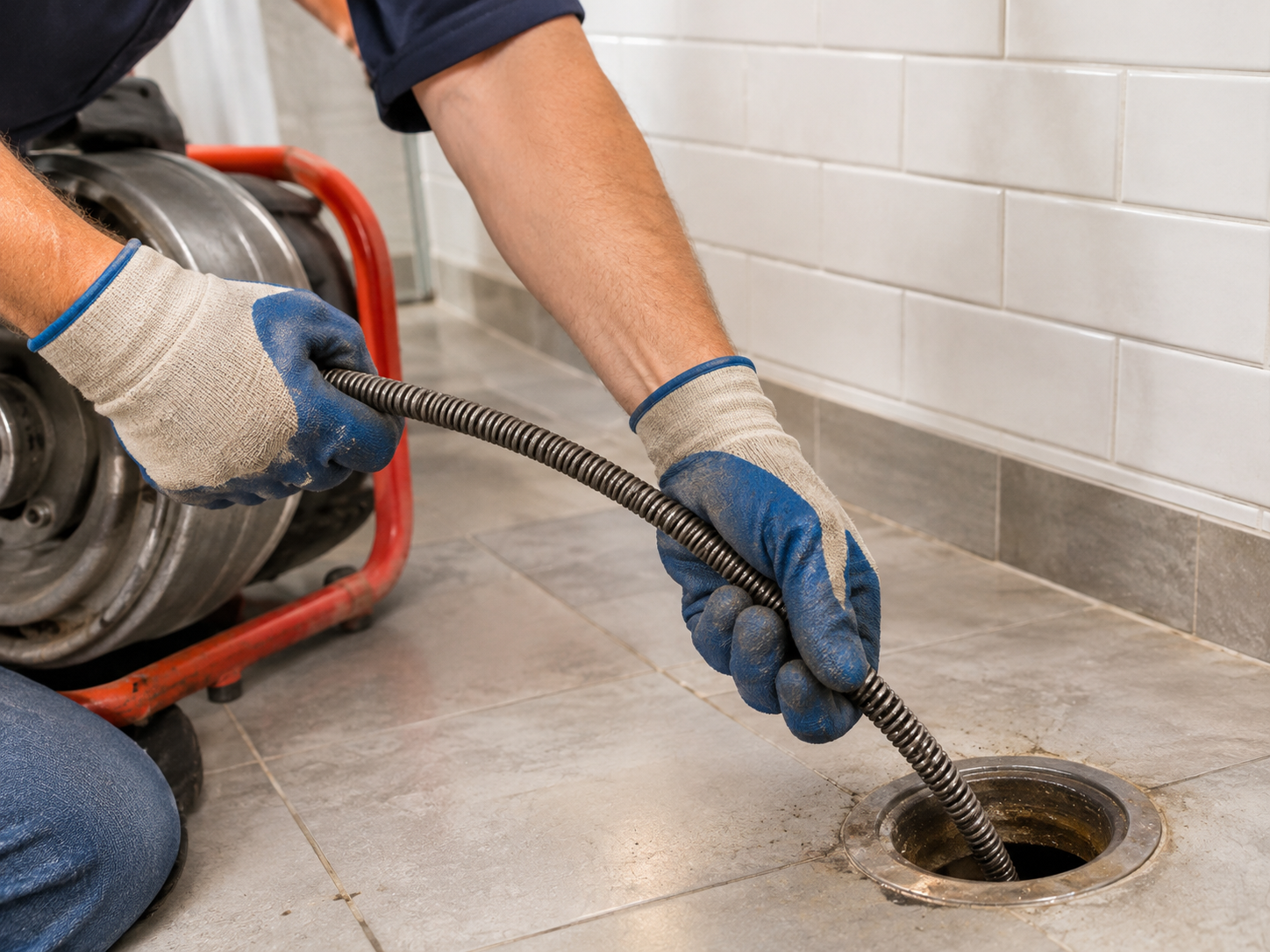
Wear the right protection. Safety glasses, the gloves the manufacturer specifies, rubber or latex gloves underneath for hygiene, non-slip shoes and no loose clothing or jewelry.
Use proper power. Plug into a GFCI-protected outlet, and keep extension cord connections dry.
Never grab the rotating cable with a rag or a loose glove. RIDGID's manuals warn it can wrap around the cable and cause serious injury.
Feed the cable by hand first. Push at least a foot of cable into the drain before you start the machine, so the end can't come out and whip.
Keep the machine close. RIDGID advises keeping the cable outlet within about 6 inches of the drain for control.
Go slowly. Let the chains work, and don't force the cable if it binds.
Reverse only as the manual allows. Running in reverse can damage the cable.
Never pull the tool out while the cable is rotating. It can whip and cause serious injury.
Flush and clean up. Wash your hands with hot, soapy water, since drains can carry bacteria and chemicals.
Several manuals also say the machine may not clear every blockage, and that if you're unsure how to use it, you should call a drain cleaning specialist.
What Goes Wrong
Cable whip. The most dangerous failure, caused by too little cable in the pipe, retracting while spinning or a loose glove.
Stuck head. A head can bind in a bend or against a damaged pipe. Don't power through it.
Pipe damage. An aggressive head in thin or old pipe can scratch, crack or tear a liner.
Wrong tool. Using one for a toilet or a solid blockage wastes time, and some machines aren't recommended for toilets.
A fast fix that doesn't last. If grease comes back within weeks, the cause hasn't changed. Our guide on why a kitchen sink gurgles shows how partial blockages show up before they become full ones.
Look First: Why a Camera Comes Before Any Cleaning
Before anything spins inside a pipe, see what's in it. A drain camera shows whether the blockage is grease, roots, scale or a break, and whether the pipe is sound enough for an aggressive head. Many plumbers offer an inspection with a cleaning, and it gives you a before-and-after record. If the camera reveals cracks, offsets or a low spot where water pools, cleaning is only a stopgap and the pipe needs repair.
What It Costs
The individual cutting heads are relatively inexpensive compared to the overall cost of the motorized unit. In retailer listings, a 2-inch Milwaukee standard chain knocker is about $75, and Renssi models for various cable sizes run from roughly $39 to about $172 depending on size and style. The machine, cable and gloves are the larger expense. For a one-off job, hiring a technician often costs less than buying or renting gear, and a pro brings a camera to confirm the result.
Easier Alternatives for Homeowners
A chain knocker is a professional attachment. For most homes, these steps come first:
A hand auger or small snake for sinks, tubs and shallow clogs.
Better habits: keep grease out of the drain, and use hair catchers. Our article on what really happens when you flush hair shows how small habits build big clogs.
A camera inspection when clogs keep returning.
A licensed plumber for main lines, roots and recurring grease. Our guide on how to hire a plumber explains how to compare quotes and ask which tools they'll use.
Keeping the Line Clean Afterward
A cleaned line stays clean only if the habits change. Keep fats, oils and grease out of kitchen drains, wipe greasy pans before washing, and treat so-called flushable wipes as trash. Use strainers in sinks and tubs. Don't rely on hot water alone, because melted grease can harden again farther down the line. After a scouring, ask your plumber how long buildup usually takes to return, since that tells you whether a maintenance schedule makes sense.
Quick Answers
Is a chain knocker safe for PVC? Standard versions are made for PVC and other fragile pipe, though technique matters.
Do I need a special machine? Yes. These heads attach to specific cables and drain machines, so match the head to your machine and follow its manual.
Does it clear tree roots? Some models list roots, but dense roots usually need a cutter, and a camera should confirm the fix.
What size do I need? Match the head to your pipe's inside diameter and to your cable.
Will it fix a collapsed pipe? No. It only cleans. A damaged pipe needs repair.
The Bottom Line
A chain knocker is a precise tool for a specific problem: buildup on pipe walls. Check the clog and the pipe first, pick the right head, follow the manual and keep your hands clear of the cable. If anything feels uncertain, a plumber with a camera is the safer call.
About Mubashir Yaqoob
Mubashir Yaqoob researches and writes practical home repair guides for Home Repair Manual, focused on translating technical roofing, plumbing, and maintenance information into clear advice for homeowners.
View all posts by Mubashir Yaqoob