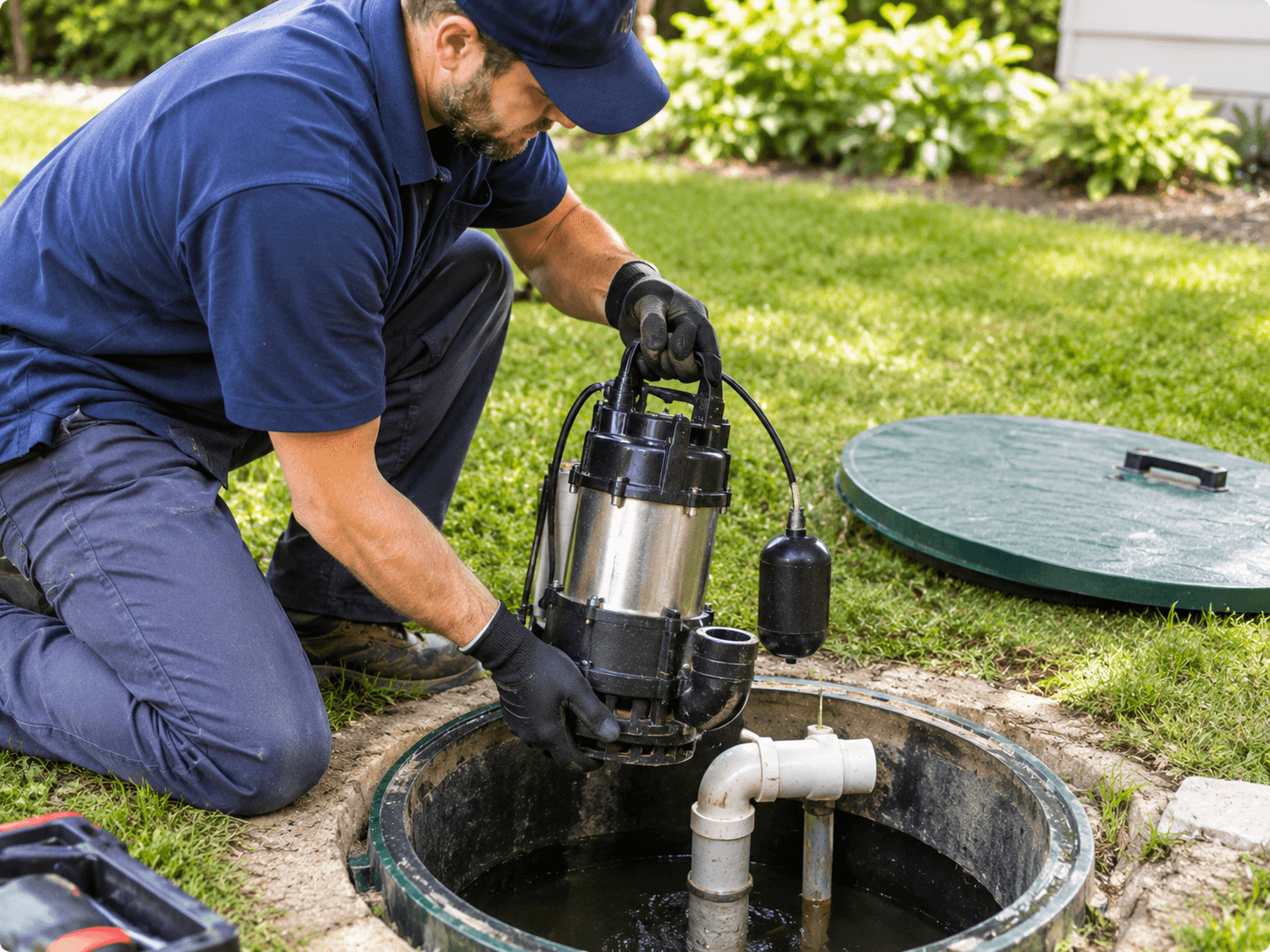
Ask five people for a pump for septic tank repairs, and you'll get five different pumps. That's because the phrase covers at least three machines that do very different jobs, plus a truck that doesn't belong in the conversation at all. Buy the wrong one, and you've wasted money. Ignore the alarm on the right one, and you've got sewage where it shouldn't be.
This guide to choosing and caring for a pump for septic tank systems sorts out which pump you have, what it does, what the alarm means, what repairs cost, and what to leave to a licensed septic professional.
Which Pump for Septic Tank Do You Actually Need?
Start by deciding what the pump has to move.
Pump | What it moves | Where it sits | Common use |
Effluent pump | Clarified liquid from the tank, with small solids | In the pump or dosing chamber after the septic tank | Sends effluent uphill or evenly to the drain field |
Sewage ejector pump | Raw wastewater with solids | In a basin below a basement bathroom or laundry | Lifts waste up to the septic tank |
Grinder pump | Raw sewage, chopped into slurry | In a basin, often with long pressure lines | Moves waste uphill or over long distances |
Effluent pumps are built for gray, mostly clear liquid. One manufacturer describes them as handling small solids up to about half an inch, normally discharging from a septic tank or aerobic system to a drain field. Ejector and grinder pumps handle raw sewage. Mixing them up is the classic mistake, because an effluent pump isn't designed for raw waste.
The fourth thing people search for is septic tank pumping, the vacuum truck that empties solids. That's a service, not a pump you buy, and we cover it in the maintenance section.
How a Pumped Septic System Works
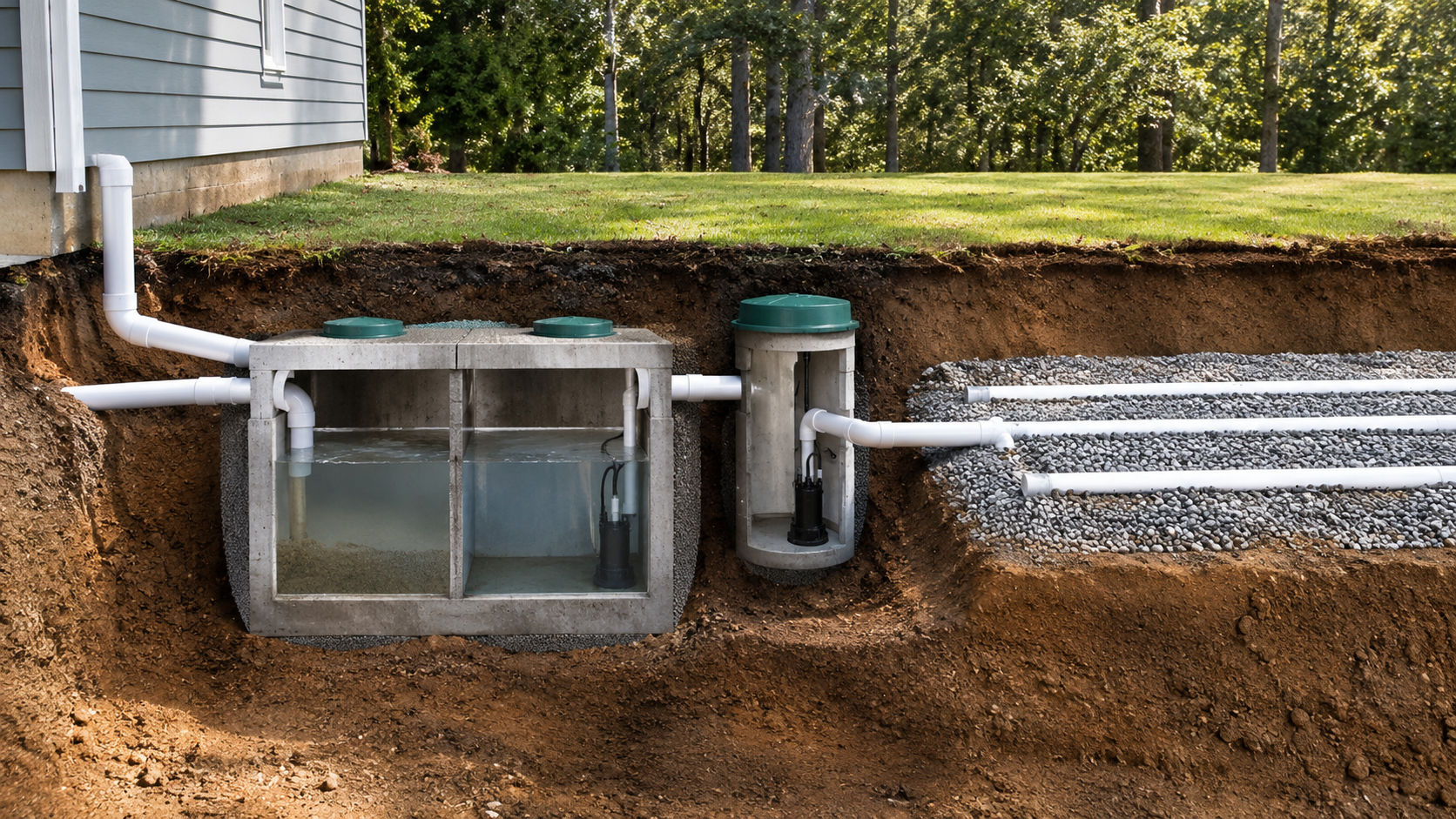
A pump for septic tank systems is only needed when gravity can't do the job. In a gravity system, effluent simply flows downhill to the drain field and there may be no pump at all. When the drain field sits uphill, far away or in poor soil, a pump moves the effluent.
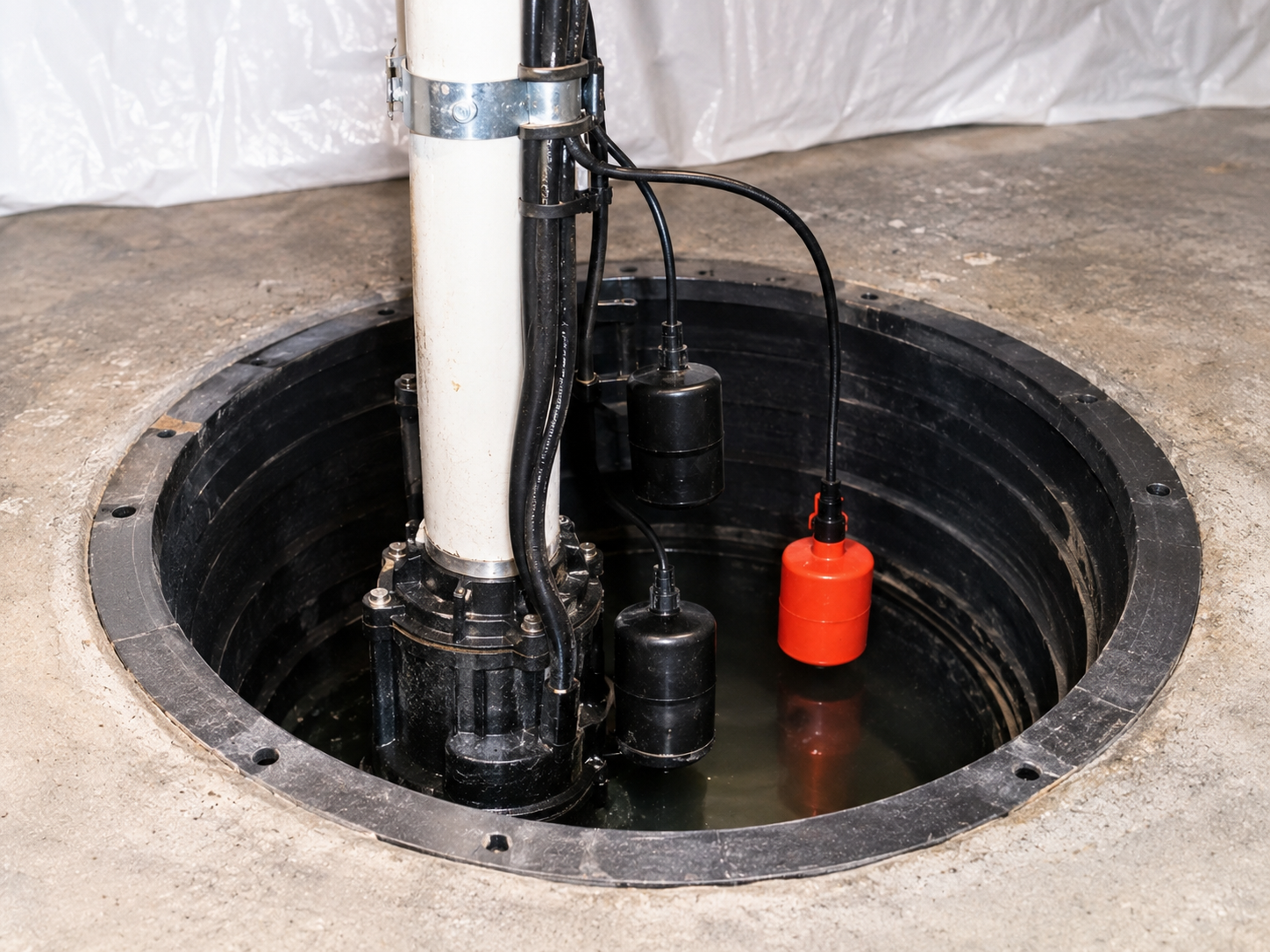
Washington State's Department of Health describes the pump chamber as a concrete, fiberglass or polyethylene container that collects septic tank effluent. Inside are the pump, control floats and a high-water alarm float. Control floats switch the pump on and off to deliver a set dose, and some systems use timers instead. The alarm float triggers a buzzer and a visible light if the level climbs too high.
Texas A&M's extension service adds an important detail. In its example, an alarm that sounds with about 80 gallons of reserve means the household can use only roughly 80 more gallons before the tank is full. That's why you shouldn't ignore the alarm or keep running laundry.
What the Alarm Means and What to Do
Many homeowners learn about their pump for septic tank only when the alarm goes off. Public health agencies agree on the basics:
Cut water use right away. No laundry, dishwasher or long showers until you know what's wrong.
Silence the alarm if the panel allows it, but don't ignore it. The light usually stays on until the level drops.
Check the breaker and the control panel. A tripped breaker or a power outage can stop the pump.
Don't open the tank or chamber. Septic gases are dangerous, and lids can be heavy or unstable.
Call a septic professional if the alarm continues, comes back or the pump doesn't run.
Common causes include a failed pump, a stuck or tangled float, a clogged effluent filter, a tripped breaker, excess water or a saturated drain field. Virginia's health department notes that if the "on" float tips up and the pump doesn't start, the high-water alarm gives the signal that something is wrong. EPA materials also warn that a high liquid level in the pump tank can point to a pump or control failure, so a pumper may need to check it.
For related warning signs on the plumbing side, see our guide to the signs your sewer line is failing.
Replacing a Pump for Septic Tank: What to Do and What It Costs
Replacement is usually a job for a licensed septic contractor or plumber, because the work involves electrical connections, wet chambers and hazardous gases. Whoever does it needs to match the pump to your system rather than just buying a similar-looking unit.
Match these specs:
Pump type: effluent, ejector or grinder.
Head: the vertical lift plus friction losses to the drain field or tank.
Flow: the dose volume or gallons per minute your design requires.
Solids handling: effluent pumps handle small solids, while raw sewage needs a different design.
Discharge size and connection: a common standard on effluent pumps is a 1-1/4-inch connection, but verify it.
Floats and control panel: replace them together if the manufacturer says to.
Published cost ranges from HomeAdvisor and Angi help with budgeting:
Item | Typical cost |
Sewage ejector pump replacement | $850 to $3,800, average about $2,300 |
New ejector system installed | About $2,000 to $5,500 |
Ejector pump unit alone | About $150 to $2,000 |
Grinder pump unit alone | About $1,000 to $2,500 |
Septic pump repair | About $250 to $400 |
Effluent filter replacement | About $200 to $300 |
Septic tank pumping | Average about $420, usually $290 to $560 |
Septic systems vary widely, so your quote may differ. Ask what's included: the pump, floats, controls, labor, permits and disposal of the old unit. For tips on comparing quotes, read our guide on how to hire a plumber. If you're dealing with a backup into a basement, our explanation of a backwater valve shows how it differs from an ejector pump.
How Often Should the Pump Run?
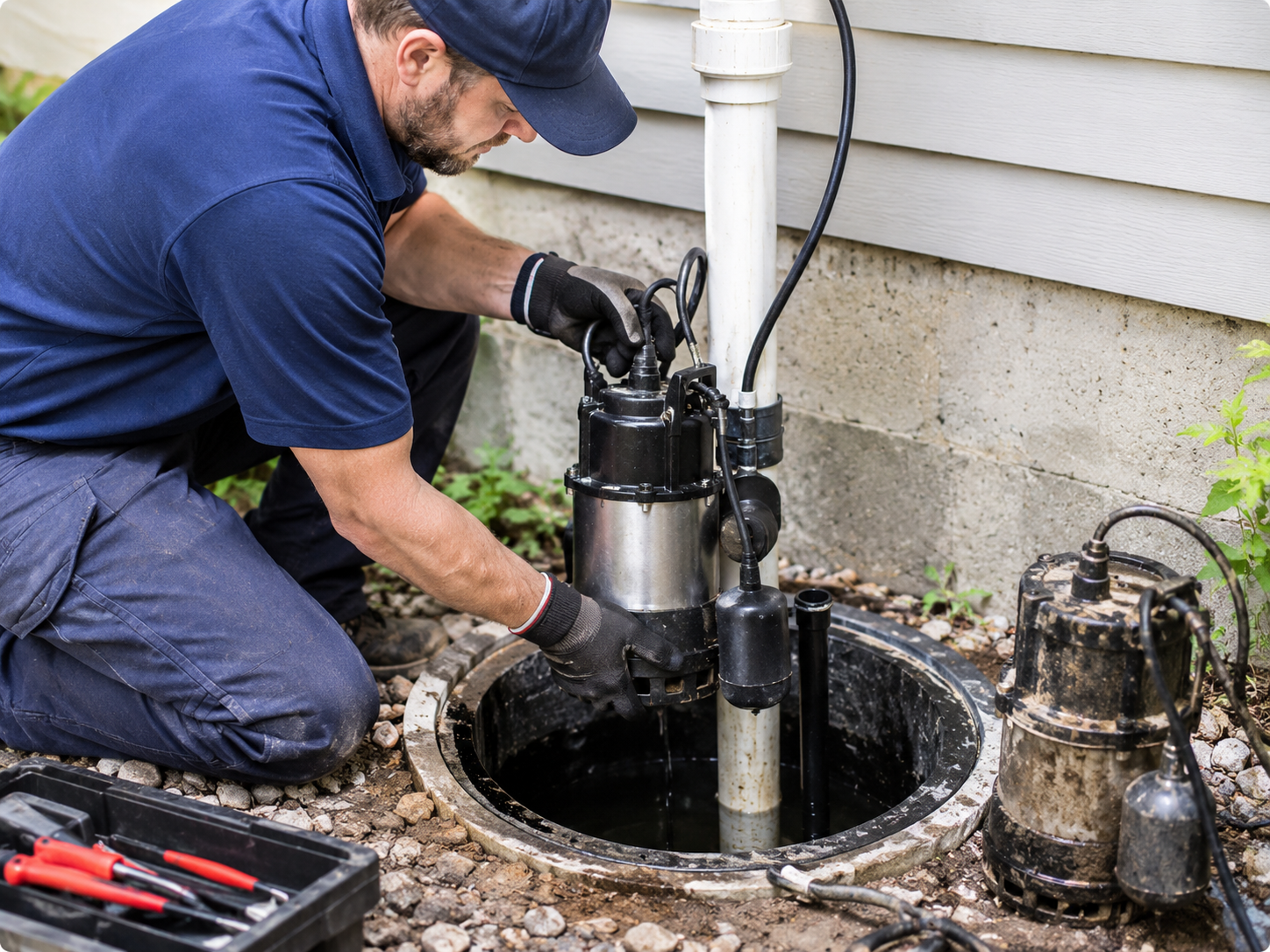
A healthy pump cycles on and off in a steady rhythm. Many systems run a few short cycles a day, but the right number depends on your design, tank size and household water use, so learn your own normal. Listen once, note how often it runs and how long each cycle lasts. A pump that suddenly runs constantly, cycles far more often or never seems to start is telling you something, whether that's a stuck float, a leak into the chamber or a failing check valve.
Repair or Replace? A Simple Rule
Small fixes, such as a float or a filter, are usually worth doing. A good rule of thumb is that when repairs keep adding up to more than half the cost of replacing the pump and controls, replacement tends to be the smarter move. Age matters too, as does the rest of the system. A pump that keeps failing because the tank is leaking or the drain field is saturated won't be fixed by a new motor.
Safety: Why You Shouldn't Do This Alone
A septic tank or pump chamber is a confined space, and the air can contain hydrogen sulfide, methane and low oxygen. Never climb into a tank or chamber, and don't lean over an open one. Turn off power before touching pump wiring, and use a pro for anything that involves opening the chamber, pulling the pump or working on electrical controls. Local health departments regulate septic work in many areas, so check what permits or licensed installers are required.
Keeping the Pump and the System Healthy
Inspect and pump the tank on schedule. EPA guidance recommends inspecting a typical household system about every three years and pumping it every three to five years, depending on tank size and household use.
Test the alarm. Many panels have a push-to-test button, and Washington's guidance says to check it regularly.
Treat the pump gently. A pump for septic tank use lasts longer when solids, grease and sudden surges stay out of the chamber.
Protect the effluent filter. Washington also recommends an effluent filter or pump screen so solids don't reach the pump.
Skip additives. Washington and EPA say septic additives aren't necessary and don't replace pumping.
Mind what you flush. Wipes, grease and chemicals shorten pump life. Our article on what really happens when you flush hair shows how small habits add up.
Spread out water use. Heavy laundry days can overload a pump system.
Keep records. Note pumping dates, pump age and alarm events.
Our general plumbing maintenance guide is a good complement for the rest of the house.
Quick Answers
How long does a pump for septic tank systems last? Many last for years, but lifespan depends on the model, how often it cycles and what reaches it. Keep service records and replace on the pro's advice.
Can I use a sump pump instead of an effluent pump? Not safely unless the pump is rated for effluent. Some pumps are sold as sump/effluent models, but a basic sump pump isn't built for septic effluent or solids. Check the rating and follow your system's design.
Why does my pump run constantly? Possible causes include a stuck float, a leak, a failing check valve or too much water use. Call a pro if it doesn't stop.
Do I need an alarm? Yes, for any pumped system. It's your warning before sewage backs up.
Who do I call? A licensed septic contractor or plumber experienced with onsite systems.
The Bottom Line
The right pump for septic tank work depends on what it moves and where it sits. Identify the pump type, treat the alarm as a real warning, keep the tank pumped and leave the chambers to licensed professionals.
About Mubashir Yaqoob
Mubashir Yaqoob researches and writes practical home repair guides for Home Repair Manual, focused on translating technical roofing, plumbing, and maintenance information into clear advice for homeowners.
View all posts by Mubashir Yaqoob