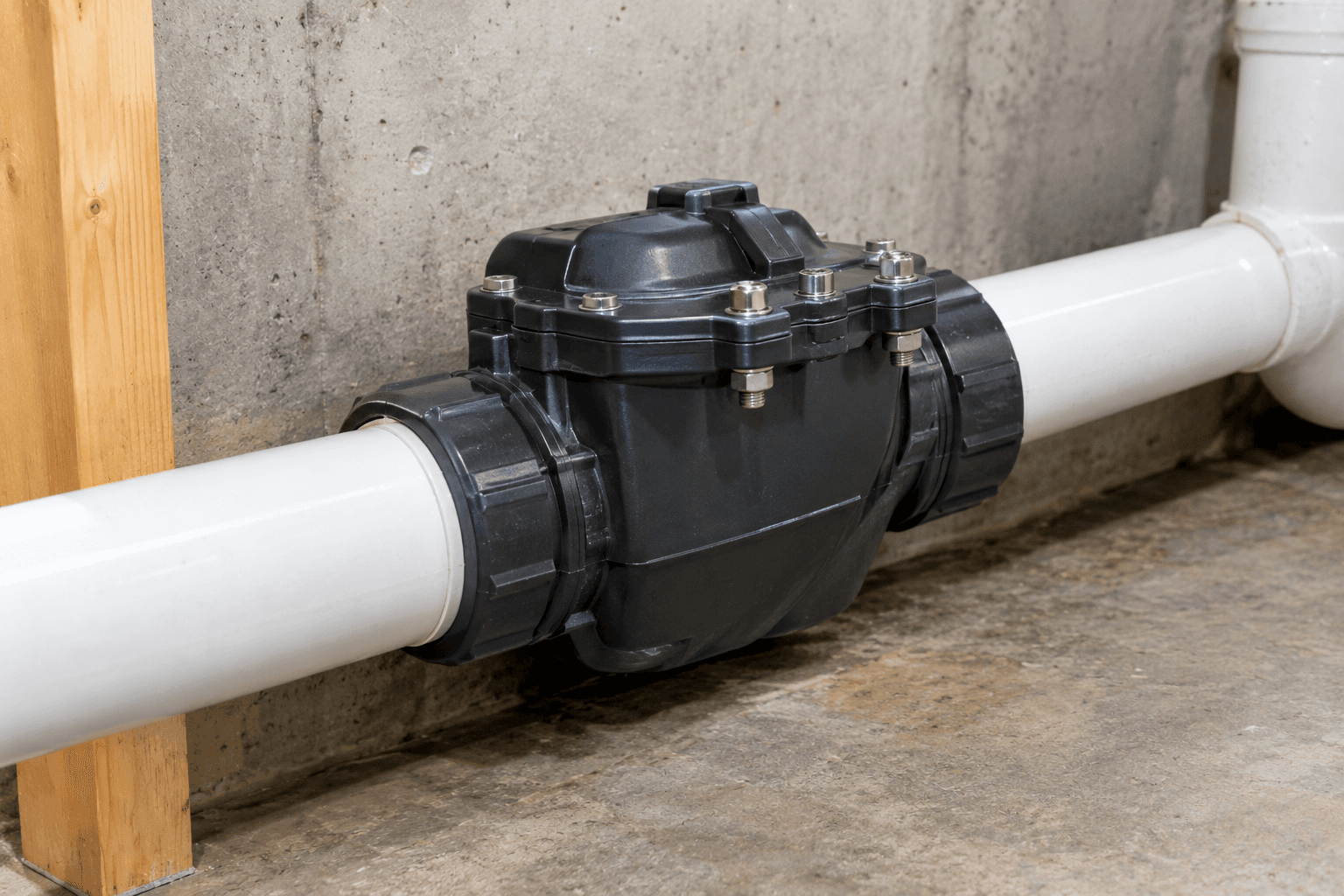
A backwater valve is the kind of plumbing part you never think about until the day you wish you had one. That day usually looks the same: heavy rain, a sewer main that can't keep up, and wastewater coming up through the lowest drain in the house.
So what is a backwater valve, really? Here's the plain-English version: how it works, who actually needs one, what it costs and the trade-offs most guides skip. We've also gathered what homeowners say about living with one.
General information only. Plumbing codes, permits and rules differ by city and country, so check with your local building department and a licensed plumber.
What Is a Backwater Valve? The Short Answer
A backwater valve is a one-way gate on your home's sewer line. It lets wastewater flow out to the city sewer, and if sewage starts flowing the other way, a flap closes and stops it from entering your house.
Think of a bouncer at a door that only opens outward. Everything leaving is welcome. Anything trying to come back in gets turned away.
Backups happen when heavy rain or a blockage overwhelms the sewer main. With nowhere else to go, the water finds the lowest openings it can reach, usually a basement toilet, shower or floor drain.
Plumbers and city websites use several names for it, including backflow valve and sewer backup valve. It isn't the same as the backflow preventer on your drinking water supply, which protects clean water, not sewage.
How a Backwater Valve Works
So what is a backwater valve actually doing down there in the dark? Not much, and that's the point.
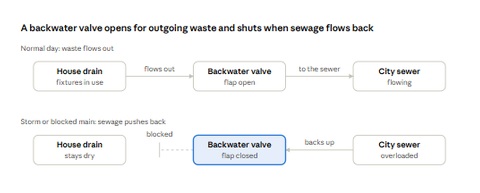
Picture a backup in plain terms. When the sewer main fills, pressure pushes back up the pipe that serves your house. If nothing stops it, that force looks for the easiest exit, and that is typically the lowest fixture in the house. With a valve installed, the flap seals the pipe and the pressure has nowhere to go.
Most valves follow one of two designs:
Normally open: A hinged flap rests open so waste flows freely, then swings shut when the flow reverses.
Normally closed: A gate stays shut and is pushed open by water leaving your house.
Each has a catch. A few stray fibers or a crust of grease can keep an open flap from seating fully. One homeowner who installed a normally closed unit reported that low-flow fixtures struggled to push waste past the gate.
Do You Need a Backwater Valve?
Not every home does. Your risk depends mostly on where your lowest drain sits compared with the street sewer. You're a stronger candidate if:
You have a toilet, shower, laundry sink or floor drain below street level.
You've had a sewage backup, or your neighbors have during storms.
Your area has older or combined sewers that overload in heavy rain.
Your property sits on low ground or near a river, creek or drainage channel.
If every drain in your house sits above the nearest manhole cover, your risk is much lower. A plumber can check this in minutes. It's also worth looking up your local code, since some cities require these valves in new construction.
You may already have one. Look for a removable lid on the basement floor or on the main drain where it exits the house, or ask a plumber to confirm.
Gurgling drains are an early warning. If a sink gurgles when you flush the toilet, a drain line may be partly blocked, so have it checked before the next storm.
What a Backwater Valve Will Not Do
Before you pay for one, understand what it can and can't protect you from.
It doesn't fix the cause. The overloaded or blocked main is still there.
It won't clear a clog in your own pipes. If a toilet overflows from a local clog, follow these emergency steps; the valve only blocks flow from the street.
It can't stop groundwater. Water seeping through basement walls or floors needs a different solution.
It traps your own wastewater when closed. If you keep running showers or laundry during a backup, water can pool inside the house.
It can fail quietly. Debris may keep the flap from sealing, and you won't know until you need it.
Types of Backwater Valves and Where They Are Installed
Type | Typical location | What it protects | Trade-off |
Normally open, full-line | Inline on the main drain, either in an access pit or beneath the floor slab | Every drain in the house | Flap can jam on debris |
Normally closed | Main sewer line | Every drain in the house | Low flows may struggle to open it |
Fixture-specific | One floor drain or fixture | Only that drain | Cheaper, but other drains stay exposed |
Manual gate | Main line, with an access lid | Whole house, when closed | Someone has to close it in time |
Cost and Installation: Permits, Rebates and Hiring a Pro
Costs depend on location, ground conditions, pipe depth and how much digging is needed. Treat the figures below as budgeting ballparks, not quotes. Commonly cited retrofit estimates run about $1,000 to $5,000, while installing one in a new build usually costs far less.
Scenario | Typical range (USD) |
Fixture-specific valve on one drain | 200–700 |
Valve on an accessible existing line | 500–1,500 |
Valve under a basement slab | 2,000–5,000 |
Full-line valve with exterior excavation | 3,000–6,000+ |
The hardware is rarely the expensive part. Most of the cost is labor: breaking concrete, digging, reconnecting pipe and repairing the floor.
Many places require a permit and inspection, and skipping them can complicate an insurance claim later. Some municipalities also offer rebates for retrofits, so ask before you hire anyone. Choose a licensed plumber, get at least two written quotes, and ask which valve type they'd use, where the access cover will go and what the warranty covers.
Maintenance: Inspection, Cleaning and Testing
Inspect it a couple of times a year, and after major storms, through the access cover.
Clean away grease, wipes, paper or grit that could stop the flap from closing fully.
Test the flap by lifting it gently by hand, if the manufacturer's instructions allow, and check that it drops back freely.
Book a plumber for a yearly check if you can't reach the valve comfortably, or fold it into your general plumbing maintenance routine.
Tell any plumber who snakes your drain about the valve, because a cable can dislodge the flap. Also check the lid's O-ring and any floats for wear, and keep the model number handy for replacement parts.
What Homeowners Report
These are common themes from homeowner discussions, so treat them as anecdotes rather than data. People often describe real relief after storms that used to flood the basement. Some with normally closed units notice slower drainage from low-flow fixtures, while others find a jammed flap only after checking it. The most repeated regret is forgetting the valve exists, which leaves a false sense of security.
Backwater Valve vs Sump Pump vs Sewage Ejector Pump
People often confuse these three devices, yet each handles a separate job.
Device | What it does | Best for | Doesn't do |
Backwater valve | Blocks sewage from flowing back in | Street sewer backups | Move water out of your home |
Sump pump | Removes groundwater near the foundation | Wet or flood-prone basements | Stop sewage backups |
Sewage ejector pump | Lifts basement wastewater up to the sewer line | Basement bathrooms below the sewer | Block reverse flow from the main |
Some homes need more than one. A basement bathroom, for example, may rely on an ejector pump and still benefit from a valve.
FAQs
1. What is a backwater valve in simple terms?
A one-way gate on your sewer line. Used water leaves normally; when sewage pushes the other way, a hinged flap shuts and blocks the return path.
2. Can I install one myself?
It's not recommended. The work involves cutting into the main sewer line, and many areas require a permit and inspection.
3. How long does one last?
With regular checks, many last for years. Parts like the flap may need replacing sooner.
4. Does home insurance cover sewer backup?
Often not by default. It's commonly a paid add-on, so check your policy and ask whether a valve affects your premium.
5. Will it cause slow drains or smells?
A properly installed, well-maintained valve shouldn't. Slow drainage is more likely with a normally closed unit on a low-flow system.
The Takeaway
So, what is a backwater valve worth to you? If you have plumbing below street level or a history of backups, it's one of the more practical protections you can add. Pair it with a licensed plumber, the right permits and a quick look at your insurance, and it can spare you a very bad day.
Further reading: backwater valve guidance from the City of Mountain Home, Arkansas.
About Mubashir Yaqoob
Mubashir Yaqoob researches and writes practical home repair guides for Home Repair Manual, focused on translating technical roofing, plumbing, and maintenance information into clear advice for homeowners.
View all posts by Mubashir Yaqoob