
You step into the bathroom barefoot on a muggy July morning and land in a puddle. The floor around the toilet is wet, the tank is covered in beads of water, and your first thought is a leak. Probably not. In most homes, toilet sweating is plain condensation: warm, damp air touching a very cold tank.
That doesn't make it harmless. Drip after drip can soak flooring, swell baseboards and feed mold. This guide shows you how to tell sweating from a real leak in about ten minutes, how to work out which cause you're dealing with, and which fixes are worth your money.
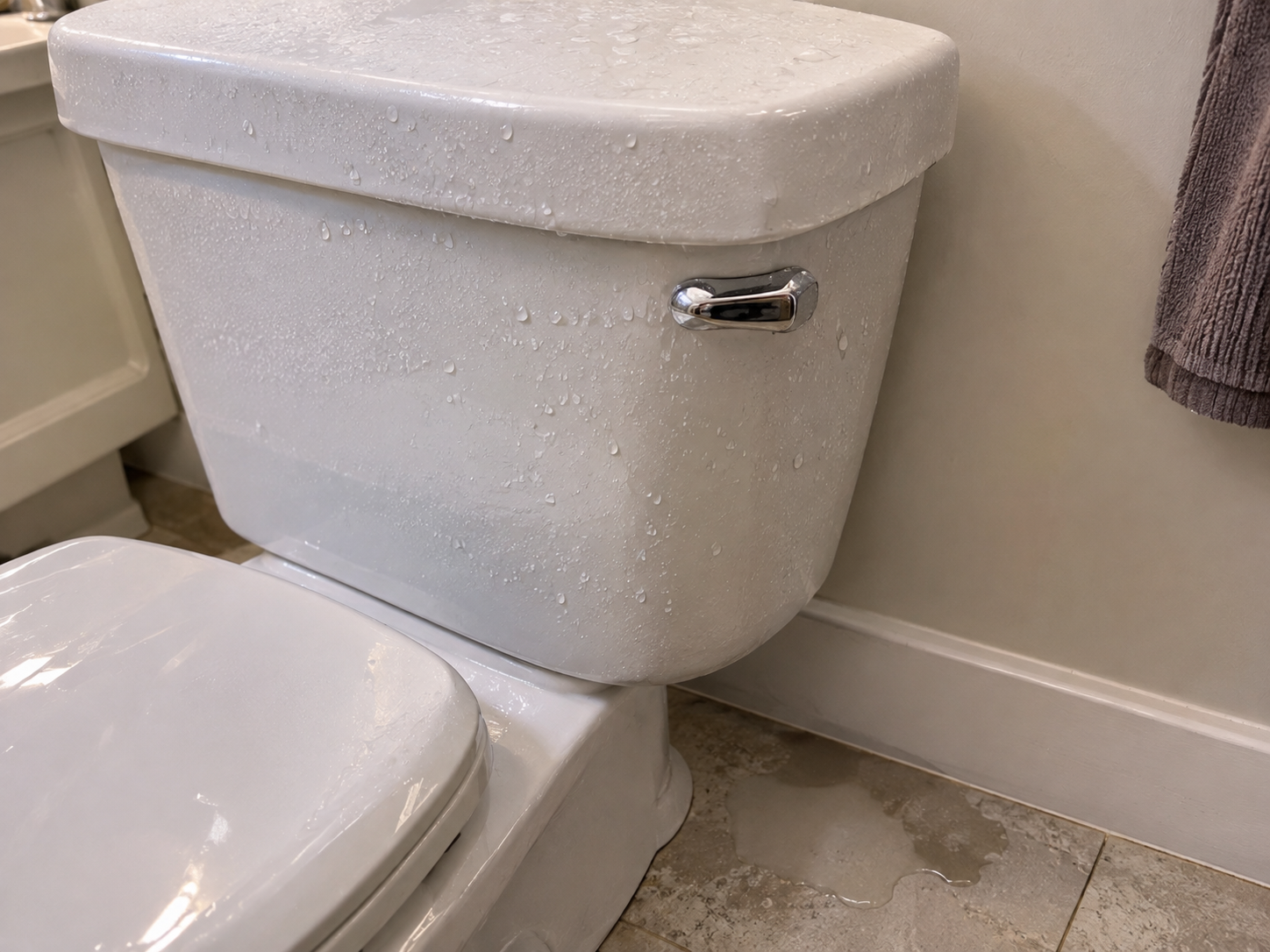
Is It Toilet Sweating or a Leak? A 10-Minute Test
Work out which problem you actually have first, since condensation and a leak get fixed in very different ways.
Dry the tank and bowl completely with a towel, then wait 10 to 15 minutes without flushing. If fine beads return evenly across the tank, it's condensation. If water comes back in one spot, such as a bolt, the supply line or the base, you have a leak.
Two more checks help. Tuck a dry paper towel under the supply line connection and around the tank bolts to see which one gets wet. Then put about ten drops of food coloring in the tank and don't flush for 15 minutes. Color in the bowl means the flapper is leaking, which is a separate problem and one that can make toilet sweating worse.
Clue | Toilet sweating | Leak |
Where the water shows | Evenly across the tank and bowl | One spot: a bolt, the supply line or the floor seal |
Weather | Worse on humid days, better when dry | The same in any weather |
After you dry it | Fine beads return slowly | A drip or steady seep returns |
Water and smell | Clear, no smell | May look dingy or smell like sewage at the base |
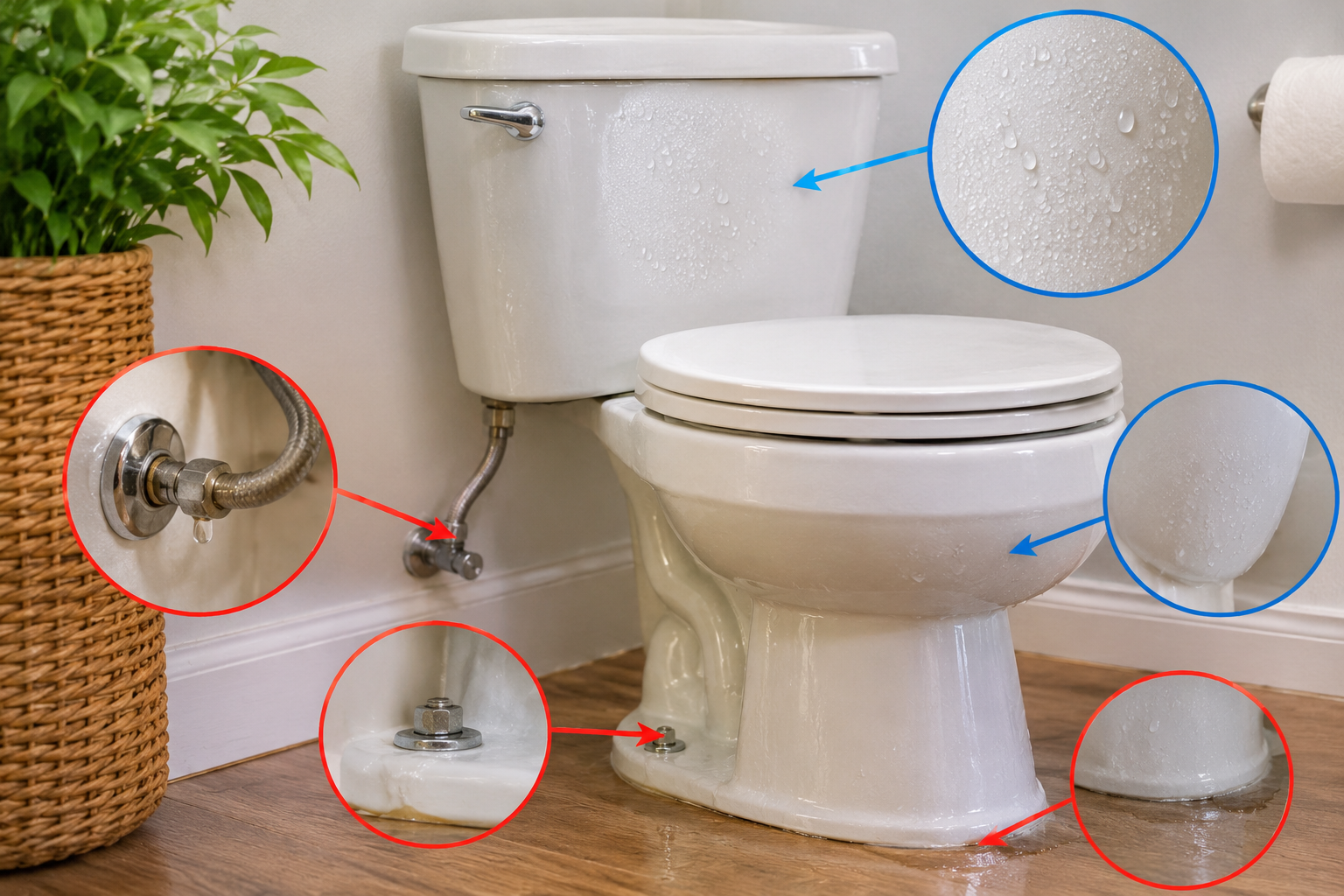
Why Is My Toilet Sweating? Four Common Causes
Tank water usually runs about 50 to 60°F. When humid air touches a surface that cold, it can't hold on to its moisture, and the extra turns into droplets. Four things tip the balance.
Humid weather. The classic summer case. When the air is loaded with moisture, even a modest temperature gap is enough.
Showers with weak ventilation. A long hot shower can create July-level humidity in any month. No fan, a clogged fan, or one that dumps moisture into the attic leaves it hanging around. The EPA suggests keeping indoor humidity below 60 percent, ideally between 30 and 50 percent. A basic humidity gauge is often under $30 and takes the guesswork out.
A toilet that keeps refilling. This one gets missed. If the fill valve runs or the flapper leaks, fresh cold water keeps entering the tank and it never warms up. This Old House plumbing expert Richard Trethewey says it's the first thing he checks. If yours hisses or refills on its own, read why a toilet makes noise when it isn't in use, and use our commode parts guide to find the fill valve and flapper.
Very cold supply water. Well water, a basement bathroom or a cold winter can all send chillier water into the tank. That's why toilet sweating can show up in January too.
Where it sweats tells you something. If only the tank drips, think humidity or cold refill water. If the cold supply pipe under the tank is the wet part, that pipe is sweating too, and a strip of foam pipe insulation fixes it cheaply. Sweat on the bowl itself usually points to cold water sitting in the bowl and warm room air, so the same fixes apply.
Read the gauge before you buy anything. Take one reading just after a shower and another on a sticky afternoon, then compare the two. If the number sits above 60 percent, humidity is your problem, and the fan, dehumidifier or AC will help most. If it's in the 40s and the tank still sweats, suspect cold refill water or a running fill valve instead.
How to Stop Toilet Sweating: Fixes From Cheapest to Most Involved
Work down this list in order. Each step is cheaper and easier than the next, and plenty of homes never get past the second row.
Fix | Cost | Effort | How well it works | Best when |
Run the exhaust fan | Free | Easy | Good if shower humidity is the cause | Sweating after showers |
Fix a running fill valve or flapper | Low | Easy to medium | Essential if the tank keeps refilling | Toilet hisses or refills by itself |
Dehumidifier or air conditioning | Medium | Easy | Strong in summer and in basements | Whole-room humidity |
Tank insulation liner | Low | Medium | Mixed results | Mild, seasonal sweating |
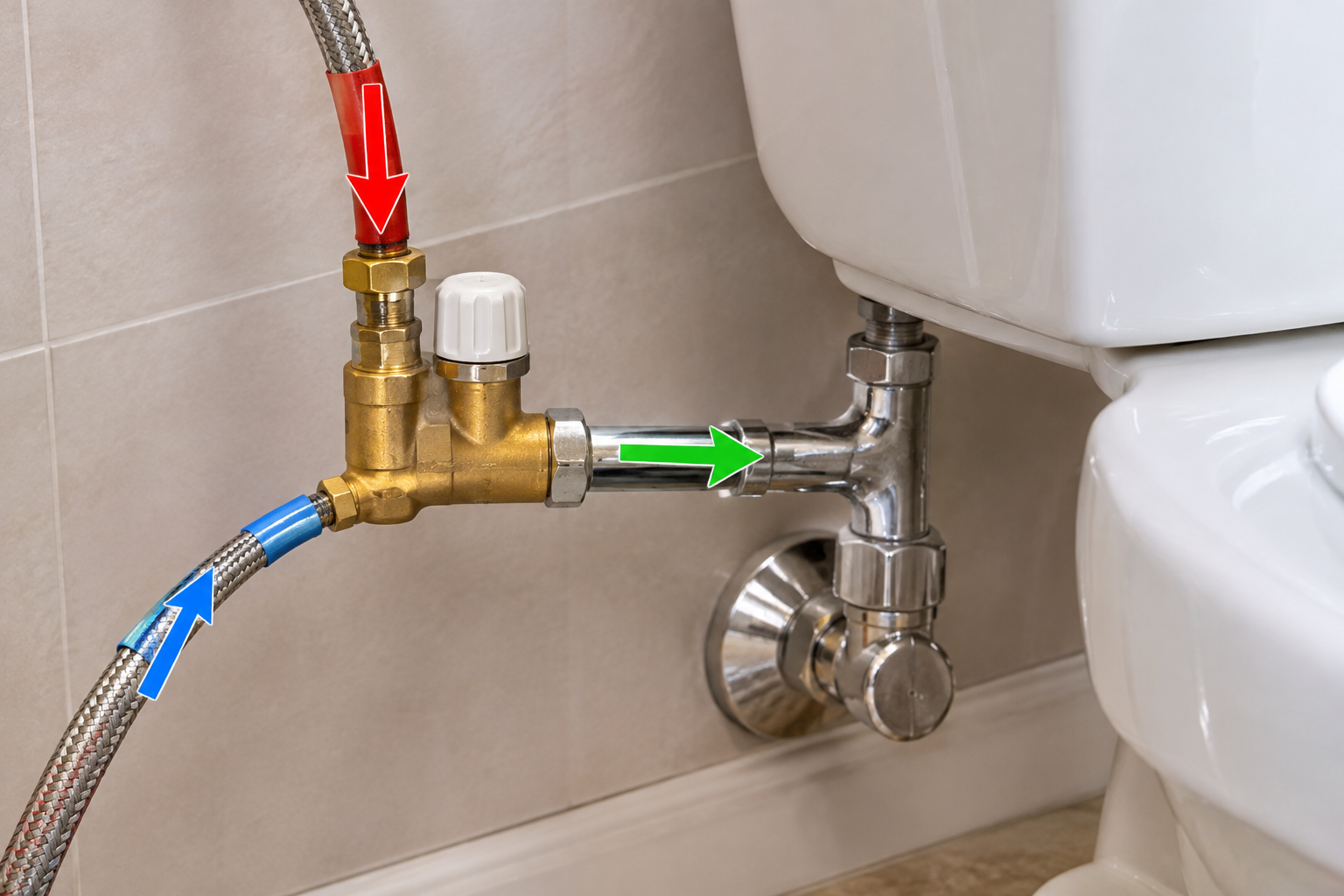
Anti-sweat (mixing) valve | Medium | Hard | Most reliable for stubborn cases | Cold supply water or constant summer sweating |
Fan first. Turn it on before you shower and leave it running 20 to 30 minutes afterward. Make sure it vents outside and not into the attic, as the EPA advises. If it barely pulls a tissue against the grille, clean or replace it. If the house still feels clammy, our guide on how to know if your AC is broken lists quick checks.
A dehumidifier is the easiest summer fix. Run it with the bathroom door closed during humid spells, empty the bucket or use a drain hose, and clean it the way the manufacturer says, because the EPA says to clean it regularly.
Liners are a gamble. Foam liners glue inside the tank to keep the outer surface warmer. This Old House says most don't work well, while other sources report good results in mild cases. Treat one as a cheap experiment, not a cure.
The anti-sweat valve is the heavy hitter. It blends a little hot water into the cold line feeding the toilet so the tank stays near room temperature. Pick an adjustable model so you can shut off the hot side in winter, and mount it vertically, because its internal check valves only work in that position. It does use some extra hot water, and it means cutting into supply pipes, so most people hire a plumber. Our guide on how to hire a plumber covers what to check first.
Skip the towel trick. A towel or drip tray under the tank protects the floor, but it doesn't stop the sweating.
What Toilet Sweating Can Damage
A few drops don't matter. Constant drips do. In a humid summer, a sweating tank can drop a surprising amount of water on the floor, and This Old House notes it can seep into the subfloor and joists, stain baseboards and discolor walls. Check around the base for:
Spongy or discolored flooring
Swollen or stained baseboard
Peeling paint or soft drywall behind the tank
A musty smell
If the floor near the base looks fine but you're unsure, press the handle of a screwdriver gently into the flooring beside the toilet. Anything that feels soft is a sign to stop guessing and get it checked.
The EPA advises drying wet materials within 24 to 48 hours to stop mold from starting. If you find soft spots or stains, our guide to hidden water damage after a plumbing leak explains what to check next, and the types of drywall damage guide helps you read a stained wall. For surface mildew, follow the routine in our bathroom cleaning guide.
A Simple Plan for This Week
Day one: Run the dry test and the food coloring test.
Day two: Put a humidity gauge in the bathroom and note the reading right after a shower.
Days three and four: Fix anything that runs or refills, and clean the fan.
End of the week: If humidity is still above 50 to 60 percent, add a dehumidifier. If the tank sweats even when humidity is normal, look at the anti-sweat valve.
When to Call a Plumber
Call one if the dry test shows water coming back in a single spot, if the supply line or base is wet, if the floor feels soft, or if a fill valve keeps running after you've adjusted it. An anti-sweat valve is also best left to a plumber unless you're comfortable cutting and joining supply pipes. Never plug a fan or other electrical device near a tub or shower to fight humidity.
FAQ
Is toilet sweating normal? It's common in humid weather, and the toilet itself still works fine. It's worth fixing because the water it drops can damage floors.
Does toilet sweating mean I have a leak? Usually not. Use the 10-minute test above to be sure.
Why is my toilet sweating in winter? Cold supply water meets warm, humid indoor air, especially after hot showers or in basement bathrooms.
Can toilet sweating cause mold? Yes, if moisture sits on the floor, baseboard or wall for more than a day or two.
Will a tank cover or towel stop it? It catches drips but doesn't fix the cause. Dry or wash it regularly so it doesn't stay damp.
Do tank liners work? Sometimes. Results are mixed, so try one only for mild cases.
Final Thoughts
Toilet sweating is rarely an emergency, but it's rarely worth ignoring either. Confirm it's condensation, find the cause, and start with the cheap fixes. Most of the time, a working fan and a toilet that isn't running are enough.
About Mubashir Yaqoob
Mubashir Yaqoob researches and writes practical home repair guides for Home Repair Manual, focused on translating technical roofing, plumbing, and maintenance information into clear advice for homeowners.
View all posts by Mubashir Yaqoob