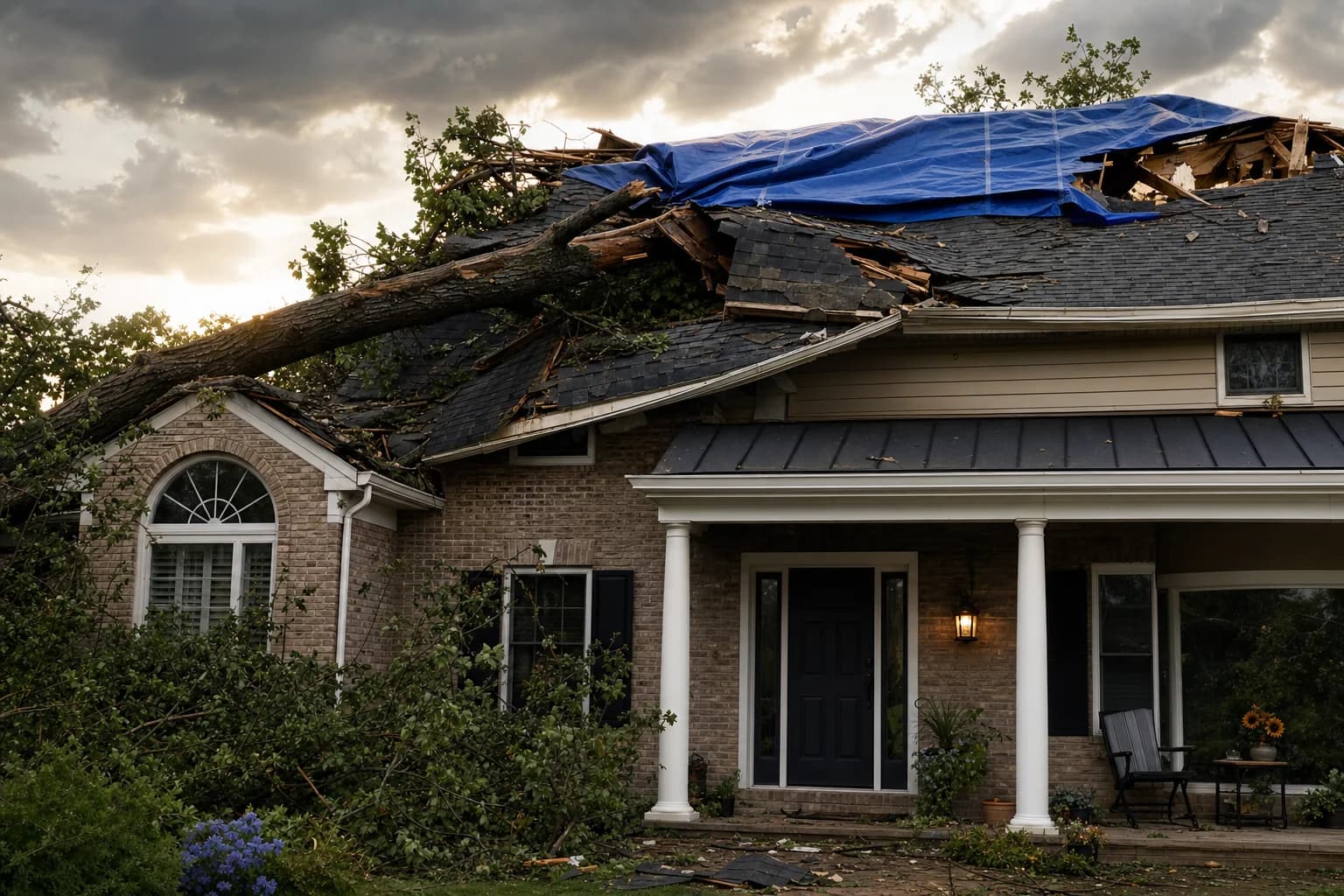
After a storm rolls through, the instinct is to look for missing shingles and call it good if you don't see any on the ground. That's exactly the assumption that leads people to underestimate what they're dealing with, since roof wind damage repair often has less to do with what blew off and more to do with what's still up there, quietly compromised.
Storm damaged roof repair covers more than wind alone, too — hail, falling debris, and driving rain all leave their own distinct marks. Treating every storm the same way is how real damage gets missed during a quick ground-level glance.
What Roof Wind Damage Repair Actually Involves
Wind doesn't just remove shingles outright — it breaks the adhesive seal holding them flat, even when the shingle stays in place. A shingle that looks fine from the street can be lifted, creased, or unsealed without ever coming loose.
Creased shingles in particular are a real, specific risk: the crease itself weakens the material permanently, meaning it will eventually crack and leak even though nothing appears obviously wrong today. This is the single most common thing homeowners miss when they check their own roof after a storm and conclude everything's fine because nothing's visibly missing.
Checking for Damage Without Getting Hurt
Before anything else, walk the property at ground level and check the area — this isn't a formality, it's a genuine first step that matters before you get anywhere near a ladder:
Downed power lines — treat any as live until confirmed otherwise
Broken branches or hanging limbs near the roofline
Loose debris on the ground that could indicate what's still on the roof
From the ground, binoculars can reveal missing or lifted shingles, damaged flashing, and debris on the roof surface without you needing to climb up at all. If you have safe attic access, a look from inside can reveal daylight, staining, or nail movement that confirms uplift even when the exterior looks intact.
Storm Damaged Roof Repair: Reading the Specific Damage Type
1. Wind-Lifted or Creased Shingles
Covered above — the defining wind damage sign, and the one most likely to be missed on a quick visual check.
2. Hail Bruising
Hail damage often isn't visible as obvious cracking. Instead, it breaks down the protective granule layer on a shingle, which shortens the roof's remaining lifespan even when the surface looks intact — a slow-motion problem rather than an immediate one.
3. Debris Punctures
A fallen branch or blown debris can create an actual hole rather than just lifting material, which is a different repair scope entirely from wind-lifted shingles — worth sizing up separately rather than assuming the same fix applies.
4. Flashing and Seal Failures
Wind and driving rain together are especially hard on flashing around chimneys, vents, and skylights, since these joints are already the weakest points in the roofing system even without a storm involved.
What Your Insurance Company Actually Needs to See
Photograph everything before any cleanup or temporary repair begins — wide shots of the whole roof and close-ups of specific damage both matter for an insurance claim. Thin, quick documentation is one of the more common reasons a legitimate claim gets underpaid or denied on the first pass.
It's worth knowing that initial assessments aren't always final, either: cases exist where an adjuster first called damage "cosmetic" and denied a claim, only for more thorough documentation and a second inspection to get it properly approved. A denial on the first pass isn't necessarily the final word.
Temporary Measures vs. What Actually Needs Doing
If you can't get to a full repair immediately, the same tarping approach covered here applies directly to storm damage — it buys time without making the eventual repair harder, as long as it's treated as temporary and not the finished job.
For anything involving missing or visibly damaged shingles, addressing it before the next storm arrives matters more than most people realize, since one round of wind damage often weakens the areas most likely to fail in the next one.
Repair or Replace After a Storm?
A handful of lifted or missing shingles in an otherwise sound roof is a straightforward repair. Widespread creasing, granule loss across large sections, or damage affecting the roof's ability to reliably shed water points toward replacement instead.
Repairing isolated symptoms on a roof that's fundamentally compromised usually just delays a bigger cost rather than avoiding it — this is often where the real difference between a simple roof wind damage repair and a full storm damaged roof repair project becomes clear. How long either option actually takes is worth knowing before you commit to a timeline, especially since storm season creates the same contractor-scheduling backlog covered there.
FAQ
How do I know if my roof has wind damage if no shingles are missing?
Check for creased or lifted shingles, which can be damaged without falling off — a crease alone means the shingle's seal and material integrity are already compromised.
Is storm damaged roof repair usually covered by insurance?
Often yes, particularly for wind and hail, though thorough documentation significantly affects whether an initial claim gets approved at the amount it should.
Can I do roof wind damage repair myself?
Minor, accessible shingle replacement is realistic for a comfortable DIYer; anything involving flashing, structural punctures, or roof-wide creasing is worth a professional assessment first.
How soon after a storm should I inspect my roof?
As soon as it's safe to do so — waiting allows minor damage like a lifted seal to worsen with the next weather event before it's addressed.
What's the biggest mistake people make assessing storm damage?
Assuming no damage exists because no shingles are visibly missing, when creasing, seal failure, and hail granule loss are all real damage that doesn't look dramatic from the ground.
About Mubashir Yaqoob
Mubashir Yaqoob researches and writes practical home repair guides for Home Repair Manual, focused on translating technical roofing, plumbing, and maintenance information into clear advice for homeowners.
View all posts by Mubashir Yaqoob