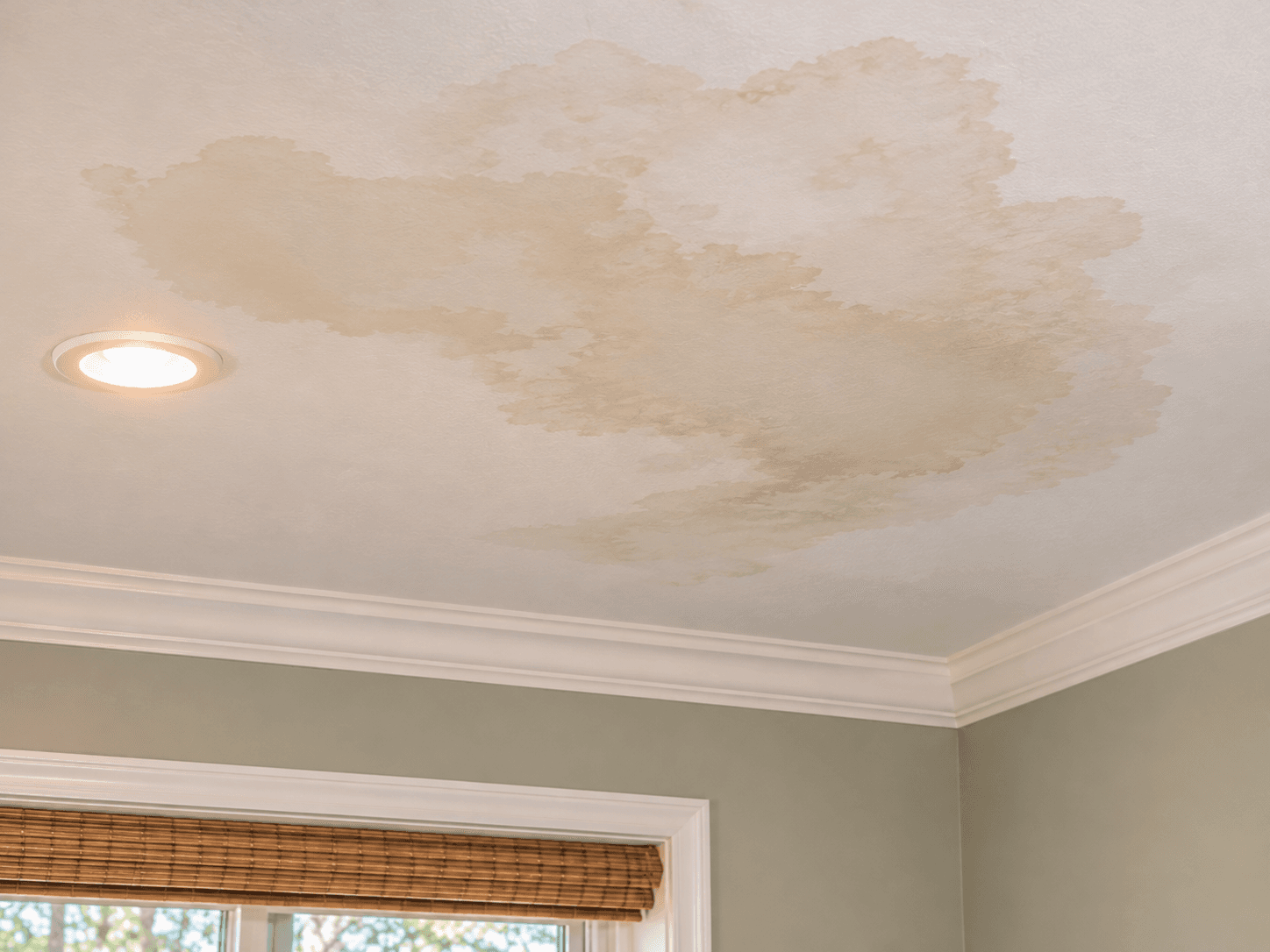
A brown ring appears overhead the morning after a storm, and the temptation is to reach for a can of paint. Resist it. The stain is only the last step of a journey that began somewhere above you, and paint does nothing about the journey.
This guide to a water stain on a ceiling after heavy rain explains how to read the clues, what to do in the first hour, how to trace the leak with a simple hose test and an attic check, and how to repair the ceiling so the stain stays gone.
Safety note: water and electricity are a dangerous mix, and ladders and roofs are dangerous on their own. If water is near a light fixture or wiring, or the ceiling is sagging, treat it as an emergency and call a professional.
Water Stain on Ceiling After Heavy Rain: Read the Clues Before You Climb Up
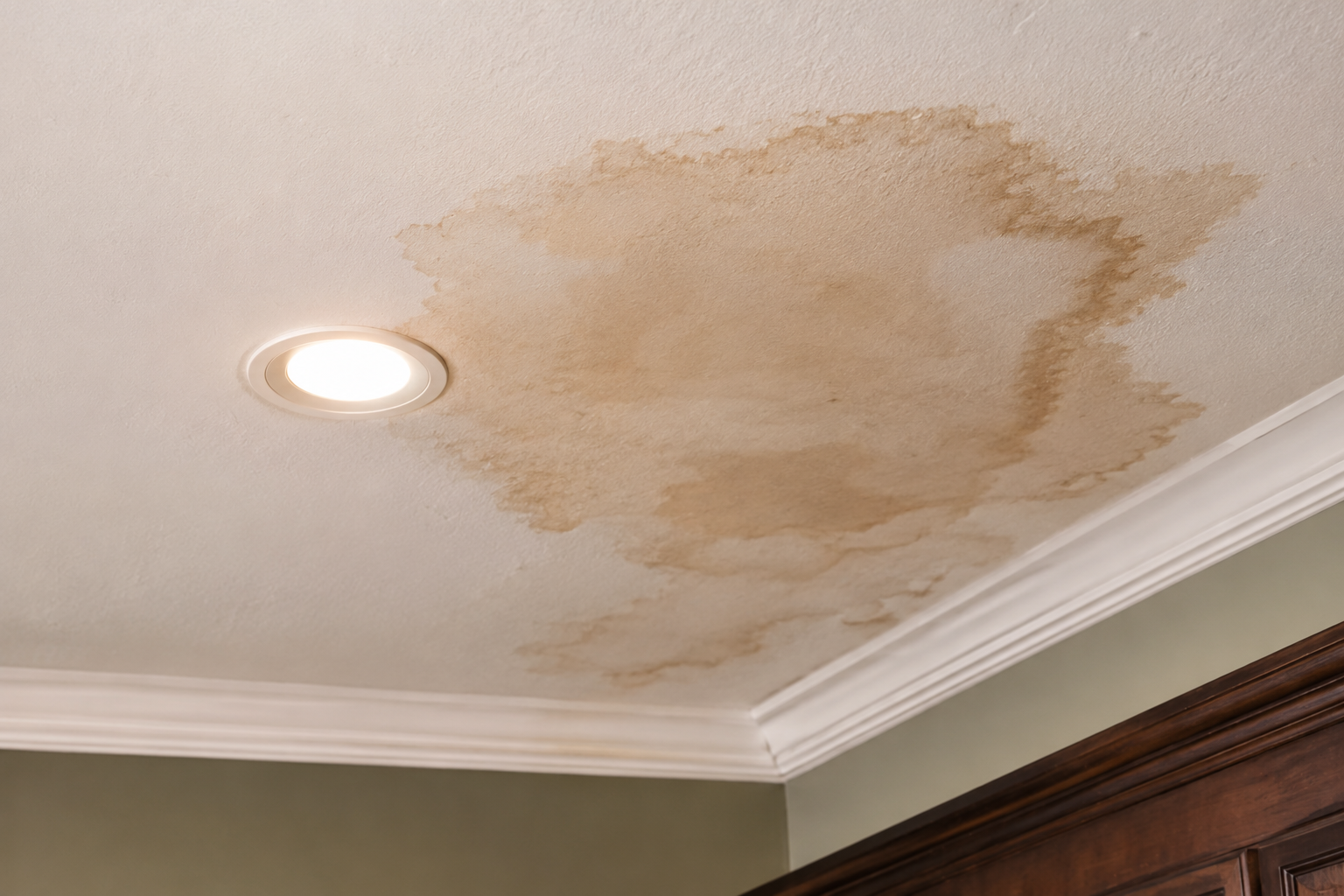
Spend two minutes studying the stain. It already holds clues:
What you see | What it often means |
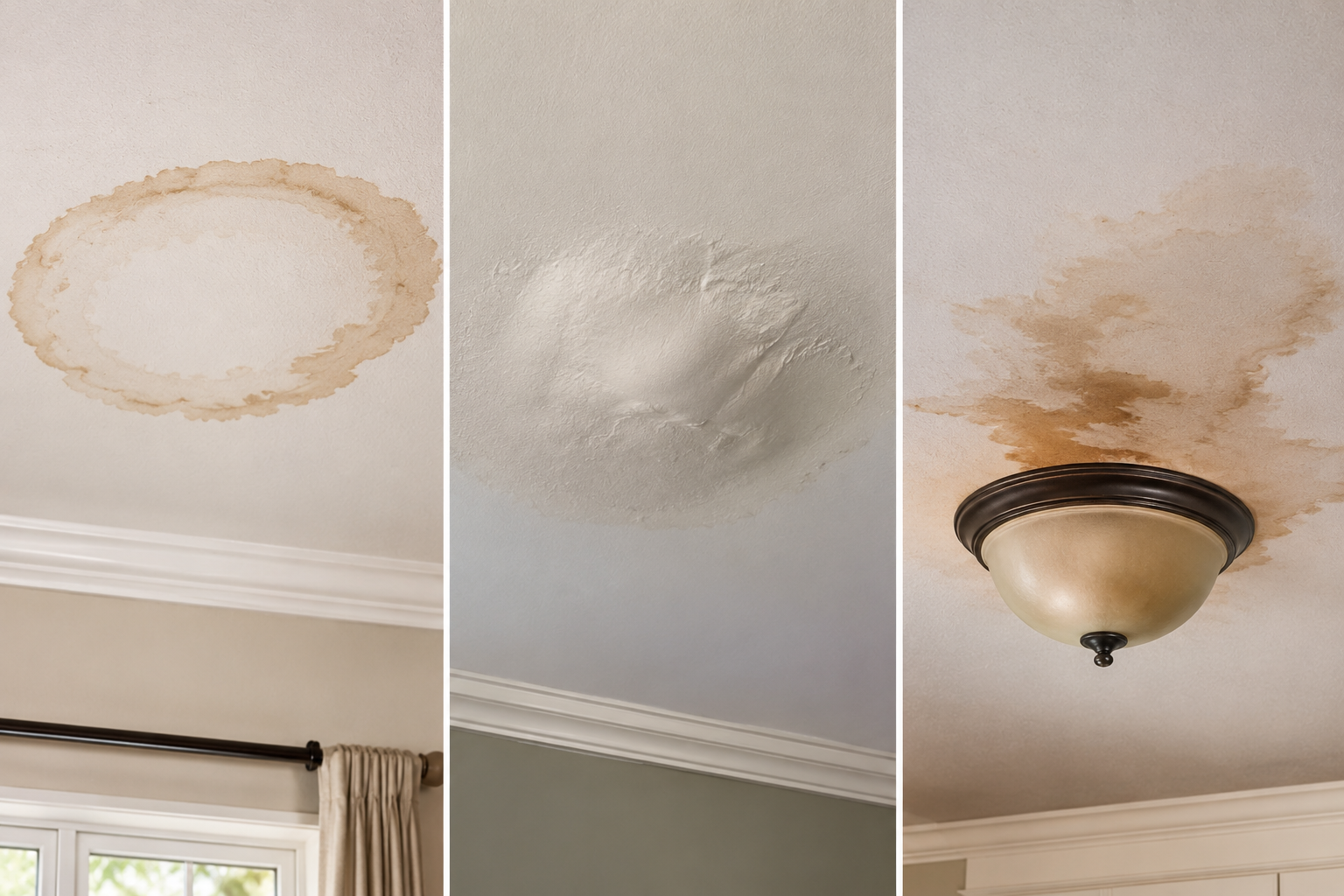
Yellow-brown ring with a darker edge | Water has arrived, dried and arrived again, so the leak is repeating |
Stain that's damp or dripping | The leak is active right now |
Bulge or sag | Water is pooled behind the drywall |
Stain near an exterior wall edge | Roof edge, gutter or flashing |
Stain in the middle of a top-floor room | Roof deck, vent boot or attic issue |
Stain around a light fixture or vent | Water is following wiring or duct openings |
Stain below a bathroom or kitchen | Plumbing, not rain |
Timing matters too. A stain that appears within minutes usually means an opening close to it, such as a skylight, window or flashing. One that appears hours later, or peaks the next morning, often means water traveled along framing or soaked insulation first. Trace a pencil line around the edge and check it after the next rain. If it grows, rain is the trigger.
Is It Still Leaking? A 60-Second Check
Before you plan repairs, find out whether the leak is active or old. Press the back of your hand against the stain. Cool and damp means water is still arriving. Dry, hard-edged and papery means the leak may be old or dormant. A moisture meter gives a clearer answer, and so does the pencil line you drew around the edge. A water stain on ceiling after heavy rain that grows after each storm but dries between them points to rain as the trigger, while one that never dries points to plumbing or trapped water.
The First Hour: Contain, Protect, Record
Cut the power if water is near a fixture. Switch off the breaker for that room before you touch anything.
Catch the drips. Use a bucket and towels, and move furniture out of the way.
Relieve a bulge carefully. If the ceiling is ballooning, poke a small hole at the lowest point over a bucket, wearing eye protection. Do it only after the power is off.
Take photos. Capture the stain, the room and any dripping with the date.
Start drying. The EPA says mold can start growing within 24 to 48 hours on wet surfaces, so open windows if the weather allows and run fans or a dehumidifier.
For the roof side of this emergency, our guide to fixing a leaking roof from the inside covers the first 30 minutes in detail.
Why It Only Leaks in Heavy Rain
Light rain runs off. Heavy rain overwhelms the weak points. Gutters overflow behind fascia, valleys carry more water than their flashing can handle, and wind drives rain sideways under laps and around openings.
Heavy-rain culprit | How it shows up |
Clogged gutter or downspout | Stain near the exterior wall |
Worn flashing around chimneys, vents or walls | Stain near the penetration |
Roof valley | Stain along a line below the valley |
Cracked vent boot | Spot stain in a top-floor room |
Missing or lifted shingles | Stain after wind and rain together |
Window or wall gap | Stain beside a window, which our guide on leaking windows during heavy rain explains |
Run a Controlled Hose Test
If the leak vanishes between storms, make your own rain. You need a helper inside with a flashlight.
Start at the lowest part of the roof, and soak one small zone for about ten minutes.
Move up the slope one zone at a time, and pause between each.
Have your helper call out the moment water appears, and note which zone you were soaking.
Don't use a pressure washer or spray upward under shingles.
Stay safe on ladders, and skip this test if the roof is slick, steep or near power lines.

Check the Attic Like a Detective
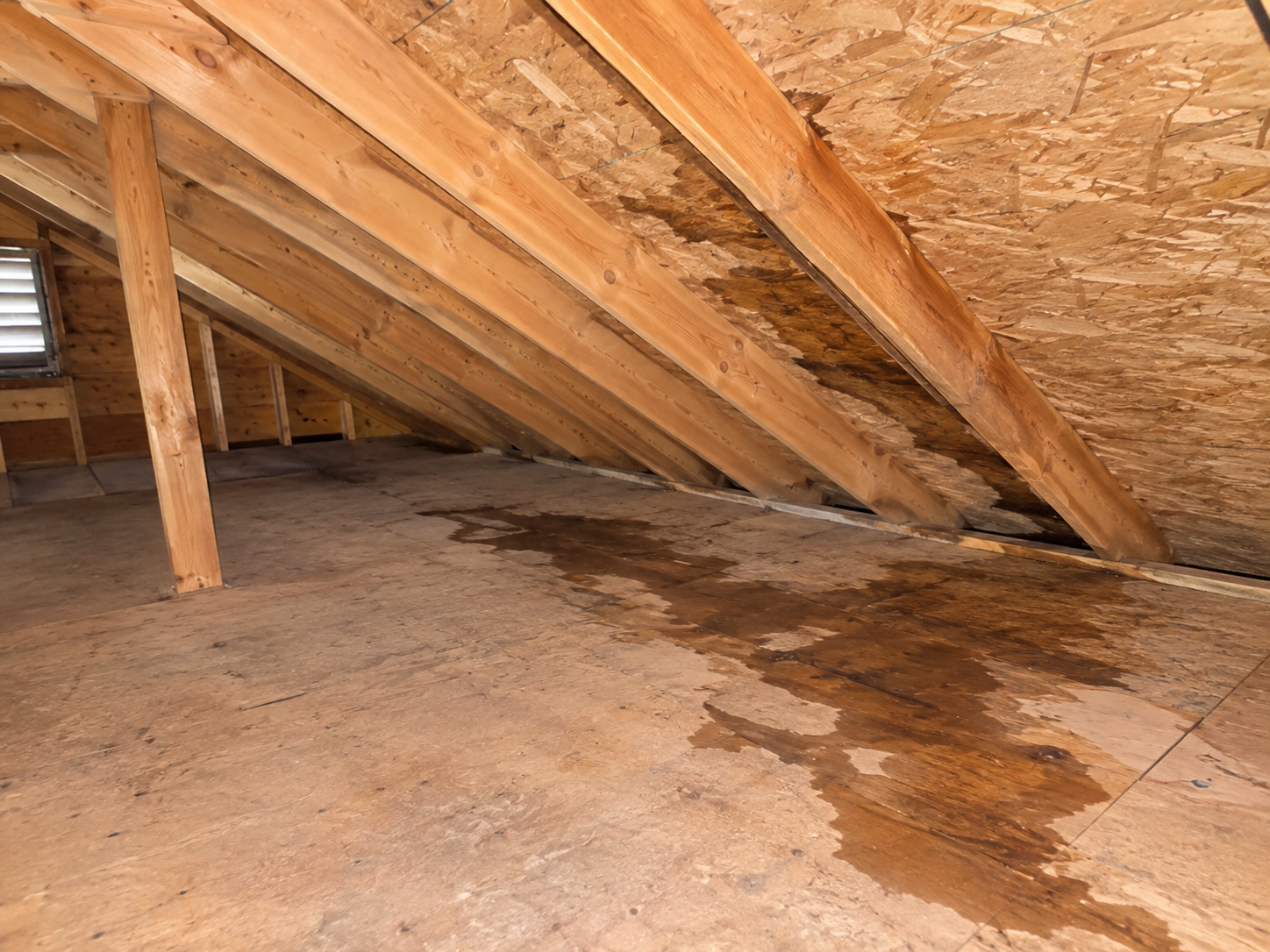
Go up with a flashlight during or soon after rain, stepping only on joists. Look for:
Dark streaks on rafters or underside of the roof deck
Damp, matted or discolored insulation
Rusty nail tips or daylight at penetrations
Wet spots near vents, chimneys and valleys
If framing feels wet, a moisture meter helps. One contractor source puts the target for wood framing at under about 16 percent before the ceiling is closed up. After a big storm, our guide to wind and storm roof damage shows what to look for outside.
Rule Out the Look-Alikes
Not every ceiling stain comes from rain. Check these first if the stain also shows up in dry weather:
Plumbing: stains that grow without rain, or sit under a bathroom or kitchen. Our checklist for hidden water damage after a plumbing leak helps you tell the difference.
Condensation: damp spots in cold weather, often with poor attic ventilation.
HVAC: a drip pan or duct problem near a vent.
Dry, Seal and Repaint
Once the source is fixed, repair the ceiling in this order:
Dry completely. Fans and a dehumidifier help, and a moisture meter confirms it.
Remove damage. Cut out sagging, soft or moldy drywall.
Patch and sand. Fill and smooth the area.
Prime with a stain blocker. A shellac-based primer is the strongest choice for dark or recurring stains, and ordinary ceiling paint won't hide them.
Paint. Match the sheen, and texture if your ceiling has it.
Skipping the primer is the classic mistake, because brown bleeds through fresh paint.

What a Water Stain on Ceiling After Heavy Rain Costs to Fix
Job | Typical range |
Ceiling repair | $419 to $1,359, average about $884 |
Roof repair | $379 to $1,758, average about $1,060 |
Roof leak repair | $360 to $1,550 |
Framing repair | $500 to $2,500 |
Insulation replacement | $1.50 to $3.50 per sq ft |
Painting a ceiling | $1 to $2.50 per sq ft |
Water damage restoration | $1,305 to $5,707 |
Figures come from Bob Vila's ceiling repair cost guide, ConsumerAffairs and HomeAdvisor. For drywall specifics, see what drywall repair costs.
Keep Records for Insurance
Photograph the damage on the first day, and keep dated notes, receipts and any contractor reports. Insurers often separate sudden storm damage from long-term wear, so ask your agent what your policy covers before you start major work, and don't delay temporary protection while you wait.
When to Call a Pro
Who you call depends on the source. For a water stain on ceiling after heavy rain, start with a roofer. Call a plumber if the stain also shows up in dry weather, a restoration company for widespread wetness or mold, and an electrician if water reached wiring.
The ceiling is sagging, cracking or still dripping hard
Water is near wiring, fixtures or the panel
The roof is steep, wet or high
The stain returns after a repair
You see mold, soft framing or a musty smell
Mistakes That Bring the Stain Back
Most repeat cases of a water stain on ceiling after heavy rain trace back to one of these:
Painting before the ceiling is bone dry
Using ordinary paint instead of a stain-blocking primer
Patching the ceiling without finding the leak
Checking only the roof surface and skipping the attic
Climbing a wet roof to investigate in the rain
Sealing the first crack you see without confirming it's the source
Prevent the Next Stain
A water stain on ceiling after heavy rain is easier to prevent than to repair. Work through this list:
Before storm season: clear gutters and downspouts, check valleys, and look at flashing around chimneys, vents and skylights.
After a major storm: walk your attic with a flashlight and look for new streaks or damp insulation.
Every spring and fall: inspect vent boots and sealant for cracks, and trim branches that scrape the roof.
Once a year: consider a professional roof inspection, especially on an older roof.
Always: keep photos of your roof and attic in good condition, so you can spot changes and support a claim.
FAQs
1. Is a water stain on ceiling after heavy rain an emergency?
If it's dripping, bulging or near electricity, yes. A dry old ring is less urgent but still needs a source check.
2. Can I just paint over it?
Only after the leak is fixed and the ceiling is dry, and with a stain-blocking primer first.
3. How long until mold grows?
Mold can start within 24 to 48 hours of wetting, so dry the area fast and watch for musty smells afterward.
4. Why did the stain come back?
The leak probably wasn't fully fixed, or the ceiling wasn't dry before painting.
5. Does homeowners insurance cover it?
Sometimes. Coverage depends on the cause and your policy, so photograph everything and ask your agent.
The Takeaway
A water stain on ceiling after heavy rain is a message, not a blemish. Read the clues, protect the room, trace the water with a hose test and the attic, fix the source, and only then dry, prime and paint.
About Mubashir Yaqoob
Mubashir Yaqoob researches and writes practical home repair guides for Home Repair Manual, focused on translating technical roofing, plumbing, and maintenance information into clear advice for homeowners.
View all posts by Mubashir Yaqoob