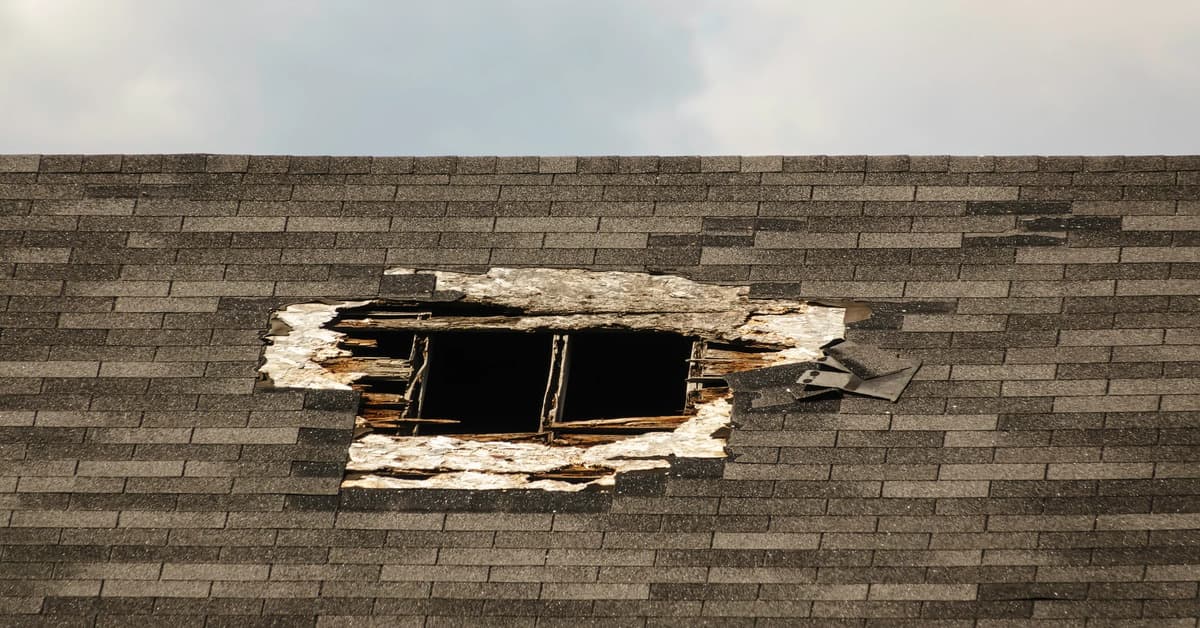
A hole from a fallen branch and a hole from a removed lag bolt might both be called "a hole in the roof," but they call for completely different fixes — one might take fifteen minutes with a tube of sealant, the other needs a saw, a support plank, and a genuine afternoon of work. Real roof hole repair starts with recognizing that these aren't the same job.
That distinction is exactly what most repair guides skip. Fixing a hole in a roof isn't one process with one set of steps; it's three genuinely different jobs depending on size, and picking the wrong approach for the size you're dealing with is how a good patch roof damage attempt fails within a season.
Start by Sizing Up the Damage
1. Pinhole to 1 Inch
Bolt holes, nail holes, and small punctures fall here. This is the most straightforward hole sealing roof job you'll encounter. Clean the area, then either fill it directly with roofing sealant for anything under a quarter inch, or for something closer to an inch, cut a wooden plug slightly larger than the hole, coat it in sealant, and press it firmly in place before sealing over the top. A piece of flashing tucked under the surrounding shingle and bedded in silicone works too, though it's worth knowing this trick has a real limitation: if the hole sits too close to an existing roofing nail, there often isn't enough clearance to slide flashing in properly, and replacing the shingle outright becomes the more reliable option.
2. One to Six Inches
This is shingle-level damage — the hole has taken out enough material that patching around it isn't realistic, and repair roofing shingles work becomes the actual task. Lift the surrounding shingles carefully with a pry bar, remove the damaged section along with any nails, and check whether the decking underneath is still solid before covering it back up. Install a fresh piece of underlayment over the exposed area for real roof waterproofing, then replace the shingle itself, sliding it under the row above the same way the original was installed.
3. Larger Than a Shingle, or Through the Decking
At this size, you're not patching the roofing surface anymore — you're repairing structure. Cut the damaged decking back to a clean rectangular shape rather than trying to match an irregular hole, and install a support plank underneath, roughly three times the width of the opening, so the new patch has something solid to rest on rather than floating unsupported. Cut a new piece of plywood to fit, screw it to the support plank, then rebuild the underlayment and shingles above it in the same layered order as the original roof.
What Usually Causes a Hole Like This
1. Falling Debris and Animals
Fallen branches and storm debris account for a large share of sudden holes. Animal damage adds to that count too — squirrels and larger pests can work through weakened roofing material faster than most people expect.
2. Removed Hardware
An old satellite mount or vent taken out without properly patching the mounting holes is a quieter, slower cause. It often goes unnoticed until a leak shows up months later, similar to how a missing shingle left unaddressed can quietly become a bigger repair over time.
3. Rot That Finally Gave Way
Sometimes a hole is really the end point of rot that was never addressed — the material simply collapsed under its own weakness. This is a different, more serious situation than a clean puncture from an object, and one worth folding into your regular roofing maintenance checks going forward.
Tools and Materials for Fixing a Hole in a Roof
The right roofing patch materials depend entirely on which size category you're dealing with:
Small holes: roofing sealant, a wooden dowel or scrap for a plug, a putty knife
Shingle-level holes: a pry bar, replacement shingles, roofing nails, underlayment, a utility knife
Structural holes: a reciprocating saw, plywood matching your existing deck thickness, a 2x4 support plank, deck screws, and the same shingle/underlayment materials as above
Temporary Measures vs. the Real Fix
If weather or timing means you can't do the full repair right away, a properly secured tarp buys time without making the eventual fix roof damage job harder. The same approach and materials covered here apply directly to a hole, not just a leak, since the underlying roof leak repair methods overlap heavily between the two situations — the goal at this stage is simply stopping water intrusion, nothing more.
The real fix is whichever size-matched repair covered above actually addresses the hole itself, not just what's covering it. Treating a tarp as the finished job is how a fifteen-minute patch turns into thousands in water damage a season later, since a tarp does nothing to restore the roof's actual structure or long-term waterproofing — it only buys time until that real repair happens.
Safety Line Worth Repeating
Never step directly on or near an area you suspect is rotted or structurally weak — a hole large enough to see daylight through often means the surrounding material is compromised too, not just the visible opening, and one wrong step can turn a roof repair into a fall through the roof entirely. If you can't tell how far the weakness extends from the ground or the attic side, that uncertainty alone is a reason to bring in a professional rather than find out by testing it with your weight.
When This Stops Being a DIY Job
A hole extending into rafters or trusses, not just decking, is structural work outside typical DIY scope. The same goes for any hole near electrical wiring, a vent stack, or a chimney, where the repair intersects with systems that need more than roofing knowledge to handle safely. And if multiple holes or widespread damage suggest this is one symptom of a bigger problem rather than an isolated event, that's worth a full professional assessment before patching piece by piece.
FAQ
Can I fix a small hole in my roof myself?
Yes — pinhole to one-inch holes are genuinely manageable roof repair DIY jobs with basic materials, as long as the surrounding roofing material is still solid.
How do I know if a roof hole has damaged the decking underneath?
Soft, spongy, or visibly stained wood when you lift the surrounding shingles is the clearest sign; solid, dry wood usually means the damage is limited to the surface layer.
Is a tarp a permanent fix for a hole in the roof?
No — it's a temporary measure to stop water intrusion, and should be followed by a proper patch or structural repair as soon as conditions allow.
What's the biggest mistake people make patching a roof hole?
Sizing the repair to what's visible from the outside rather than checking how far the damage actually extends underneath — a hole that looks small on the surface can hide a much larger area of compromised decking.
How much does it cost to fix a hole in a roof?
Small punctures often run under $100-300 in materials for a DIY repair; structural holes involving decking replacement can run into the thousands, especially with professional labor included.
About Mubashir Yaqoob
Mubashir Yaqoob researches and writes practical home repair guides for Home Repair Manual, focused on translating technical roofing, plumbing, and maintenance information into clear advice for homeowners.
View all posts by Mubashir Yaqoob