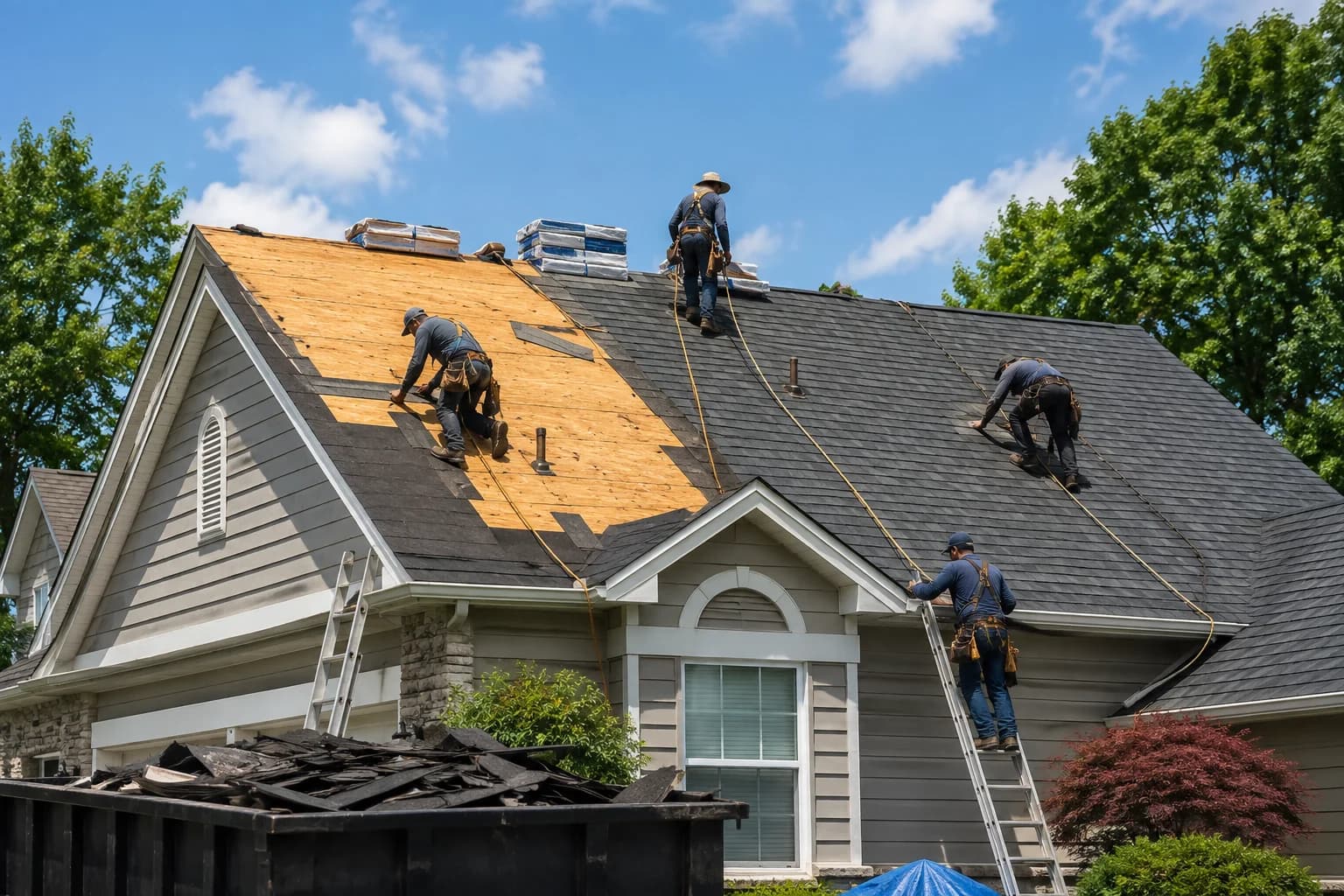
How long does it take to repair a roof? Ask five different roofers, and you'll get five different answers about roofing project duration, not because any of them are wrong, but because they're often answering two completely different questions without realizing it.
Most people asking this question really want to know one of two things: how long the actual work takes once someone's on the roof, or how long the whole process takes from the first phone call to a finished repair. Those two numbers can be wildly different, and almost no article online separates them clearly — which is exactly what this one is going to do.
How Long Does It Take to Repair a Roof? The Honest Range
Most roof repairs take anywhere from 1 hour to 3 days of actual hands-on work, depending entirely on what's wrong. Any real roof repair time estimate has to start there — a missing shingle is not the same job as a rotted section of decking, and lumping every repair into one average is exactly why online answers feel so inconsistent.
Two Different Clocks: Booking a Contractor vs. the Repair Itself
This is the distinction almost nobody makes clearly, and it's probably the most useful thing in this entire article: the contractor repair time and the time it takes to get someone out to fix it are not the same number. During peak season — right after a storm, or in the busiest months for roofing companies — homeowners can wait 4-5 weeks just to get on a contractor's schedule before any actual work begins.
The repair itself, once a crew arrives, is usually finished in an afternoon for most common issues. If you're planning around a repair, the honest total is booking delay plus work time, not just the work time competitors usually quote.
What Each Type of Repair Actually Takes
This roof damage repair timeline breaks down by task, not a single average:
1. Missing or Damaged Shingles
The fastest common repair, typically 1-4 hours. Often finished before lunch on a same-day job, since it usually just involves removing the damaged shingle and fitting a replacement.
2. Small Leak Patch
Usually 2-4 hours, including locating the source, letting the area dry if needed, and sealing it properly. Most of this time goes toward finding the leak, not fixing it once found.
3. Flashing Repair
Around chimneys or vents, typically 3-6 hours. Precise cutting and fitting of the metal flashing takes more care and time than straightforward shingle work.
4. Saturated or Damaged Decking
Pushes toward a full day, since it requires removing shingles, drying or replacing the underlying deck material, then reinstalling everything above it.
5. Major Storm or Tree Damage
1-3 days or more, depending on how much of the structure needs rebuilding rather than just resurfacing.
Repair vs. Replacement: Very Different Timelines
Understanding repair vs replacement time upfront saves real confusion later. A repair and a full replacement aren't different sizes of the same job — they're different projects entirely, each with its own roofing process duration. Most repairs finish within a single day, focused narrowly on the damaged section rather than the whole roof surface.
A full roof replacement on an average-size home typically takes 1-3 days of active work, and can stretch to a week or more on larger or more complex roofs. If a contractor tells you your "repair" is going to take multiple days, it's worth asking directly whether the scope has actually shifted toward a replacement, since that's a different conversation and a different price entirely.
What Actually Slows a Repair Down
Among the real repair delays factors, these three come up more than any others:
1. Weather
Certainteed's own shingle installation guidance specifically warns against installing asphalt shingles when air or surface temperatures drop to 40°F or below, since the material doesn't seal properly in the cold — a real, cited threshold, not just a vague "bad weather" warning.
2. Roof Complexity
Steep pitches, multiple valleys, and dormers all add time regardless of temperature, since each detail requires more careful, individual attention than a simple, single-slope roof.
3. Hidden Damage
A leak that turns out to have spread further than expected once shingles come off is one of the most common reasons an estimated half-day job becomes a two-day one.
DIY Timeline vs. Professional Timeline
A professional crew works faster not just because of experience, but because of crew size — multiple people working simultaneously compresses a job that would take one person a full weekend into a few hours. Professionals also carry the right tools and materials on hand, so there's no mid-repair trip to the hardware store to stall progress.
DIY repairs are realistic for straightforward tasks like a handful of shingles or a visible, accessible leak, but expect the same job to take considerably longer solo, and factor in the time spent finding the actual source of a leak before any repair work even starts. For anything involving structural concerns like a sagging section of roof, the time and safety tradeoff shifts firmly toward professional work regardless of DIY comfort level.
How to Avoid Unnecessary Delays
This roofing timeline guide comes down to a few habits that make the biggest difference:
Book early once you notice a problem, rather than waiting until you're competing with everyone else after the next storm rolls through your area
Get a clear scope in writing before work starts — a contractor who can't tell you whether they're expecting a half-day or multi-day job hasn't actually assessed the damage yet
Schedule around the weather forecast where possible, since a repair pushed a few days to avoid a cold snap or storm system usually finishes faster overall than one that starts and gets interrupted partway through
Build roof checks into a regular roof maintenance schedule, so small issues get caught before they turn into a longer home repair duration down the line
FAQ
How long does it take to repair a roof leak specifically?
Typically 2-4 hours for a straightforward patch once the source is found, though locating a hidden leak can add significant time before repair work even begins.
Why did my contractor say weeks when the repair itself only takes a day?
That's almost always the booking delay, not the work itself — busy season scheduling can run 4-5 weeks out even though the actual repair takes hours once a crew arrives.
Does roof material affect repair time?
Yes — asphalt shingles are generally the fastest to repair, while metal, slate, and tile roofing typically require more precise, time-intensive work.
Is a same-day roof repair realistic?
For minor issues like a few missing shingles or an accessible small leak, yes — many straightforward repairs are genuinely finished within a few hours.
How much does weather affect roof repair scheduling?
Significantly — rain, high winds, and temperatures at or below 40°F for asphalt shingles can all delay or pause work for safety and material performance reasons.
About Mubashir Yaqoob
Mubashir Yaqoob researches and writes practical home repair guides for Home Repair Manual, focused on translating technical roofing, plumbing, and maintenance information into clear advice for homeowners.
View all posts by Mubashir Yaqoob