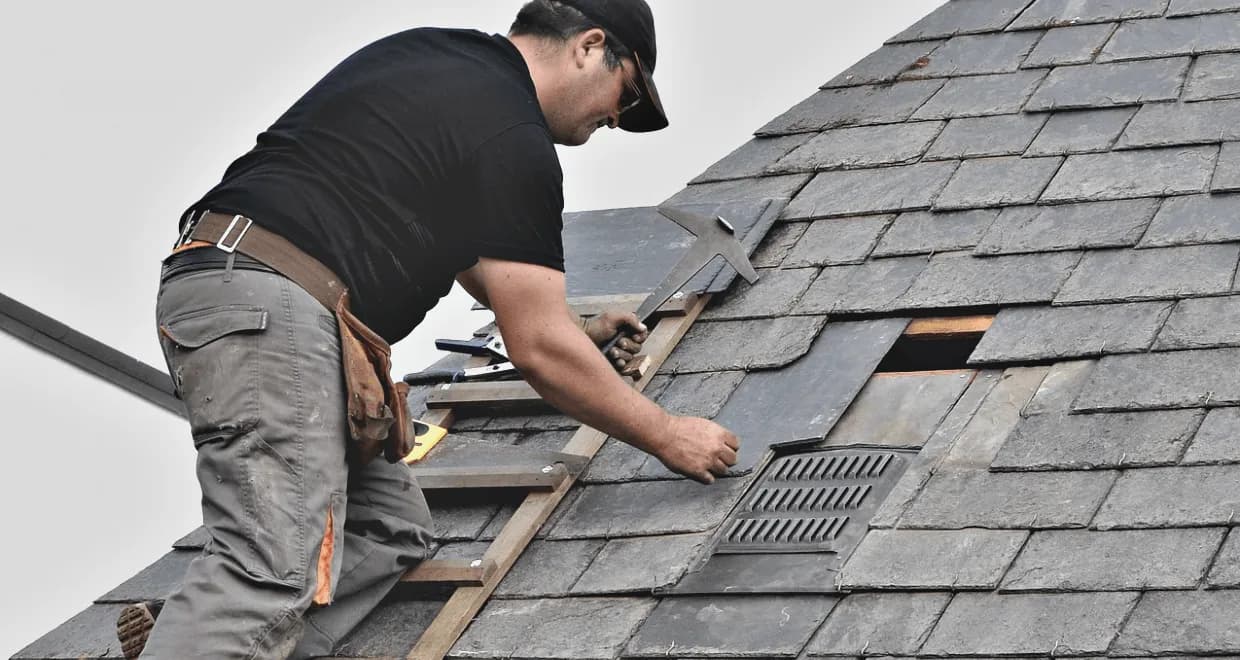
A missing shingle may look like a small roofing problem, but it can leave the roof underneath exposed to rain, wind, and moisture. If you can't arrange a permanent repair immediately, a temporary fix for missing shingles can help reduce the chance of water entering the roof system while you wait for proper repairs.
This is especially important after a storm. Strong winds can loosen or remove shingles, exposing the underlayment or roof decking underneath. The goal of an emergency repair isn't to make the roof as good as new. It's to protect the exposed area and prevent additional damage until the damaged shingles can be properly replaced.
Temporary Fix for Missing Shingles: What Should You Do First?
Start by assessing the situation from a safe location.
If the roof is wet, icy, steep, visibly damaged, or still being affected by strong winds, don't climb onto it. A missing shingle isn't worth risking a fall.
Instead:
Check the roof from the ground.
Look for obvious missing or displaced shingles.
Check the attic for signs of water intrusion.
Place a container under any active interior drip.
Move furniture or belongings away from the affected area.
Take photographs of the storm damage for your records or insurance claim.
If water is already entering the house, dealing with the interior damage quickly is important. Our guide to a temporary roof leak fix covers some immediate steps homeowners can take while waiting for permanent repairs.
What Happens When a Shingle Is Missing?
Roof shingles are part of a layered roofing system. They help shed rainwater and protect the materials underneath.
When one is missing, the exposed area may allow water to reach the underlayment, roof decking, or surrounding roofing materials.
The risk becomes greater when:
Heavy rain is expected
Wind can reach the exposed area
The roof has already suffered storm damage
The underlayment is damaged
The roof decking is exposed
Several neighboring shingles are loose
A single missing shingle doesn't necessarily mean the entire roof is damaged. However, it should be addressed rather than ignored.
Immediate Risks of Missing Shingles
The biggest concern is water intrusion.
Rain can enter beneath surrounding shingles and reach the layers below. Repeated moisture exposure may contribute to damaged decking, wet insulation, wood rot, and eventually more expensive roof repairs.
Wind can create another problem. Once one shingle is missing, nearby shingles may become easier for wind to lift, particularly if their edges or fasteners have already been compromised.
There is also a risk that a small roofing problem is actually part of a larger storm-related issue.
Look for:
Multiple missing shingles
Damaged flashing
Bent or exposed metal
Cracked shingles
Sagging sections
Ceiling stains
Water in the attic
If you notice significant structural damage or a sagging roof, don't treat it as a simple missing-shingle repair. A professional inspection is appropriate.
Temporary Ways to Protect the Exposed Area
The safest temporary solution depends on the location and condition of the roof.
Use a Properly Secured Tarp
A heavy-duty waterproof tarp can sometimes provide temporary protection over a damaged section of roof.
The tarp needs to extend beyond the damaged area and be secured appropriately so wind cannot easily lift it. Poorly secured tarps can create additional damage, so homeowners should avoid improvising with loose plastic sheets or lightweight materials.
If installing a tarp requires climbing onto an unsafe roof, leave the work to a professional.
Don't Simply Glue a Shingle in Place
A loose or missing shingle shouldn't be permanently “fixed” with household glue, tape, or an improvised adhesive.
Roofing materials need to be installed according to the roofing system's requirements, including appropriate positioning and fastening.
A temporary patch should be treated as exactly that—a short-term measure until proper missing shingles repair can be completed.
Materials You May Need
For a basic emergency roofing response, useful items can include:
Heavy-duty waterproof tarp
Appropriate temporary fastening materials
Work gloves
Flashlight
Bucket or container for interior drips
Towels or absorbent materials
Camera or phone for documenting damage
Don't buy materials and climb onto the roof simply because you want to complete the repair yourself. Roof work becomes significantly more dangerous when surfaces are wet or damaged.
What If Water Is Already Coming Inside?
If the missing shingle has already resulted in an interior leak, focus on controlling the immediate damage.
Place a container beneath the drip and move valuables away from the affected area. If water is near electrical equipment, outlets, or wiring, don't touch the wet area. Have the situation assessed safely.
You can also learn about how to fix a leaking roof from the inside for short-term measures while arranging an exterior repair.
Remember that stopping the visible drip doesn't necessarily mean the roof leak itself has been repaired.
Don't Overlook the Roof Valley
If the missing shingle is close to a roof valley, the situation deserves extra attention.
A roof valley carries water from two roof slopes, so damaged roofing in this area can expose the roof to concentrated water flow.
Understanding roof valleys and their common problems can help homeowners recognize why damage in this part of the roof may require more careful inspection.
Safety Precautions
Roof repairs can be dangerous even when the damage appears minor.
Never climb onto a roof during a storm or when the surface is wet, icy, unstable, or heavily damaged. Use extra caution around power lines and avoid walking on areas that appear soft or sagging.
A professional roofer is the better option when:
The roof is steep
Several shingles are missing
The roof has structural damage
The damage is difficult to reach
Strong winds are continuing
Water is entering extensively
You are uncomfortable working at height
A quick roof fix isn't worthwhile if it puts you at risk of serious injury.
When Should Missing Shingles Be Permanently Replaced?
A temporary repair should not be left in place indefinitely.
Once weather conditions are safe, the missing shingle should be properly replaced. A roofer should also check the surrounding shingles, underlayment, flashing, and roof decking for hidden storm damage.
Permanent repair becomes especially important when there are repeated leaks, multiple missing shingles, damaged decking, or signs that water has reached the roof structure.
If the damage is widespread, the roofer may recommend a broader inspection rather than simply replacing individual shingles.
FAQ
Can you temporarily cover a missing shingle?
Yes. A properly installed and secured waterproof tarp can provide temporary protection in some situations. However, it should only be installed when the roof can be accessed safely.
How long can a roof stay with a missing shingle?
There isn't a safe universal timeframe. Weather conditions matter considerably. A missing shingle should be repaired as soon as reasonably possible, especially when rain is expected.
Can I put a new shingle over the missing area temporarily?
A proper shingle replacement is preferable to an improvised temporary installation. The surrounding roofing should also be inspected to determine whether the storm damaged other components.
Will one missing shingle cause a roof leak?
It can. The risk depends on the location, roofing system, weather, and condition of the layers underneath.
Should I call a roofer after storm damage?
If several shingles are missing, water is entering the house, flashing is damaged, or the roof appears structurally compromised, professional inspection is recommended.
Final Thoughts
A missing shingle isn't something to panic about, but it shouldn't be ignored either. The exposed area can allow rain and wind to reach parts of the roofing system that are normally protected.
A sensible temporary fix for missing shingles is about limiting further damage until permanent repairs can be made—not trying to turn an emergency patch into a long-term solution.
Inspect from a safe location, protect the interior if water is entering, and arrange professional repairs when the damage is beyond a simple, safely accessible fix. Acting early can help prevent a small piece of storm roof damage from developing into a much larger roofing problem.
About Mubashir Yaqoob
Mubashir Yaqoob researches and writes practical home repair guides for Home Repair Manual, focused on translating technical roofing, plumbing, and maintenance information into clear advice for homeowners.
View all posts by Mubashir Yaqoob