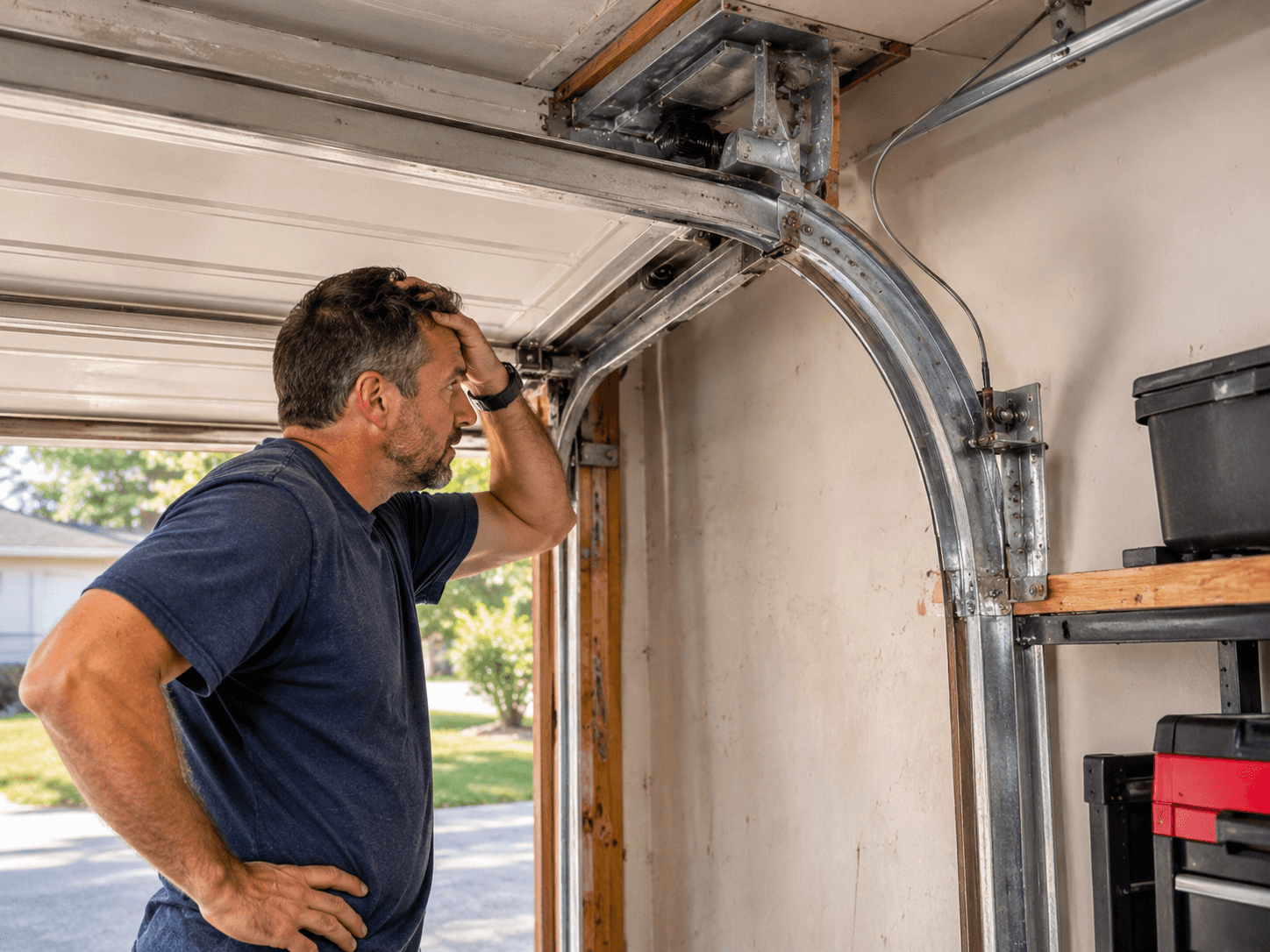
A garage door looks like a simple machine: a few panels, a motor, a wall button. Behind that simplicity sits a counterbalance system that stores a lot of energy, and the door it supports can weigh well over a hundred pounds. That's why a good homeowner checklist draws a clear line between quick troubleshooting and repairs that belong to a trained technician with the right tools.
Checking the obvious first is smart. A weak remote battery, a blocked sensor, a tripped breaker or a locked wall panel can all stop a perfectly healthy door. The trouble begins when the door starts acting heavy, crooked or loud and the homeowner keeps pressing the button anyway.
Here's the rule worth remembering: if the problem could involve the springs, the lift cables, the tracks or the balance of the door, stop using the door and get the system inspected before it moves again.
1. A spring has snapped or worn out
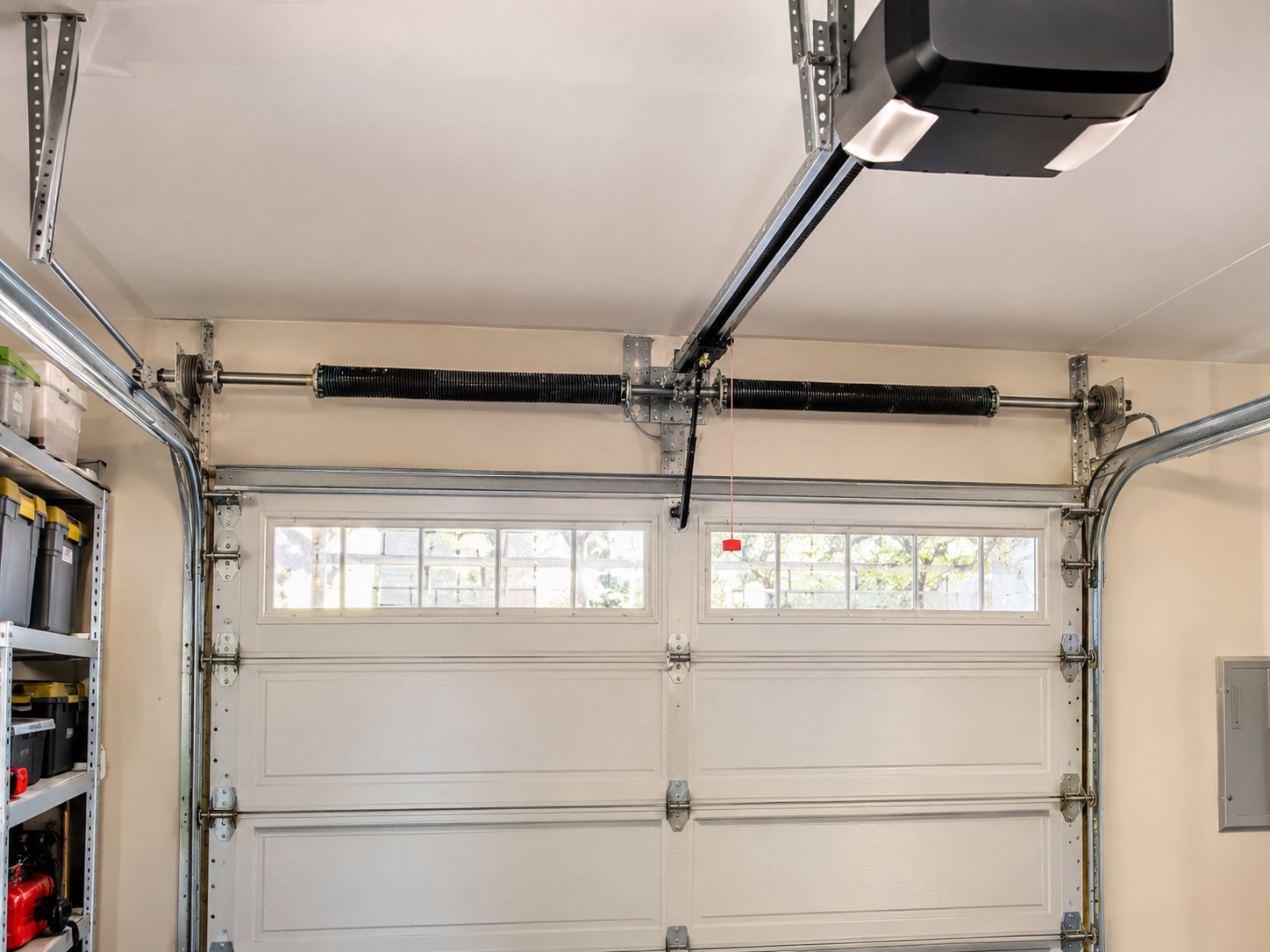
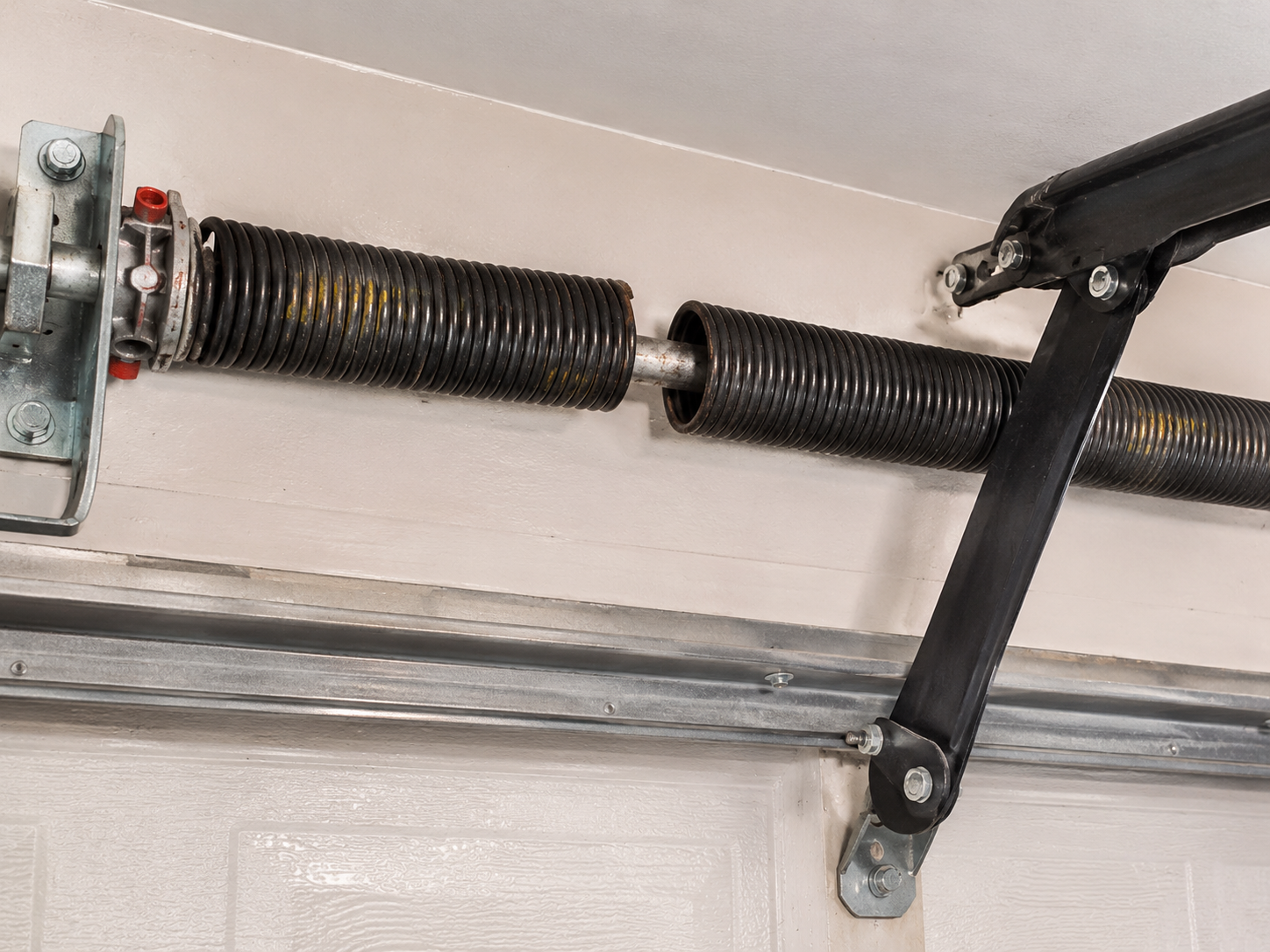
The springs, not the motor, carry the bulk of a garage door's load. In a torsion setup, a coiled spring on a shaft over the opening does the lifting, which leaves the opener with the easy job of steering. Once that spring gives out, nothing offsets the weight of the door.
Sometimes the evidence is obvious, such as a gap in the coil and a loud bang you heard earlier. Other times it's subtle: the motor hums and strains, the door lifts a few inches and stops, or it feels far heavier than usual if you pull the release cord and try it by hand.
What not to do is keep pressing the button. The motor was never designed to lift a full door load. Forcing it can burn out the opener, bend brackets and leave the door hanging in an unsafe position. Spring work also needs special winding bars and a real understanding of stored tension.
2. A lift cable is slack, frayed or off its drum
Lift cables work alongside the springs and keep the two sides of the door rising in step. When one slips off its drum, starts to fray or hangs loose near a bottom corner, the door tends to lift lopsided, with one side racing ahead of the other.
Don't treat it like a wire that just needs reseating. The cable may still be tied to parts under spring tension, and putting it back doesn't explain why it came off in the first place. A worn drum, a damaged cable or lost spring tension could be the real culprit.
Each time the motor runs with a slack cable, the door twists a little more, and the strain can start damaging the hardware on the other side. If the door tilts or a cable looks wrong, stop cycling it.
3. A roller has jumped the track
A roller out of its track can look like an easy fix: nudge it back and move on. In reality, the door may be binding or carrying uneven weight, and that's why the roller escaped.
If the opener keeps pulling against a jammed door, it can bend the track, warp a panel or knock more rollers loose. Shoving it back by hand carries its own risk, because the spring and cable system may still be under load.
The useful question isn't just "how do I get this back on?" but "what pushed it out?" Find that cause before the door goes back into daily use.
4. The door suddenly feels much heavier
A balanced door moves with steady, controlled resistance when you lift it by hand. Only try this with the door closed and the opener disconnected according to the manufacturer's instructions, and stop immediately if anything feels wrong.
A sudden jump in heaviness usually means the balance is gone, from a broken spring, a failed cable or something similar. Buying a bigger opener won't solve it. A more powerful motor only pushes the extra stress onto the opener, the brackets and the door panels.
5. The door hangs crooked or rises unevenly
Both sides of the door should travel together. If one corner leads, lags or drags, a cable, track, roller or spring part is probably off.
Uneven travel is a problem because the load is no longer shared the way the hardware was designed to carry it, and every extra cycle can make things worse. If the door tilts, scrapes one side or changes shape as it moves, switch off the opener and leave the door alone until someone finds the cause.
6. A track is bent or pulled loose
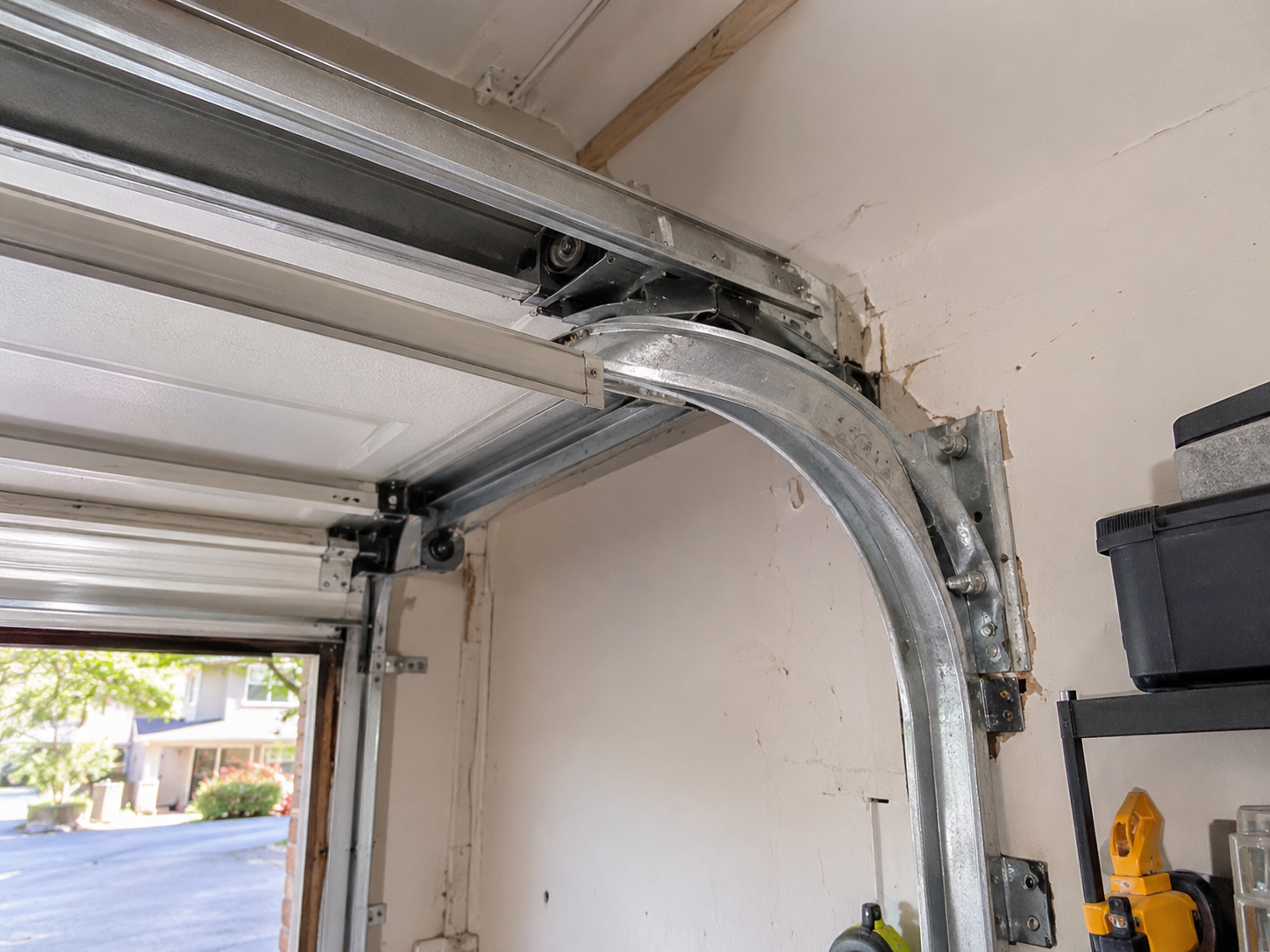
A bit of dust in the track is harmless. A track that's twisted, dented or hanging away from its brackets is not.
Some owners try to straighten it with a hammer, which can make the alignment worse even if the metal looks better. Rollers have to follow a precise path while carrying a load. A damaged track may also be a symptom of something else, such as a car bump, a loose bracket or a door that has been running out of square, so the whole system deserves a look.
7. A bottom bracket is loose, cracked or bent
The brackets at the lower corners look like ordinary hardware, and they're often where the lift cables attach. Because those cables are tied to the spring system, loosening the wrong bracket can release serious force.
What seems like a simple bolt swap is among the more hazardous jobs on a garage door. If a bracket is pulling away, cracked or warped, leave it in place and have a technician evaluate the system first.
8. The door won't stay under control by hand
A well-balanced door stays put when you stop lifting it, or drifts only slightly. If it slams down, springs upward or refuses to hold any position, the balance is off.
Never stand or place anything under a door that wants to fall, and don't count on the opener to hold it up. The opener is a drive unit, not a substitute for working springs and cables. If the door can't be controlled by hand, don't reconnect it and don't use it until it's been inspected.
What Repairs Typically Cost
Fear of the bill keeps some people tinkering when they should be calling. Published ranges from Angi and HomeAdvisor are modest next to the cost of an injury or a ruined door.
Repair | Typical cost |
Spring replacement | $150 to $350 |
Cable repair, per cable | $75 to $200 |
Track repair or realignment | $125 to $400 |
Roller replacement | $90 to $200 |
Safety sensor repair | $100 to $200 |
Panel repair or replacement | $150 to $1,000 |
Opener repair or replacement | $125 to $350 |
Overall, Bob Vila, citing Angi and HomeAdvisor, puts typical garage door repair near $247, within a range of $149 to $350, and technician labor at roughly $75 to $150 an hour. Prices vary by region and door type, so treat these as ballparks. You can read more in the HomeAdvisor spring cost guide and the Angi cable repair guide.
How Long Do Springs Last? A Quick Calculation
Manufacturers commonly rate torsion springs for somewhere between 10,000 and 20,000 cycles, counting each full open-and-close trip as one. Here's what that means in practice:
At four cycles a day, you use about 1,460 cycles a year. A 10,000-cycle spring lasts roughly seven years, and a 20,000-cycle spring about fourteen.
At eight cycles a day, those figures drop to roughly three and a half and seven years.
HomeAdvisor's own estimate is 8 to 15 years for a typical torsion spring. If your door is heading toward the upper years of its likely life, a yearly professional inspection beats waiting for the bang.
Wondering what a yearly visit should cost? Our breakdown of one tune-up versus a full maintenance plan shows how to compare options, and the same logic applies to garage doors.
What You Can Safely Check Yourself
Before you call anyone, these low-risk checks are worth a few minutes:
Confirm the opener has power and the outlet works.
Replace the remote battery if needed.
See whether the wall control's lock button has been switched on.
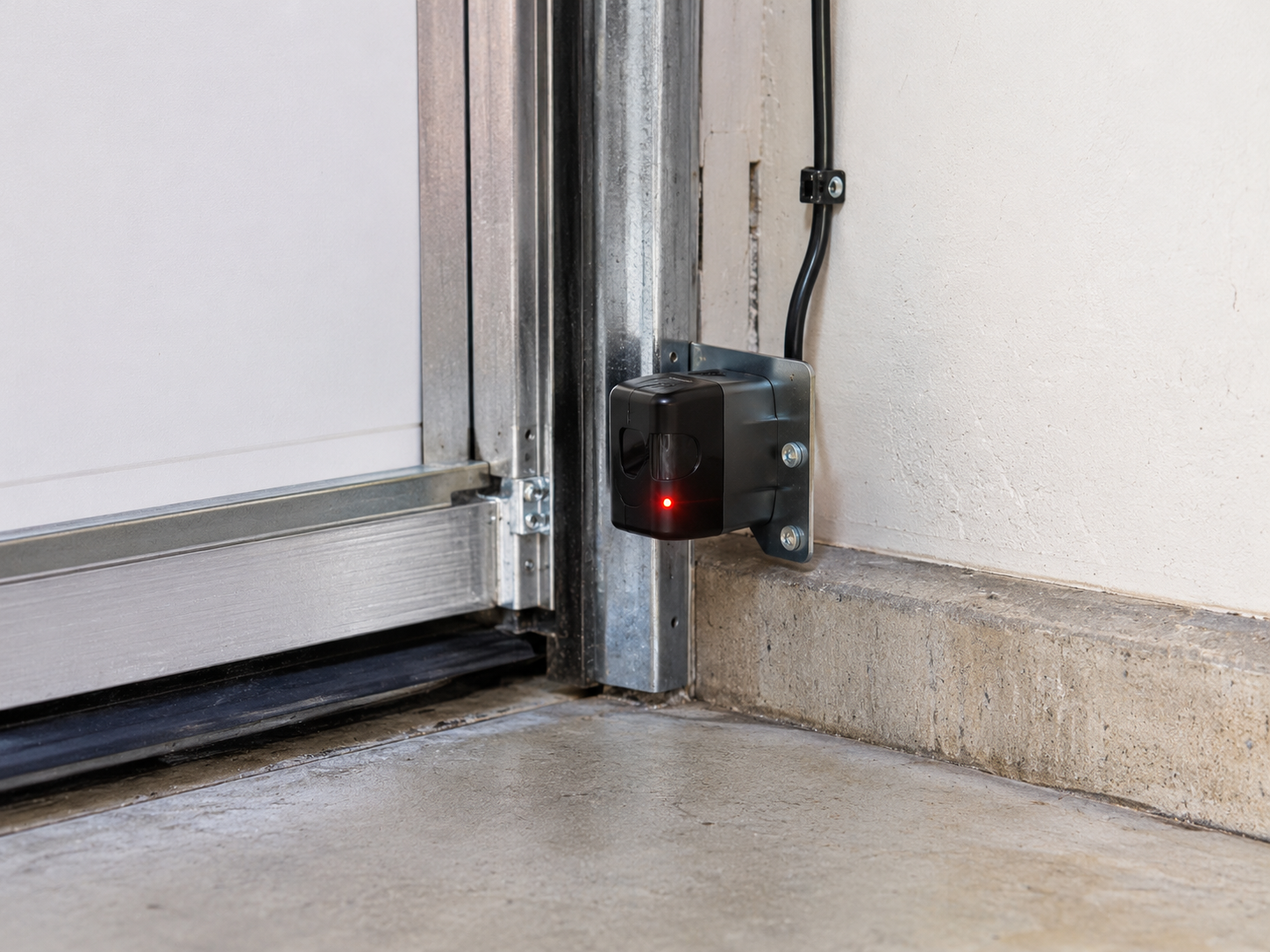
Remove anything blocking the sensors near the floor, and wipe their lenses.
Look along the tracks for debris, without loosening anything.
Notice whether the problem came on suddenly or built up gradually.
Look at the springs, cables, rollers and tracks, but don't touch or adjust them.
Also write down the opener's model number from its label before you call. Our guide to finding a model number on equipment nameplates shows where to look and what to do when a label is worn.
A monthly safety test. Most modern openers are built to back off if the closing door touches something in its path. Place a board flat on the floor under the door and close it; the door should reverse when it touches the board. Also wave an object through the sensor beam while the door is closing, and it should stop and reverse. Follow your opener manual, and if the door fails either test, stop using it and call for service.
Add the door to your yearly DIY home inspection checklist so these checks happen on schedule.
The Point Where Troubleshooting Should Stop
You don't have to diagnose every garage door problem. The goal is to recognize when you've moved past a simple power or sensor issue.
Broken springs, slack cables, off-track rollers, bent tracks and doors that are heavy or crooked all point to mechanical trouble that gets worse when the opener keeps running. If you see one, stop using the door and have the whole system checked. Fixing only the most visible symptom without finding the cause can set up a second failure somewhere else.
This is the same escalation logic we recommend for shower door problems: start with cheap checks, and climb only as far as you need to.
How to Choose a Garage Door Company
Look for a licensed and insured company, and ask for a written quote that lists parts and labor. Ask whether they replace both springs at once, which is common practice because springs wear at similar rates. Confirm what's under warranty, and ask whether they'll inspect the cables, rollers and tracks while they're there.
Our guide to what to check before hiring a pro applies to garage door companies too, from licensing and insurance to how to read a quote before work starts.
FAQs
Can I replace a garage door spring myself? Cost guides, including Bob Vila's, advise against it. The tension involved can cause serious injury.
Why does my door stop after a few inches? The opener may be straining against a broken spring or a balance problem.
Is it okay to raise the door by hand once a spring has snapped? Not usually. A door with a broken spring is very heavy and can slam down, so get it inspected first.
How often should I have the door inspected? Once a year is a reasonable rule, and sooner if it starts making new noises.
Do I need to replace both springs? Often yes, because the second spring is the same age and may be close to failing.
About NorthLine Garage Doors
For homeowners in New York who need help with repair, opener service, or replacement, NorthLine Garage Doors provides residential garage door repair, opener service, and replacement across its New York service areas.
About Mubashir Yaqoob
Mubashir Yaqoob researches and writes practical home repair guides for Home Repair Manual, focused on translating technical roofing, plumbing, and maintenance information into clear advice for homeowners.
View all posts by Mubashir Yaqoob