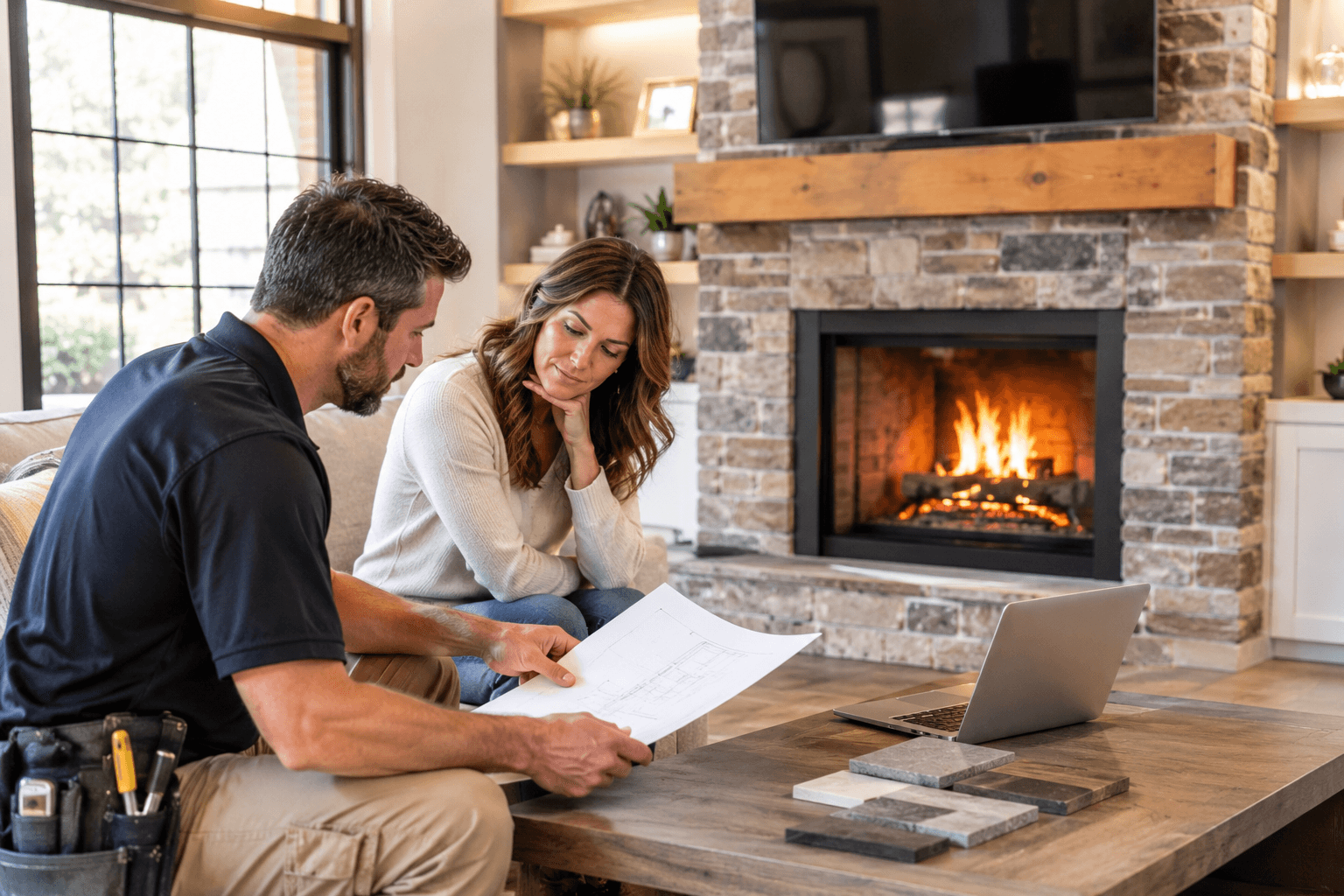
The quotes arrive, and they don't agree. One installer says $2,800, another says $9,500, a third wants $14,000 and a day to "look at the roof." Nobody did anything wrong. They're pricing different jobs, and you haven't yet told them which job you actually want.
So how much does it cost to install a fireplace? The honest answer is a range that spans two orders of magnitude, from a plug-in unit for a couple of hundred dollars to a built-from-scratch masonry fireplace that can pass $30,000. This guide shows how to narrow that range for your house, so adding a fireplace cost stops feeling like a lottery.
How Much Does It Cost to Install a Fireplace? Start With the Fuel
Fuel decides the price more than brand, style or size, because it decides what has to be built behind the wall. Published ranges from Angi, HomeAdvisor and Fixr line up like this:
Type | Typical installed range | What drives the price |
Electric | About $200 to $2,500 | Almost nothing, though premium built-ins run higher |
Gas | About $2,500 to $10,000 | Venting and a gas line |
Wood-burning | About $700 to $30,000 | An existing chimney versus building one |
Wood stove | About $325 to $4,000 | Hearth pad and flue |
Insert (into an existing fireplace) | About $1,000 to $3,600 | Liner and fit |
Pellet stove | About $1,000 to $3,100 | Venting and electrical |
The middle of the pack tells you more than the extremes. HomeAdvisor's typical range for all fireplace and wood stove projects is roughly $942 to $4,215, and Angi puts the average near $2,499. That's what most people with a workable setup pay. Anything far above it usually means new venting, a new chimney or major finishing.
The Four Bills Hiding Inside Every Quote
The question "how much does it cost to install a fireplace?" breaks into four separate bills. Ask each installer to break theirs down this way, and the mismatched quotes suddenly line up.
Bill one: the unit. The fireplace, stove or insert itself.
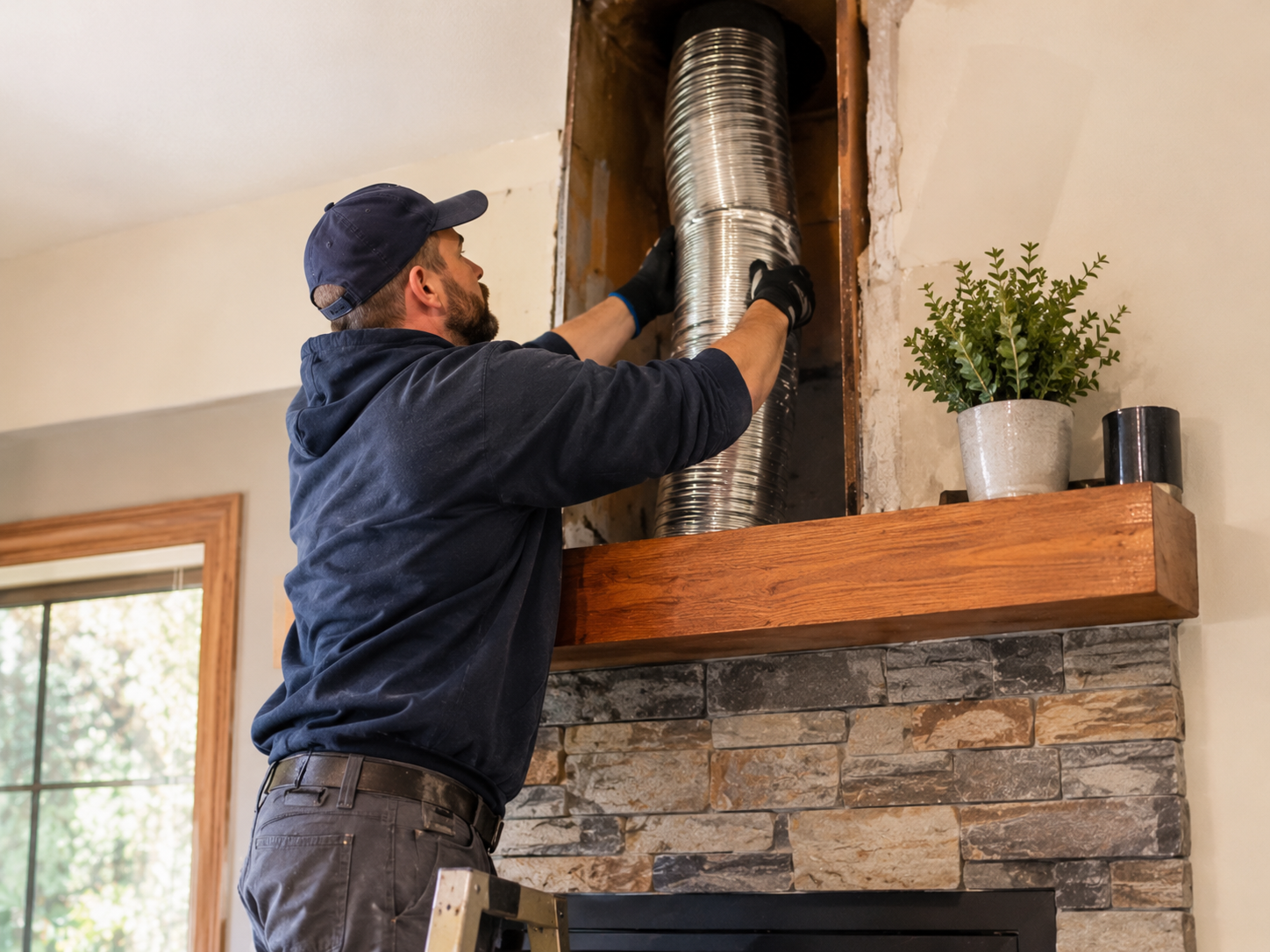
Bill two: venting. A chimney, a flue liner or a direct-vent pipe. For homes without a usable chimney, HomeAdvisor notes that a new vent pipe can add up to about $3,300, and one fireplace retailer lists liner and venting work for inserts at roughly $500 to $2,500. Venting is where bargains vanish.
Bill three: framing, utilities and finishing. Cutting into a wall, building a chase, running a gas line, adding electrical power, then patching and finishing with drywall, tile or stone and a mantel. Our guide to what drywall repair costs helps you price the patching.
Bill four: permits and inspections. Most installations need at least one permit, and gas work needs a pressure test. Permit guides list fees from roughly $75 to $800 depending on the work and the city.
Adding a Fireplace Cost: Four Worked Scenarios
Here's how adding a fireplace cost plays out for four common situations. The ranges come from the published figures above, and the combined totals are my illustrations, not quotes.
Scenario | What you'd buy | Rough total |
Plug-in or wall-mounted electric | The unit, an outlet | About $200 to $2,500 |
Gas insert into an existing masonry fireplace | Insert, liner, gas connection | Roughly $1,500 to $6,000 or more |
New gas fireplace on an exterior wall | Direct-vent unit, vent through the wall, gas line, finishing | About $2,500 to $10,000 |
New wood-burning fireplace with a chimney | Prefab firebox, chimney, roof work, finishing | Often $5,000 to $15,000, with masonry going far higher |
Notice how the scenarios differ. The unit is one line. The wall, the vent and the finishing decide everything else.
Why a Quote Might Land Far Above the Range
If a quote lands far above the ranges, one of these usually explains it:
No existing chimney or exterior wall. Venting has to go through the roof or a long run.
A roof penetration. New chimney flashing adds labor and a leak risk, and our guide to fixing a leaking roof from the inside shows what a bad one looks like.
A long gas line. The farther the gas meter, the higher the plumbing bill.
Structural work. Framing, support for heavy stone and a hearth extension.
Luxury finishing. Natural stone, custom mantels and built-in cabinetry can cost more than the fireplace.
A Five-Minute Estimate Worksheet
To answer the question "how much does it cost to install a fireplace" for your own house, fill in four lines before you call anyone. First, pick a fuel and a unit price. Second, decide how it will vent: an existing chimney, a wall or a new run through the roof. Third, add framing, a gas line or an outlet, plus finishing. Fourth, add a permit. Then add a cushion of 15 to 20 percent, a common rule of thumb for surprises behind walls, and you have a working estimate of adding a fireplace cost to compare against real quotes.
The Costs Nobody Mentions
A few items rarely appear in headline prices:
Carbon monoxide and smoke alarms. Codes generally expect working alarms near bedrooms when you add a fuel-burning appliance. Our guide on what smoke alarm manuals say explains placement and replacement.
Chimney inspection and sweeping. A manufacturer guide puts a sweep at about $100 for a well-kept wood fireplace, and up to $800 for a neglected one.
Running costs. Electric units add to your power bill, gas units to the gas bill and wood needs a supply of dry firewood, which is another line to weigh when comparing adding a fireplace cost against the heat you actually get.
Insurance. Tell your insurer, because unpermitted work can complicate claims and resale.
Permits, Safety and Who Should Do What
Part of the answer to "how much does it cost to install a fireplace" is the paperwork, so plan for a permit. Installing a new fireplace or stove, converting an existing one or running a gas line typically needs one, and inspectors check clearances to combustibles, venting and chimney height. Clearance rules come from both the building code and the manufacturer's manual, and the stricter one applies. Wood stoves, for example, commonly need around 36 inches to unprotected walls unless a listed heat shield reduces it.
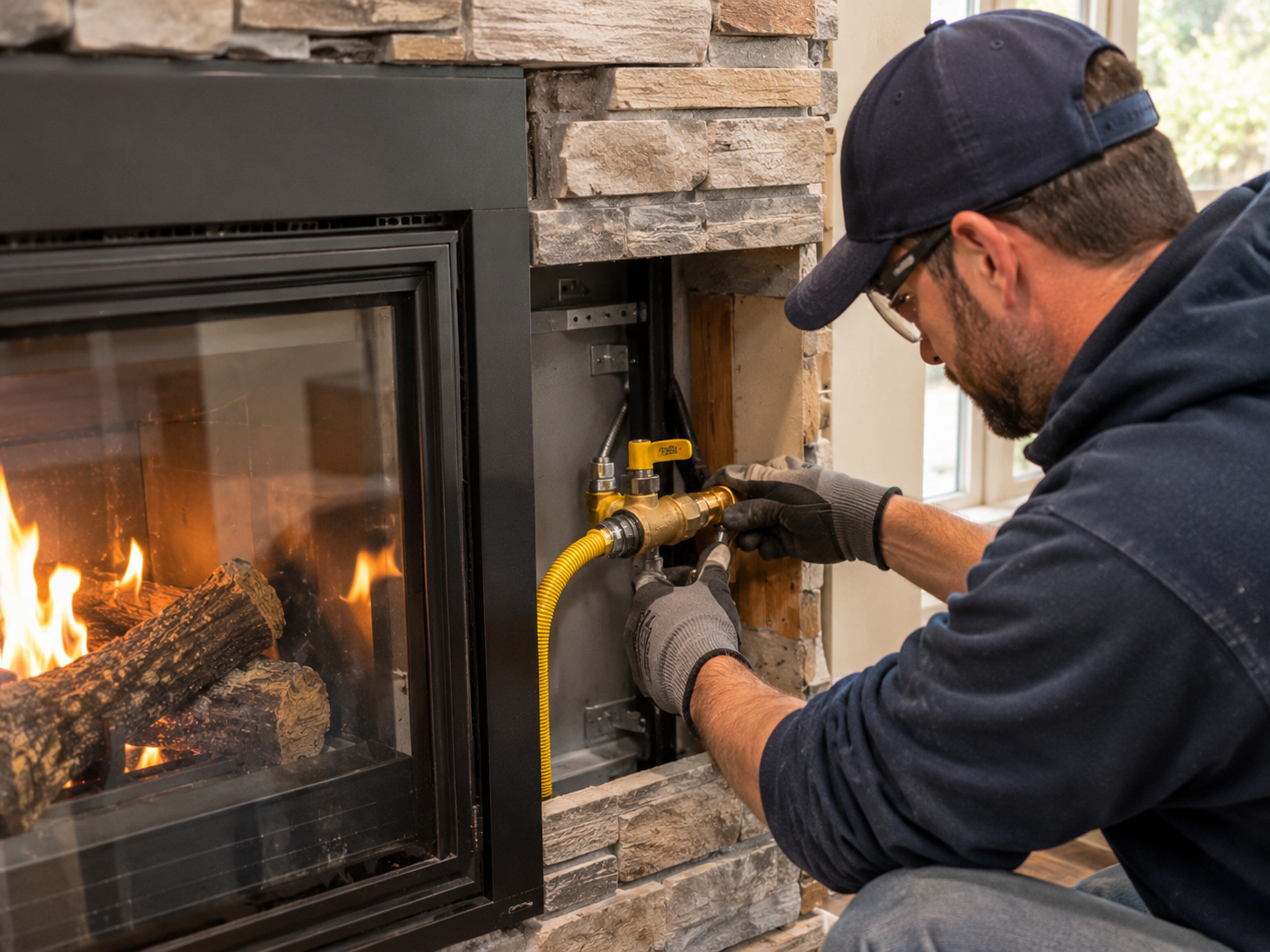
Gas work belongs to a licensed gas fitter or plumber, because gas lines need sizing and a pressure test. Our guide to how to hire a plumber covers licensing, insurance and written quotes. For chimney work, look for certified chimney technicians. DIY is realistic for plug-in electric units and cosmetic finishing, not for venting or gas.
How to Compare Quotes Without Getting Lost
Before you accept any answer to "how much does it cost to install a fireplace," make every installer price the same job. Adding a fireplace cost only makes sense when the quotes cover identical scope, so ask each installer for the same four-bill breakdown. Then check that every quote states the unit model, the venting type, who pulls the permit, what finishing is included and what happens if they find surprises behind the wall. Three quotes beat one, and the cheapest isn't automatically the best if it leaves out the vent.
If heating is your main goal, compare options before you commit. Our guide to choosing heating and air conditioning options shows how a fireplace fits into the larger picture.

From Quote to First Fire: What the Timeline Looks Like
People ask about price and forget to ask about time. Quotes and a site visit usually take the first week or two. Design choices and the permit follow, and their length depends on your city. Installing an electric unit or a gas insert can take a day or two, while a new chimney, a chase and finishing can stretch across weeks. A final inspection closes the permit, and only then should you light the first fire.
Ways to Lower the Price
If your answer to "how much does it cost to install a fireplace" is higher than your budget, use these moves to bring adding a fireplace cost down:
Use an existing chimney or an exterior wall, so venting stays short.
Choose an insert or electric unit if you mainly want the look.
Keep the finishing simple, and upgrade the mantel later.
Get three written quotes, and ask what each leaves out.
Schedule work when installers are less busy, which some shops reward with better pricing.
Quick Answers
How much does it cost to install a fireplace in an existing house? Most homeowners with a workable setup land in the low-to-mid thousands. New venting or a new chimney pushes the total up sharply.
What's included in adding a fireplace cost? The unit, venting, framing and finishing, a gas line or outlet, and permits and inspections. Ask installers to itemize each one.
Does adding a fireplace cost more than it adds in resale value? Usually, yes. It can add appeal, but you won't recoup the whole price, and the return depends on your market. Treat it as a lifestyle upgrade first.
Which type is cheapest to install? Electric, by a wide margin. Gas inserts come next if a chimney already exists.
Can I install one myself? Plug-in electric yes. Gas, wood and venting no.
Do I need to tell my insurer? Yes, and keep the permit paperwork.
The Bottom Line
If someone asks, "How much does it cost to install a fireplace?" the best answer is a question: what are you venting through, and what's behind that wall? Break any quote into the four bills, compare like with like and remember that adding a fireplace cost is mostly a venting and finishing story, not a unit story.
About Mubashir Yaqoob
Mubashir Yaqoob researches and writes practical home repair guides for Home Repair Manual, focused on translating technical roofing, plumbing, and maintenance information into clear advice for homeowners.
View all posts by Mubashir Yaqoob