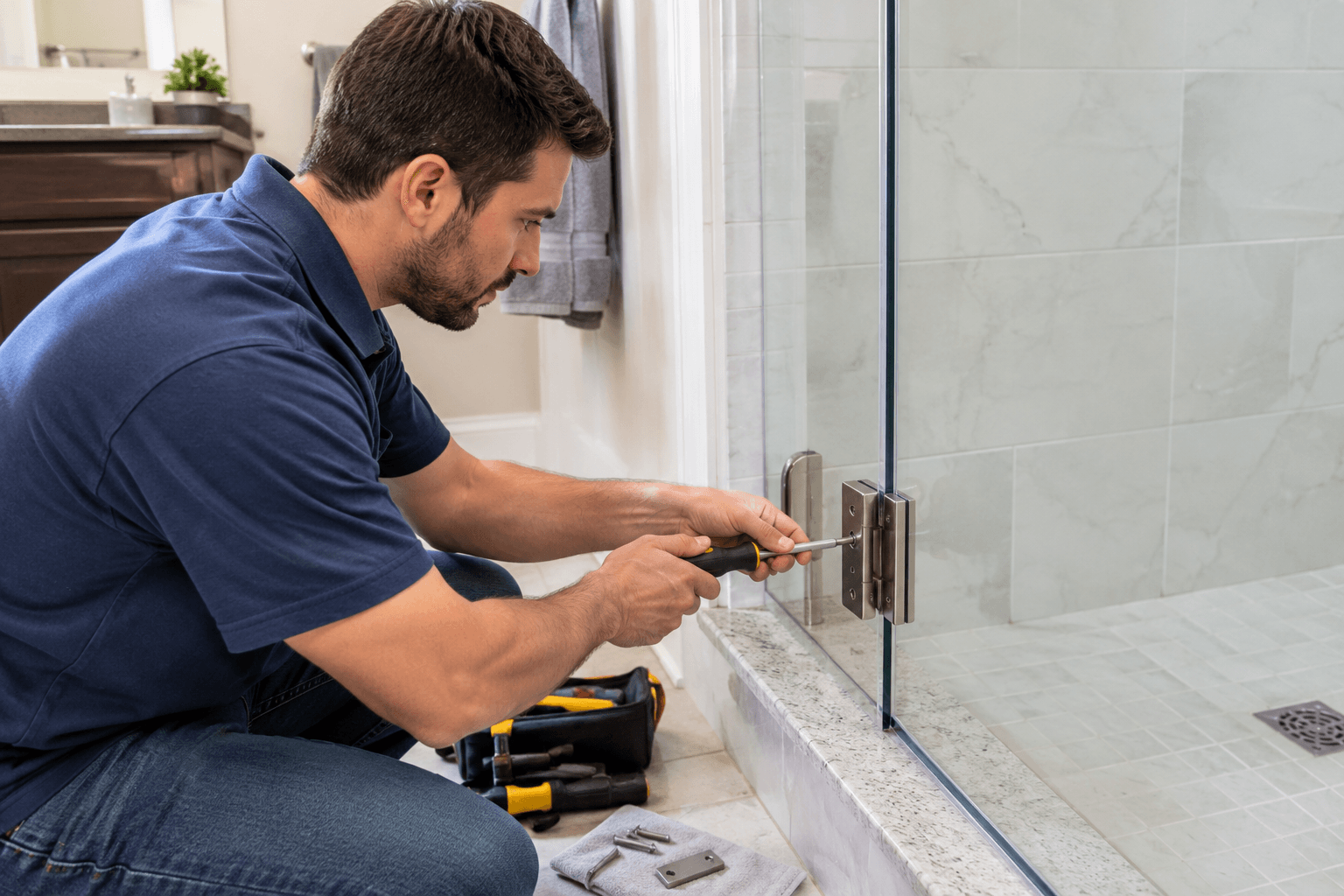
Many shower door problems come down to track buildup, alignment issues, or a worn part that doesn't cost much to replace.
That's why this goes in order, from free to expensive. You stop the minute the door works.
One rule before anything else: glass doesn't forgive force. If something's stuck, don't muscle it.
First, Which Door Do You Have?
The fix depends on the door, so look before you touch a screw.
Sliding (bypass): two panels slide past each other on a track. Common over tubs.
Hinged, framed or semi-frameless: it swings, and there's metal around some or all of the glass.
Frameless: thick glass, no frame, held by clamps and hinges.
Find a brand or model stamp on the frame or hinge too. Parts are brand-specific, the same story as faucet parts, and a photo of that stamp saves a wasted trip.
What the door does | Start at |
Drags, sticks, rolls rough | Rung 1 (Clean Track) |
Rubs one side or sits crooked | Rung 2 (Adjust Screws/Hinges) |
Leaks at the bottom or won't latch | Rung 3 (Replace Rollers) |
Frame looks misaligned or the gap remains | Rung 4 (Re-Square Frame) |
Chipped glass or a sagging heavy panel | Rung 5 (Call a Professional) |
How to Fix Shower Door Problems in Five Rungs
Rung 1: Remove Track Buildup (free, about 10 minutes)
Dragging and sticking is usually grit.
Pick the gunk out of the track. An old toothbrush works. So does a vacuum crevice tool.
Remove the residue with a soft brush and mild cleaner, then dry the track with a cloth.
Spin each roller by hand. If one doesn't turn freely, note it for Rung 3.
Sitting on an acrylic base? Use a soft brush. Scouring powder scratches it, and the notes on cleaning a plastic tub explain why that makes things worse.
Don't spray oil in the track. Tom Silva of This Old House says lubricant on a sliding track just collects dirt and makes the sticking worse. Some retailer guides tell you the opposite. The dirt argument holds up better.
Rung 2: Adjust It (free, about 15 minutes)
Rubbing, crooked, or off the track? Adjust before you replace.
Sliding doors: roller height screws sit in the bottom corners of the door, sometimes behind small plastic plugs. Pop a plug off with a flathead.
Quarter turns only. Same on both sides. Test after each one.
Off the track: lift the door, hook the top rollers in first, then set the bottom ones. If it slips off again, check the rollers for wear or damage.
Hinged doors: check the hinge screws first. Loose fasteners can let a door sag and leave gaps around the seal.
One change at a time. Test the door after each adjustment so you can tell what made the difference.
Rung 3: Replace the Cheap Part
Sometimes the problem comes down to a damaged seal or worn hardware.
Bottom sweep: if water's coming out under the door, remove the old strip and fit a compatible replacement. Trim it to length if the manufacturer allows.
Magnetic strip or gasket on the closing edge: if the door lines up but won't seal, this is often why.
Rollers: flat spots or cracks mean replace them. Do both together, and take one old roller to the store.
Handle: a wobbly one usually just needs its set screw tightened.
Rung 4: Re-Square the Frame (an afternoon)
The door's fine and it still won't close. Now look at the frame.
Put a level on the vertical rails and the track.
Check for loose rail fasteners or visible misalignment. Only loosen or adjust them if the manufacturer's instructions allow it.
Check the silicone along the frame. If it's cracked, water may get behind the metal.
A bent track can sometimes be straightened gently. Often it's cheaper to replace.
If the door never closed right from day one, suspect the wall or the tub edge being out of plumb. That's an install problem, not a wear problem.
Rung 5: Call Someone or Replace
Stop climbing here.
Cracked glass, or a chip along an edge. Edge damage can increase the risk of tempered glass breaking.
A heavy frameless panel that's sagging or shifting in its hinges.
The same fix failing twice.
A leak that's been running long enough to damage something.
Don't re-hang a heavy panel on your own. Get an experienced installer to handle the panel safely.
Why You Don't Force the Glass
Shower and bathtub doors fall under federal safety-glazing requirements, including the CPSC's 16 CFR Part 1201. These rules set safety requirements for covered glazing. Tempered glass is commonly used, but the exact glass type depends on the product. When tempered glass breaks, it generally fragments into smaller pieces rather than long, sharp shards. Some certified products carry an etched identification mark in a corner.
Framed and semi-frameless kits commonly use glass in the 3/16 to 1/4 inch range, though specifications vary. Prying against a stuck panel puts stress on the glass where it may not be designed to take it.
Gloves on. Get help with anything heavy.
Where the Leak Actually Goes
Check three likely leak paths: beneath the bottom edge, along the closing edge, and around the hinge side.
To find yours, run the shower for a minute, then check the floor along each of those lines.
And don't write off a slow leak as a nuisance. Look for soft flooring near the door, a musty smell, or bubbling paint on the wall outside the shower. If you find any of that, read up on hidden water damage. If the water's getting past the door and the tub edge, the problem may be water behind the tile.
Keeping It From Coming Back
Squeegee the glass after showers. Wipe the track once a month. During your yearly home inspection checklist, look for loose hinge fasteners, worn rollers, and damaged seals.
That's most of it. Knowing how to fix shower door trouble mostly comes down to doing the boring things in the right order.
Quick Answers
Can I use WD-40 on a shower door track?
Skip it on sliding tracks unless the manufacturer specifically recommends it. It can attract dirt. Use only a lubricant approved for your door's hinge pivots, and wipe off excess.
Why does it leak when it's closed?
A worn bottom sweep, a gap along the closing edge, or a door that's out of plumb. Sometimes the leak isn't the door at all but the seal around the base.
Is it safe to repair a shower door myself?
Track cleaning and simple adjustments are usually manageable. Glass damage or unstable panels need more care than a typical DIY fix.
How do I find replacement parts?
Look for a brand or model stamp on the frame, photograph the part, and measure it. Spare parts are brand-specific.
About Mubashir Yaqoob
Mubashir Yaqoob researches and writes practical home repair guides for Home Repair Manual, focused on translating technical roofing, plumbing, and maintenance information into clear advice for homeowners.
View all posts by Mubashir Yaqoob