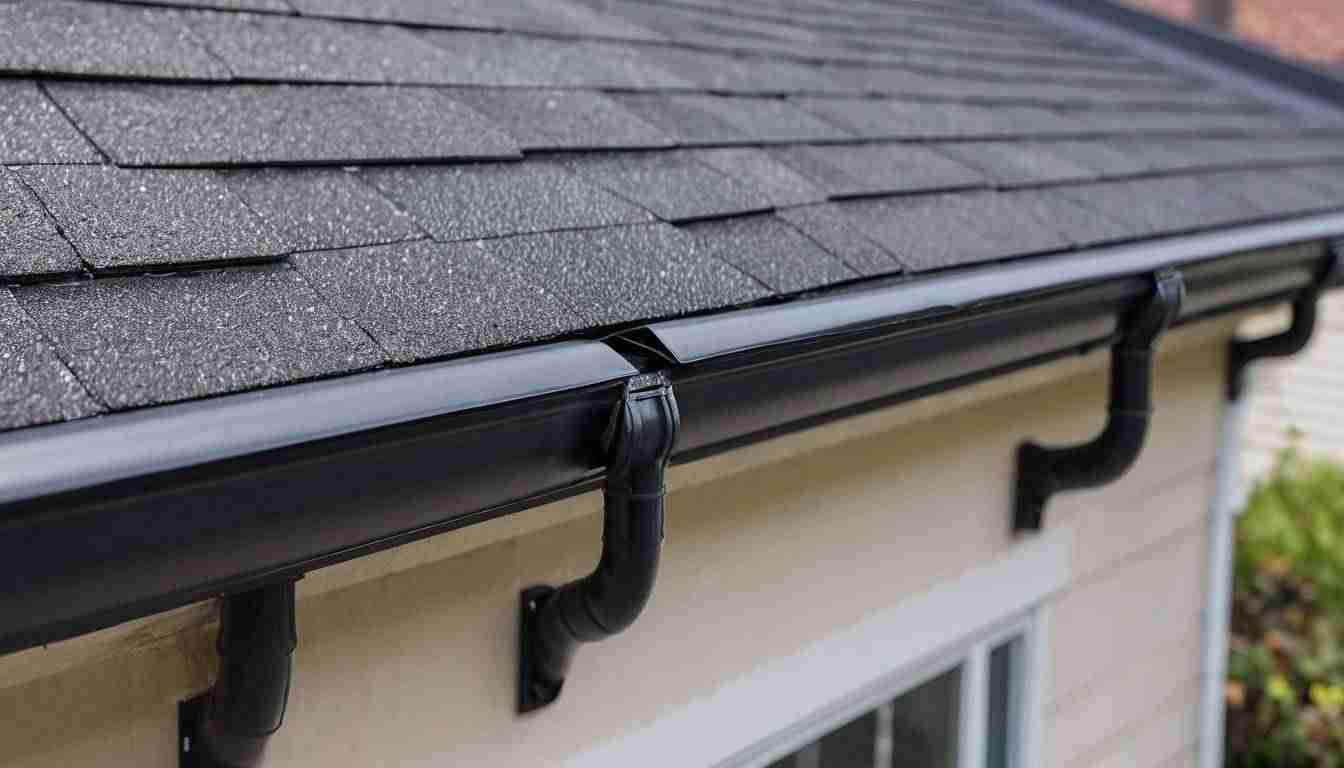
Stand under your roofline during a hard rain and watch where the water actually goes. On a properly protected eave, every drop follows a clean path from shingle to gutter. On a roof missing this one small piece of metal, some of that water sneaks behind the gutter entirely — and that's usually happening for months before anyone notices the fascia board underneath has started to rot.
That small piece of metal is the gutter apron, and despite being one of the cheapest components on your entire roof, it's also one of the most commonly missing or failed pieces of roof edge protection and water runoff control most homeowners never think to check.
What Is a Gutter Apron, and Why Does It Matter
What is a gutter apron? It's a strip of L-shaped metal flashing installed under the first row of shingles at the roof's edge and bent down into the back of the gutter, creating a continuous, sealed path for water to follow from the roof surface directly into the gutter trough. It's one of the more overlooked gutter system components, but this gutter apron definition covers the essential function: routing roof water drainage exactly where it's supposed to go. If you're trying to understand how it differs from standard drip edge specifically, that comparison is covered in detail here — the short version is that a gutter apron is a type of gutter flashing, drip edge's more specialized cousin, built specifically for eaves where gutters are mounted.
The Mechanism Most Explanations Skip
Water doesn't just fall straight down off a roof edge — it clings to surfaces through surface tension, and without something forcing it to break that path, water can actually travel along the underside of the bottom shingle row and work its way backward toward the house instead of dropping cleanly into the gutter below it. A gutter apron physically interrupts that path. It's a small amount of water in any single rainfall, but repeated over months and years, that backward creep is enough to saturate fascia and roof decking slowly, invisibly, from behind.
How It's Actually Installed
Proper apron installation roof sequencing matters as much as the material itself:
1. Measure and Cut to Length
Gutter apron is typically sold in 10-foot sections and cut to match the exact length of each eave run, with pieces overlapped by a couple of inches where two sections meet.
2. Position Before the First Shingle Course
The apron goes down after the underlayment but before the first row of shingles — this ordering matters, since installing it in the wrong sequence defeats its purpose entirely.
3. Secure Along the Roof Edge
Roofing nails spaced roughly every 12 inches hold the flat portion against the roof deck, while the bent lower edge extends down into the gutter itself without being fastened there.
4. Overlap Seams Correctly
Where sections meet, the upper piece should overlap the lower one in the direction water flows, never the reverse, so water can't find a gap to work into at the seam.
5. Confirm the Gutter Alignment
Once installed, the gutter itself needs to sit close enough to the apron's lower edge that water actually lands in the trough rather than overshooting it — a gap that's too wide defeats the apron even when it's installed correctly.
Common Problems and How to Fix Them
1. Buckled or Warped Sections
Temperature swings over years can cause metal to buckle, creating gaps water can slip through. A buckled section typically needs to be replaced rather than reshaped, since bending it back rarely restores a fully sealed fit.
2. Pulled Away From the Shingle Course
Wind, ice, or simply age can work an apron loose from under the shingles above it. This is one of the more visually obvious failures — a gap visible between the shingle edge and the metal is a clear sign it needs to be re-secured or replaced.
3. Missing Entirely in Front of a Downspout
A surprisingly common, specific failure point: if you're chasing a water stain on the fascia and can't explain it, check directly above the downspout first — a short missing or damaged section right there is one of the most frequent sources of an otherwise mysterious stain.
4. Corrosion on Older Galvanized Sections
Steel gutter apron that isn't properly coated can rust over time, especially in humid climates, similar to the aging-material issues covered in plumbing systems in older homes — the same slow-decay pattern, just above the roofline instead of inside the walls. Choosing the right roofing materials upfront reduces how often this specific problem comes up.
Keeping It Working Long-Term
Good gutter leak prevention starts with checking the parts nobody thinks to look at:
Check the apron every time you're already inspecting or cleaning gutters as part of routine roof maintenance, since it's easy to overlook when the focus is on the trough itself rather than what's feeding it
Look specifically at downspout locations and any section showing a visible gap between metal and shingle
If you're addressing missing or damaged shingles nearby, check whether the apron underneath is still properly seated while the shingles are already lifted
Aluminum resists corrosion better than uncoated steel long-term, worth considering if you're replacing a failed section rather than just matching what was there
FAQ
Is a gutter apron the same as drip edge? No, though they're closely related — a gutter apron is a specialized version of drip edge designed specifically for eaves with gutters, while standard drip edge is typically used along other roof edge protection points like the roof's sloped rake edges instead.
Can I install a gutter apron myself?
It's within reach for a comfortable DIYer working from a stable ladder or accessible roof section, though most homeowners have it installed alongside a professional gutter or roofing job rather than as a standalone project.
How do I know if my roof is missing a gutter apron?
Look at the roof edge where it meets the gutter — if you don't see a distinct metal strip tucked under the shingles and bent into the gutter, or if you're seeing fascia staining with no other explanation, it's likely missing or failed.
Does every roof need a gutter apron?
Any eave with gutters benefits from one; it's considered close to essential by most roofing professionals rather than optional, given how inexpensive it is relative to the fascia and decking damage it prevents.
How long does a gutter apron last?
Properly installed aluminum or coated steel apron typically lasts as long as the roof itself, though physical damage, buckling, or corrosion on lower-quality material can shorten that considerably.
About Mubashir Yaqoob
Mubashir Yaqoob researches and writes practical home repair guides for Home Repair Manual, focused on translating technical roofing, plumbing, and maintenance information into clear advice for homeowners.
View all posts by Mubashir Yaqoob