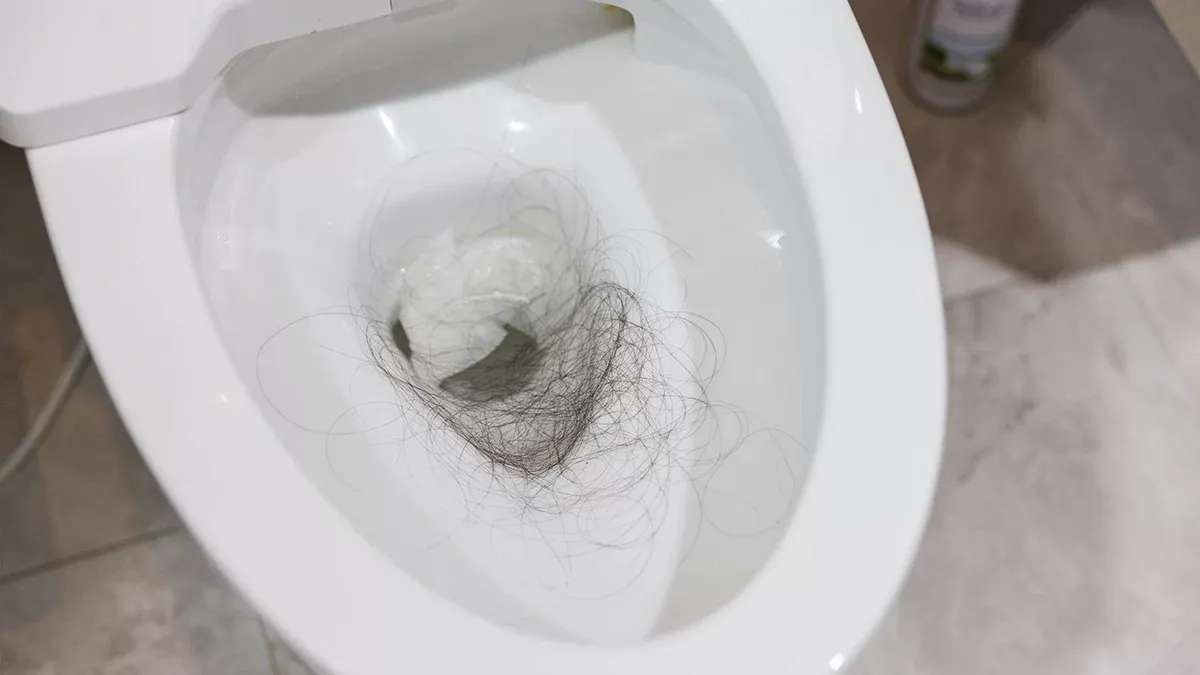
A strand of hair goes down, the bowl clears, and it looks like nothing happened. Is it bad to flush hair down the toilet? Yes — but the reason isn't obvious until you actually follow what that hair does next, because it doesn't just disappear the way everything else in the bowl does.
Is It Bad to Flush Hair Down the Toilet? The Short Version
Hair is one of the only things people regularly flush that never breaks down at all. Toilet paper dissolves within seconds by design; human waste dissolves naturally too. Hair does neither, which means every strand that goes down the drain is still down there somewhere, indefinitely, until it either gets flushed all the way out of the system or catches on something first.
The Journey Hair Actually Takes
Toilet paper is specifically engineered to fall apart in water within seconds, a property manufacturers actually test for using a method called slosh-box testing. Comparing toilet paper vs hair at a material level explains everything: hair has no such engineering behind it. It's made of keratin, the same tough structural protein in fingernails and animal claws, and keratin pipe buildup happens precisely because it's essentially waterproof and chemically inert to the kind of breakdown toilet paper is built for.
Instead of dissolving, a strand of hair travels through the trapway and out into the branch drain line, where it just sits — thin, slightly rough-surfaced, and prone to tangling — becoming a hair trap for pipes that catches anything else moving past it: soap residue, grease, more hair, more paper. That's how a single flush turns into the start of a rope-like mass that keeps growing every time something else goes down after it.
How Much Actually Makes It Risky
This is the part most articles skip entirely, and it's genuinely useful nuance for real toilet clog prevention. A few loose strands that fall out during a normal flush carry very low individual risk — most homes handle this constantly without issue, since a couple of hairs rarely have enough surface area to catch much on their own.
The real risk of hair clogging pipes climbs sharply with volume and repetition: deliberately flushing hair down drain systems in bulk, like a full hairbrush, a beard trim, or a pet's grooming clippings, introduces enough mass at once to start that catch-and-grow process immediately, especially in a toilet that already has other rough spots inside the trapway for hair to grab onto.
The Septic Tank Detour
Most coverage of this topic focuses on municipal sewer pipes, but septic tank hair damage is a distinct problem of its own if that's where the hair ends up. A septic tank relies on bacteria breaking down waste anaerobically, and hair resists that process the same way it resists dissolving in a pipe — it simply doesn't decompose at the rate everything else does.
Over time, undigested hair can contribute to solids buildup in the tank and clog the effluent filter or leach field, both of which are considerably more expensive to service than a simple pipe clog.
Where Old Pipes Make the Journey Worse
An old pipes hair clog forms much faster than the same amount of hair would in modern plumbing. Pipe material matters more than most people realize. Smooth modern PVC or PEX gives hair very little to grab onto, but older galvanized or cast iron lines develop a rough, corroded interior surface over decades — exactly the kind of texture hair catches on easily, compounding the same aging-pipe vulnerabilities covered in plumbing issues common to older homes.
The trapway design inside the toilet itself plays a role too; a narrower siphonic trapway, covered in more detail here, gives hair less room to pass through cleanly than a wider washdown-style design.
Real Situations Where This Actually Comes Up
Good bathroom hair disposal habits matter more than any single flush decision:
Cleaning out a hairbrush — this is the single most common source of accidental mass hair-flushing; empty it into the trash instead, every time, not just when you remember
Trimming a beard or shaving over the sink — a bathroom sink with a slow-draining strainer is a better catch point than letting clippings wash straight down, and worth checking if drain flow already feels sluggish
Pet grooming near the toilet — pet hair is just as resistant to breaking down as human hair, and often comes in larger clumps at once
Shower and tub drains — not the toilet specifically, but the same hair-catching mechanism applies; a simple mesh drain hair catcher stops it before it ever reaches the plumbing at all
If You've Already Flushed a Lot
A single incident rarely causes an immediate blockage, but if you're noticing early trouble — gurgling, slow drainage, or a toilet that's struggling to clear fully — a septic-safe enzyme treatment poured into the bowl and left overnight can help break down organic buildup before it hardens into a harder clog. If plunging doesn't clear it and symptoms persist, that's the point to call a plumber rather than keep flushing more water at the problem.
FAQ
Is it bad to flush hair down the toilet occasionally?
A few stray strands during normal use carry low risk, but making a habit of it — especially flushing hairbrush contents — significantly raises the odds of a slow-building clog over time.
Does short hair clog pipes as easily as long hair?
Yes — length matters less than people assume; short hair is just as resistant to breaking down and can tangle with other debris just as effectively.
Can hair damage a septic system specifically?
Yes, in a different way than sewer pipes — hair resists the bacterial breakdown a septic tank relies on, contributing to solids buildup over time rather than a sudden clog.
Why does hair cause more problems in older homes?
Older galvanized or cast iron pipes have rougher, more corroded interior surfaces that catch hair far more easily than smooth modern PVC or PEX piping.
What should I do with hair instead of flushing it?
Trash is the simplest answer for a hairbrush or grooming session; a mesh drain cover handles shower and sink hair automatically without requiring you to remember every time.
About Mubashir Yaqoob
Mubashir Yaqoob researches and writes practical home repair guides for Home Repair Manual, focused on translating technical roofing, plumbing, and maintenance information into clear advice for homeowners.
View all posts by Mubashir Yaqoob