The first hard freeze is in the forecast, and somewhere under the house is a pipe wrapped in heat tape you haven't thought about since last winter. You plug it in. Nothing glows, nothing hums, nothing smells like toast. So is it working?
Most advice on how to know if heat tape is working says to touch it and see if it's warm. That's a coin flip. A thermostat may be waiting for colder weather, self-regulating cable barely gets warm at all, and tape under foam insulation feels like nothing. What you can trust is a short check done in the right order, and the order depends on which kind of tape you own. This one takes about 20 minutes, and most of it happens with the power off.
How to Know If Heat Tape Is Working Starts With the Type You Have
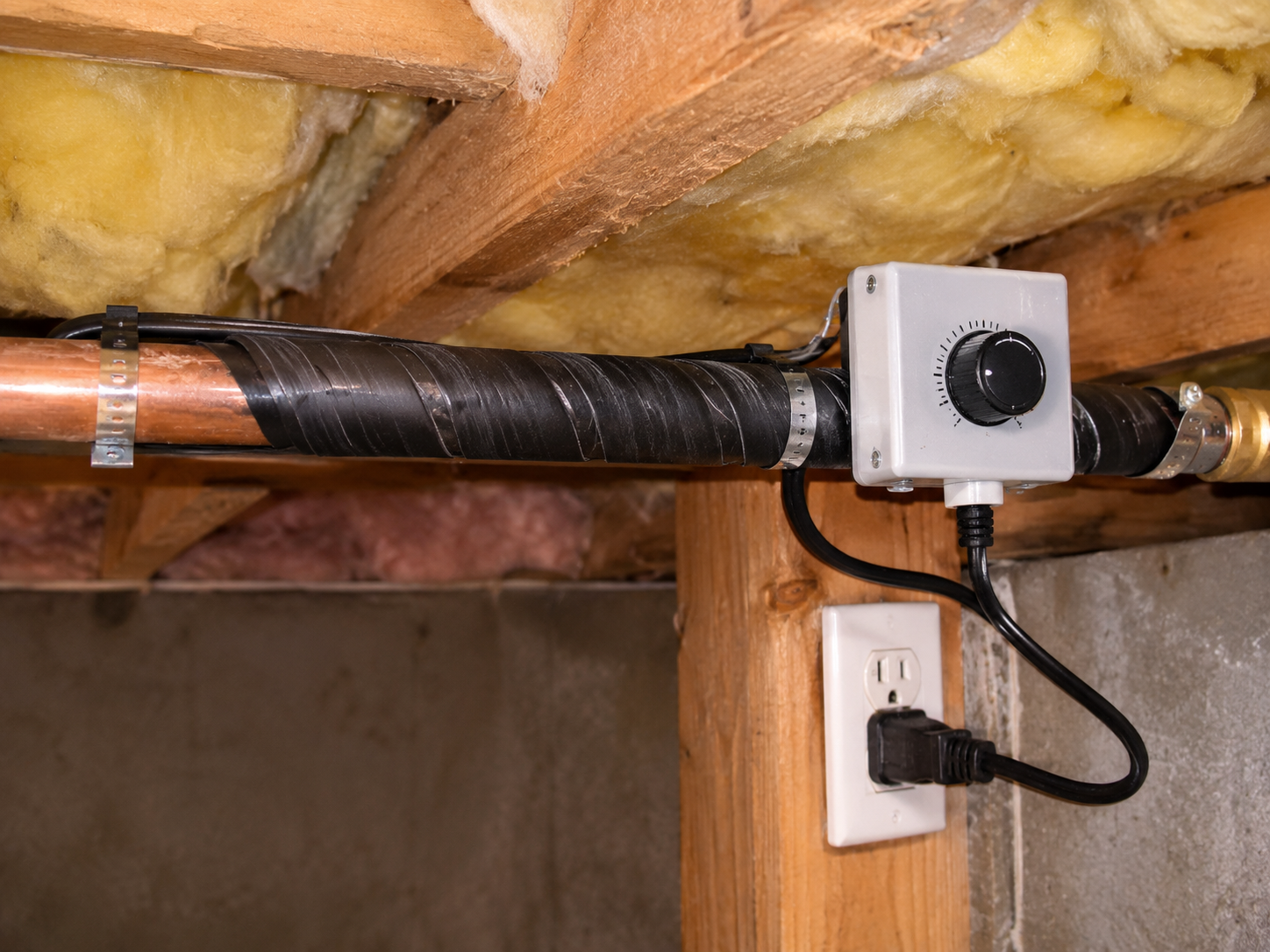
"Working" looks different for each kind of tape, which is why one-size-fits-all advice fails. Find yours in the table first.
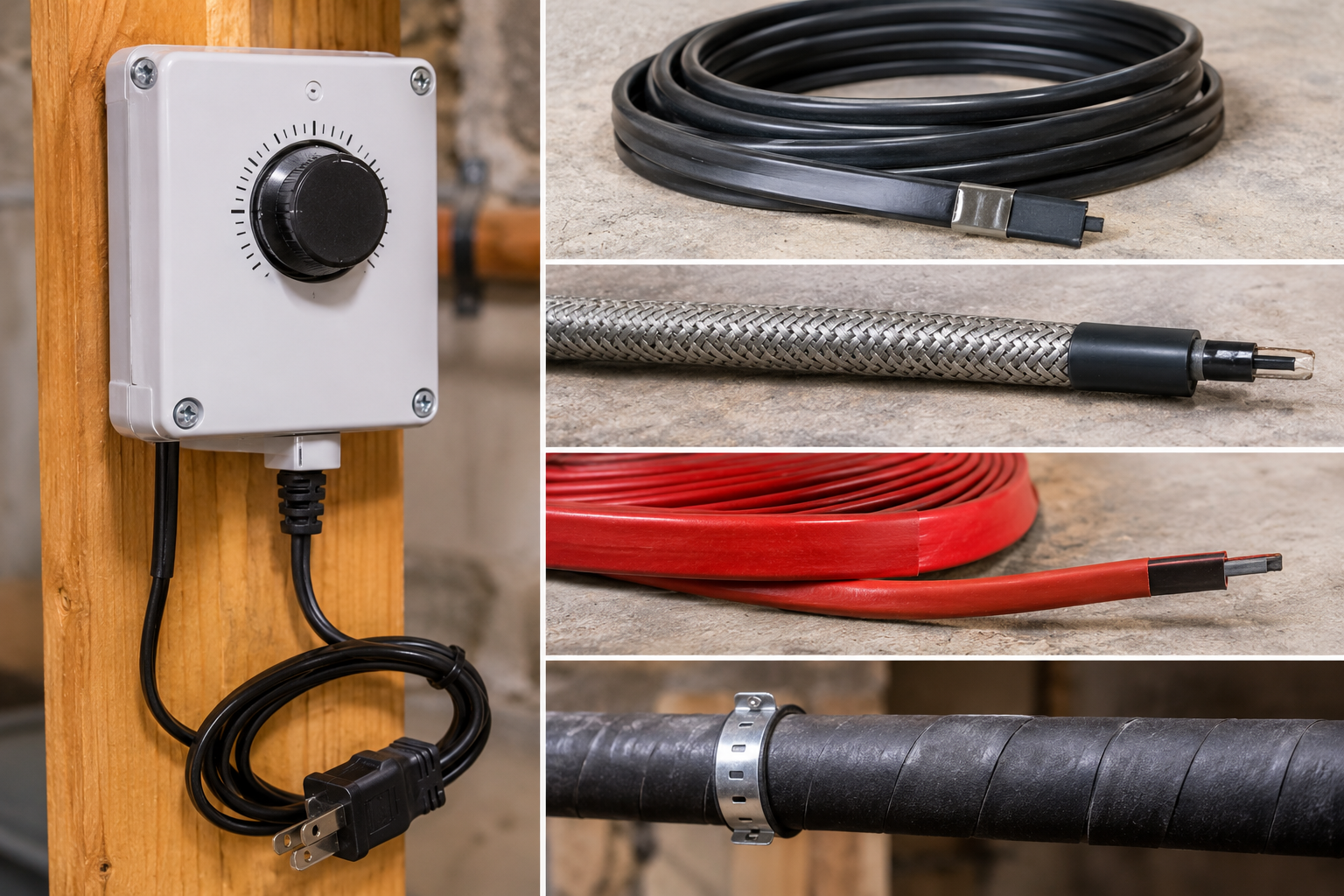
Type | How to spot it | What "working" looks like | Best test |
Thermostat-controlled tape | A small box on the cord, often near the plug | Idle on mild days, then heats once the sensor cools toward freezing | Cold test on the thermostat |
Self-regulating cable, no thermostat | Label says self-regulating, flat black cable | Draws power whenever it's plugged in, a bit more when cold, only ever warm | Plug-in watt meter |
Self-regulating with built-in thermostat | Thermostat or light at the plug end | Standby above the high 30s °F, then heats | Cold test, then check the light |
Roof and gutter cable | Sold for de-icing, often switched by hand | Warm, not hot, and only needed in snow | Watt meter, then a look at the melt |
No label at all? Treat it as old and plan to replace it. More on that in a moment.
That's why how to know if heat tape is working has no single answer. A thermostat tape sitting cold in October is behaving. A self-regulating cable that's only lukewarm is behaving. A tape that's unusually hot is the one to worry about.
Do the Safety Check With the Power Off
Unplug the tape before you handle it. Then go over every foot you can reach with a flashlight.
Look for a cracked or brittle jacket, bare wire, scorched or discolored patches (especially near the plug), tape crossing over itself, damp connections and anything a mouse has been chewing. The U.S. Consumer Product Safety Commission has long advised inspecting heat tape every fall, and it urges replacing uncertified tape that's more than three years old. Older CPSC estimates put heat-tape fires at around 2,000 a year, so this step isn't fussiness.
If you find damage, don't wrap it in electrical tape and call it done. Replace the tape. While you're under there, it's a good moment to test the smoke alarms too, and our guide on what your smoke alarm manual actually says is worth a skim. Our DIY home inspection checklist is a handy way to fold this check into your fall routine.
The 20-Minute Test, Step by Step
Check the outlet. Plug a lamp into it. If it's a GFCI, press the test and reset buttons. CPSC advises GFCI protection for heat tape, and most manufacturers say no extension cords.
Plug the tape in. If there's a light, read your manual. On many models it only means power is reaching the plug, not that the tape is heating.
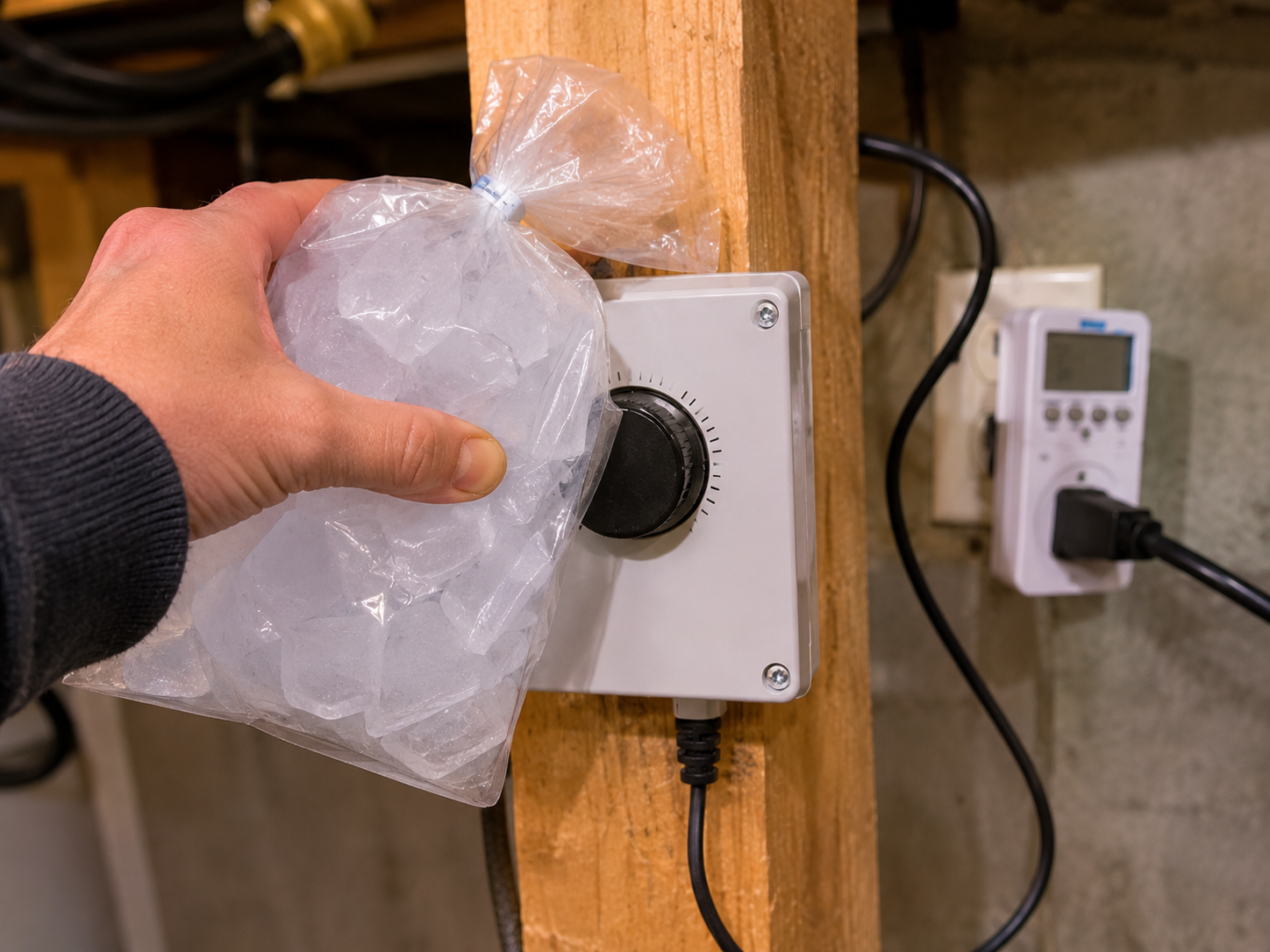
Cold-test a thermostat. Seal some ice in a zip bag and hold it on the thermostat or sensor only. Keep the plug and connections dry. Within about 10 to 20 minutes the tape should start to warm along its length. If it doesn't, the thermostat or the tape has failed.
Meter a self-regulating cable. Put a plug-in watt meter between the outlet and the tape. Any reading above zero means current is flowing. Expect a higher number when the pipe is cold than on a mild afternoon. For a rough sense of scale, a 50-foot cable rated at 5 watts per foot tops out around 250 watts, but ratings are published at a set reference temperature, so treat that as a ballpark and compare it with the manufacturer's chart.
Feel it, then measure it. Touch the tape in several places, or use an infrared thermometer to compare it with the bare pipe. One manufacturer says its self-regulating cable typically peaks around 60 to 85°F in cool conditions, so warm is normal and hot is a warning. Don't judge by touch through insulation.
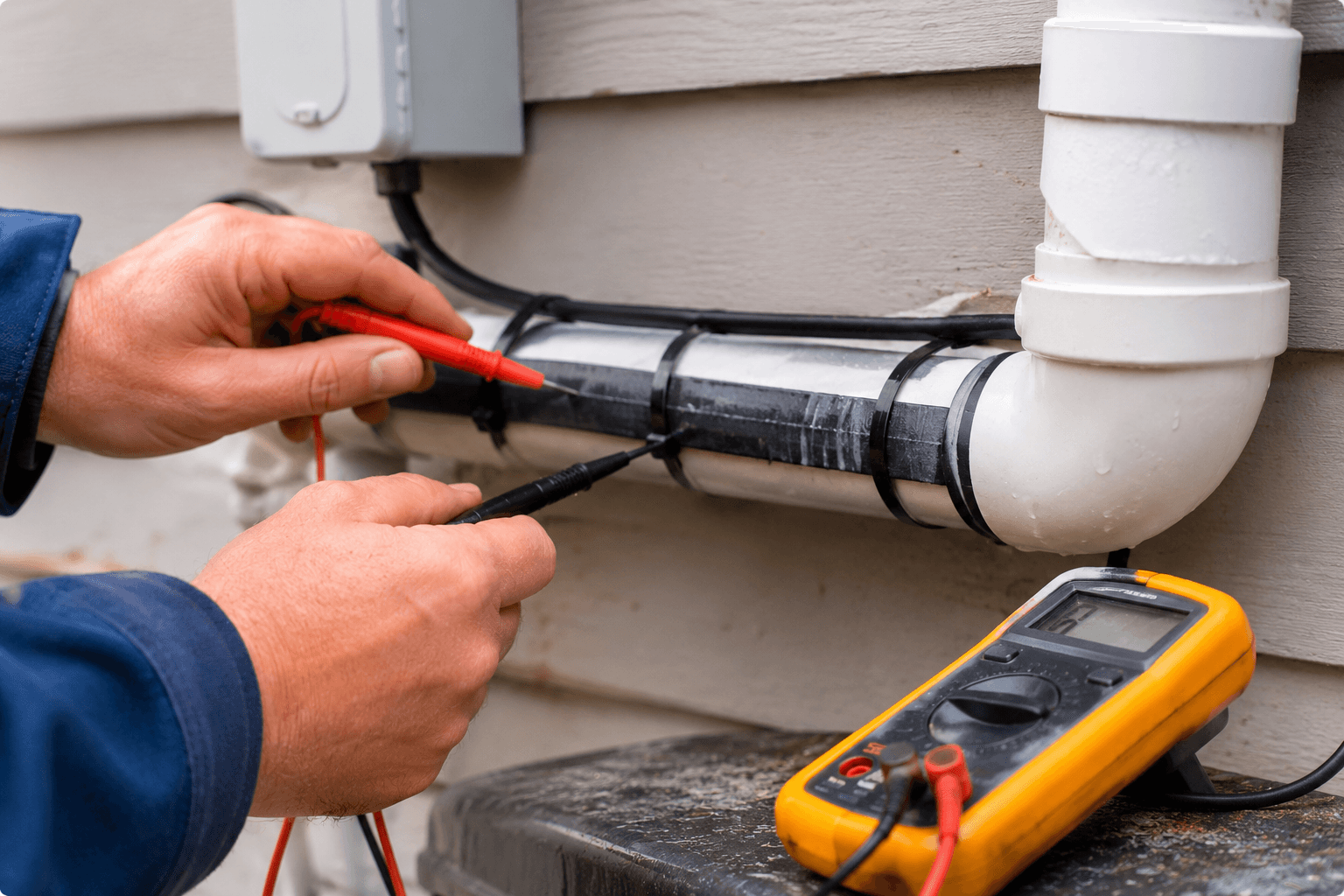
Check resistance on plain tape. With it unplugged, a multimeter should read close to the label. The math is volts squared divided by watts, so a 120-volt, 60-watt tape should read about 240 ohms. An open reading means a break. Chill any in-line thermostat first, or it may read open on its own. Skip this on self-regulating cable, because its resistance changes with temperature.
How to Know If Heat Tape Is Working on a Roof or Gutter
Roof cable is a different animal. Pipe tape doesn't belong on roofs, gutters or driveways, and CPSC says so. Roof cable usually runs only when you switch it on or when a sensor sees snow.
Test it on a cool day before the first storm. Plug it in and check the watt meter, then look along the eave from the ground with binoculars for cracked jackets, ladder scars and ice damage. After snowfall, you should see a melted path running down toward the gutter and downspout. The roof version of how to know if heat tape is working is mostly about drainage. Don't expect it to melt the whole roof. A warm, not hot, cable that carries meltwater away is doing exactly its job.
Working Is Not the Same as Protecting
Learning how to know if heat tape is working only gets you halfway. Tape can be perfectly healthy and the pipe can still freeze. The usual reasons are missing insulation, a valve or hose bib the tape never reached, a thermostat hung in the wrong spot, or wind blasting an exposed run.
Read the instructions on insulation before you add any. CPSC has warned that heavy insulation over some tapes without thermostats can cause fires, and some cables forbid insulation outright. Plastic pipe generally needs thermostat-controlled tape. If the pipe froze anyway, see can frozen pipes thaw on their own, and read about what happens if pipes freeze. Our guide to common winter plumbing problems covers the rest, and the signs of a burst pipe under the house are worth knowing.
What You're Seeing and What It Usually Means
What you see | Usual cause | Next move |
No light, no warmth, no watts | No power | Reset the GFCI or breaker and test the outlet with a lamp |
Light on, tape cold on a mild day | Thermostat waiting | Run the cold test before deciding |
Still cold after the cold test | Failed thermostat or broken element | Replace the tape |
GFCI keeps tripping | Moisture or damaged jacket | Unplug and inspect, then replace |
Warm in spots, cooler in others | Normal for self-regulating cable | Nothing, unless there's damage |
Scorched, brittle or crossing itself | Overheating or age | Replace now |
When to Replace It or Call a Pro
Replace the tape if it has no certification label, if it's more than three years old and uncertified, if the jacket is damaged, or if a GFCI keeps tripping. If you can't tell what you have, replacing it is cheaper than a burst pipe, and new certified tape comes with instructions you can actually keep. Call a licensed electrician if the circuit is the problem, or a plumber if the line keeps freezing despite working tape. Our guide on how to hire a plumber helps you vet one.
FAQ
How to know if heat tape is working without any tools? Check for power, then feel the tape on a cold day. If the pipe sits above freezing while the air is below, that's a good sign. Tools like a watt meter are more reliable.
How to know if heat tape is working when it's warm outside? Use the ice-bag cold test on the thermostat. Without it, a thermostat-controlled tape can sit cold all fall and still be fine.
How to know if heat tape is working on a roof? Plug it in, watch the watt meter, and look for a melted channel toward the gutter after the next snowfall.
How long does heat tape last? There's no single number. CPSC's guidance is to replace uncertified tape after three years and to inspect certified tape every fall, replacing it at the first sign of wear.
Should heat tape get hot? No. It should feel warm at most.
Does a light mean it's working? Only sometimes. Check what the light means on your model.
Final Thoughts
That's really all there is to how to know if heat tape is working: find your type, inspect with the power off, test the way that type calls for, and replace anything old or damaged. Do it now, while the pipes are still thawed.
About Mubashir Yaqoob
Mubashir Yaqoob researches and writes practical home repair guides for Home Repair Manual, focused on translating technical roofing, plumbing, and maintenance information into clear advice for homeowners.
View all posts by Mubashir Yaqoob