A Levittown, Pennsylvania homeowner turned off his home's heat entirely before a family vacation, saving roughly $300 in oil costs while the house sat empty. The day after he returned, his daughter's bedroom ceiling collapsed — a pipe had frozen and burst in the attic while no one was home to catch it early, causing flooding that destroyed drywall, flooring, and furniture, and turned into a drawn-out insurance claim.
That's the real shape of most common winter plumbing problems: a small, reasonable-sounding decision that quietly turns into a five-figure repair and lasting winter plumbing damage. Understanding what actually triggers these problems — the freezing temperatures plumbing systems in every home are exposed to, and where the real risk hides — is most of what separates a minor inconvenience from that kind of disaster.
What Actually Causes Common Winter Plumbing Problems
Water expands by about 9% when it freezes, and pipes aren't built to absorb that expansion. The kind of burst pipes winter homeowners worry about most tends to happen once outdoor temperatures hit roughly 20°F or below, especially for pipes running through unheated spaces — attic pipe freezing, crawl space exposure, exterior walls, and garages are the usual trouble spots. The pressure buildup from freezing water doesn't always crack the pipe at the ice itself; it often ruptures a different section entirely, wherever the pipe is weakest, which is part of why water line freezing can seem to "come out of nowhere" even when the actual freeze happened somewhere else in the line.
The Problems That Show Up Most Often
These frozen pipes issues and cold weather plumbing problems account for nearly every winter service call:
1. Frozen Supply Pipes
The most common winter plumbing complaint by far. A lack of water flow, frost visible on an exposed pipe, or strange gurgling when you turn on a faucet are the earliest pipe burst signs — catching it at this stage, before a full burst, is the difference between a quick fix and a flooded floor.
2. Cracked or Clogged Outdoor Drains
Freezing temperatures make exterior pipe sections brittle, and ice buildup inside outdoor drains can crack the pipe outright. Combined with holiday plumbing clogs from extra kitchen grease during cooking season, winter is genuinely a higher-clog season for both indoor and outdoor lines.
3. Water Heater Strain
Heavier hot water use during cold months takes a real toll on water heater winter performance, since the system is already working harder just to bring incoming cold water up to temperature. Inconsistent heat, strange noises, or a noticeably shorter hot water supply are common signs it's struggling, closely related to the other water heater issues worth troubleshooting if you notice a drop in performance.
4. Sump Pump Overload and Basement Flooding
Melting snow can saturate the ground and overwhelm a sump pump the same way a heavy rainstorm would, and sump pump winter failure is common simply because a pump that's sat idle for months often isn't discovered as faulty until it's suddenly needed. This is also when a frozen discharge line becomes a real risk — ice blocking the pump's only exit sends water right back where it came from.
Preventing Frozen Pipes: Step by Step
These pipe freezing prevention steps and pipe insulation tips are what actually make the difference, roughly in order of impact:
1. Insulate Exposed Pipes
Exterior pipe insulation in attics, crawl spaces, and basements is inexpensive and takes an afternoon. For pipes in especially exposed spots, an extra layer of protection — heat tape pipes can be wrapped in — adds real defense during a hard cold snap.
2. Keep the Thermostat Steady
Don't let indoor temperature drop below 55°F, even in a vacant home — that's the widely cited minimum to keep pipes inside walls from reaching freezing, regardless of how tempting it is to cut heating costs while away. Vacant home pipe freeze risk is exactly what caught the Levittown homeowner off guard.
3. Let Faucets Drip
Running a slow, steady drip — a dripping faucet winter habit worth keeping on the highest-risk fixtures, like those on exterior walls or at the end of a long unprotected run — keeps water moving just enough to resist freezing, since moving water freezes far more slowly than still water.
4. Open Cabinet Doors
Under-sink cabinets on exterior walls trap cold air around supply lines; leaving them open lets household heat reach the pipes directly.
5. Winterize Outdoor Connections
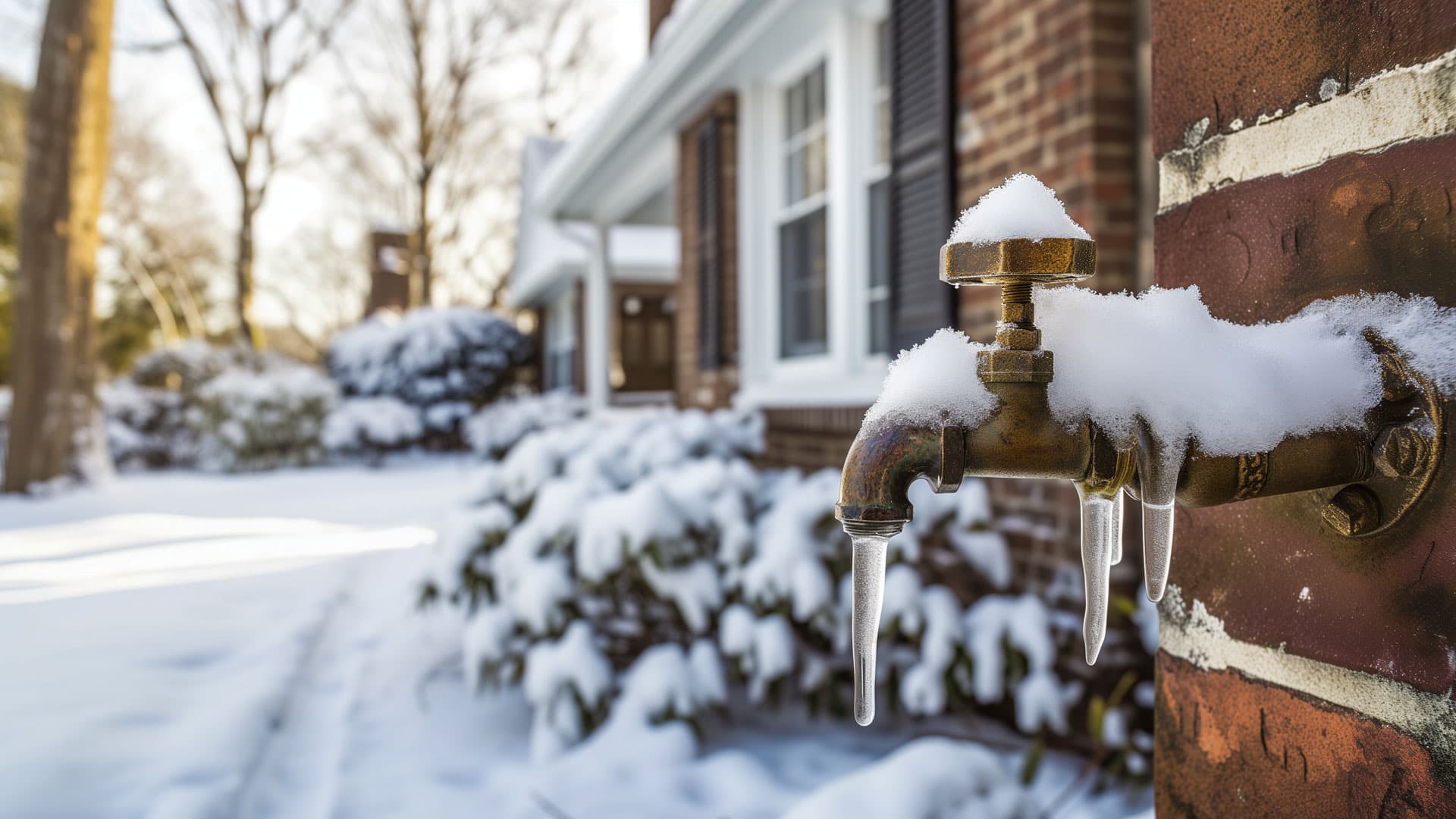
Exterior spigot winterizing — the core of exterior faucet freeze prevention — means disconnecting and draining garden hoses, shutting off the interior valve feeding outdoor faucets, and leaving the outdoor valve open to relieve any pressure if a freeze does happen anyway. This is a core part of winterizing home plumbing before the first hard freeze.
6. Tell Someone If You're Away
If you'll be gone more than a few days during a cold stretch, ask a neighbor to check the house periodically — the Levittown example above is exactly the scenario where an early catch prevents the kind of plumbing emergency winter homeowners dread most.
If a Pipe Already Froze: What to Actually Do
Turn on the affected faucet first — even a trickle means water is starting to move again as the ice melts. Trace the line to find the coldest, most exposed section (an attic run or an exterior wall are the usual suspects) and apply gentle heat: a hair dryer, a space heater kept a safe distance away, or towels soaked in hot water all work for thawing frozen pipes safely. If you can't find or reach the frozen section, or if you find a crack or active leak, shut off the main water valve immediately and call a plumber rather than guessing further.
One method to never use: an open flame. A Lockport, New York homeowner used a propane torch on a frozen pipe and ended up with his home destroyed in the resulting fire — a real, documented case, not a hypothetical warning. Pipes run through wood framing and insulation, and direct flame is a genuine fire risk, not just an inefficient thawing method.
If pipes have frozen more than once in the same spot, it's worth treating that as a plumbing winter maintenance priority as part of your broader winter home care rather than repeating the same emergency fix each year. A plumbing inspection before winter catches weak points while they're still cheap to fix, and understanding the fuller chain of damage a frozen pipe can cause makes clear why a recurring freeze point deserves a permanent fix, not just repeated triage.
These seasonal plumbing issues aren't unique to any one type of home, but the winter home water damage they cause is entirely preventable — the first cold snap plumbing systems face each year doesn't have to end in a repair bill, as long as the groundwork above is already in place.
FAQ
What temperature causes pipes to freeze?
The risk rises sharply around 20°F or below, especially for pipes in unheated or exposed areas, such as attics and exterior walls.
Can frozen pipes thaw on their own without bursting?
Sometimes, but it's not something to count on — the real risk depends on how long the freeze lasted and where it happened, not just whether the ice eventually melts.
Is it cheaper to leave heat on while away in winter than risk frozen pipes?
Almost always — a modest heating bill is far less than a typical pipe burst repair cost and the water damage that follows.
Why do drains clog more in winter?
Increased holiday cooking sends more grease and fat down kitchen drains, and outdoor drains become more prone to cracking and ice blockage in freezing temperatures.
Should I turn off my water when I go on vacation in winter?
Only if you're also draining the system properly — simply turning off the main without draining pipes can leave standing water vulnerable to freezing with nowhere to relieve pressure.
About Mubashir Yaqoob
Mubashir Yaqoob researches and writes practical home repair guides for Home Repair Manual, focused on translating technical roofing, plumbing, and maintenance information into clear advice for homeowners.
View all posts by Mubashir Yaqoob