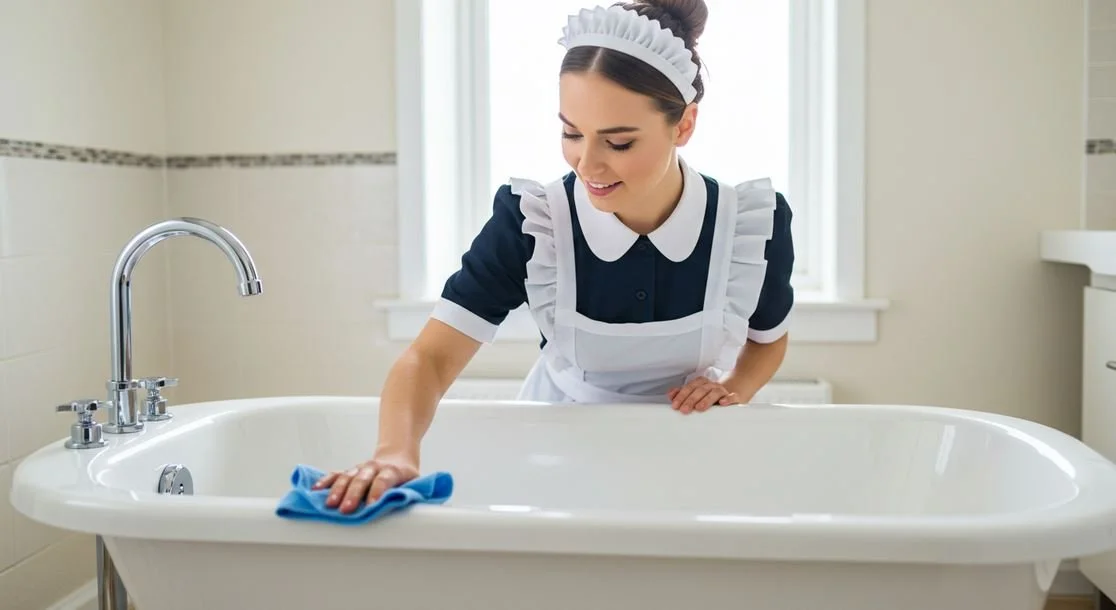
A dull, yellowed plastic tub looks like permanent damage, but it rarely is. What's actually sitting on the surface is a layer of mineral scale, soap film, and biofilm built up over time — not a change to the plastic itself. That distinction matters, because it means the right approach to how to clean a plastic bathtub can genuinely restore the surface rather than just making peace with how it looks now.
Knowing how to clean a plastic bathtub properly also means knowing what to avoid, since acrylic and fiberglass scratch and discolor easily under the wrong products — the fastest way to actually damage a tub is reaching for something too aggressive trying to fix a problem that a gentler method would have solved anyway. This applies whether you're doing acrylic tub cleaning or fiberglass tub cleaning specifically, since both materials share the same basic vulnerability to abrasion and harsh chemicals.
How to Clean a Plastic Bathtub: What's Actually Causing the Dullness
Before reaching for a stronger product, it helps to know what you're dealing with. Yellowing at the waterline, a dull or gray cast, and pink streaks near the drain are all surface buildup, not structural staining — which is why a proper bathtub deep clean, given enough time to work, reliably reverses all three signs of plastic tub discoloration.
The Basic Routine, Step by Step
Rinse the tub with warm water to loosen and wash away loose dirt, hair, and product residue before applying anything else.
Sprinkle baking soda generously across the surface, focusing on any dull or discolored areas.
Let it sit for 15 to 20 minutes — this dwell time is doing most of the actual work; rushing past it is the most common reason people conclude a method "doesn't work."
Scrub gently with a soft cloth or non-abrasive sponge, never anything textured enough to scratch the plastic.
Rinse thoroughly with a handheld sprayer or shower head until no residue remains.
The Vinegar-and-Baking-Soda Myth
This baking soda vinegar bathtub combination is popular specifically because it fizzes dramatically, which feels like proof it's working. In reality, that reaction mostly just produces water and a trace of salt — neither vinegar nor baking soda is a true surfactant, so on their own they don't cut through the greasy residue left by soap, lotion, and body oils nearly as well as people assume. Adding a small amount of dish soap to the mix is what actually helps lift that residue; the fizzing is satisfying, but the soap is doing the real cleaning.
The Non-Slip Bottom Problem Nobody Talks About
The textured, non-slip section at the bottom of a plastic tub traps dirt in a way the smooth sides never do, and it's genuinely harder to clean as a result. This calls for real non-slip tub surface cleaning technique, not just the standard routine. A mildly abrasive cleanser — something like Bon Ami, which has just enough grit to work into the texture without scratching plastic the way a harsher scouring powder would — handles this section better than the standard baking soda routine alone, and it's one of the most effective bathtub stain removal tricks for this specific spot.
What to Never Use on Plastic
Safe bathtub cleaners matter as much as the technique itself:
Bleach — can discolor or damage acrylic and fiberglass surfaces; avoid it unless a product is specifically rated safe for your tub material
Steel wool or abrasive scouring pads — these scratch plastic permanently, and scratches actually make future buildup worse by giving grime more surface texture to grip
Undiluted ammonia or harsh solvents — too aggressive for most plastic tub finishes and unnecessary given how well gentler methods work with proper dwell time
Match the Method to Your Tub Type
Not every plastic tub is the same thickness or rigidity, and that changes how hard you can reasonably clean it:
Built-in acrylic or fiberglass tubs are rigid enough to handle standard dwell times and mild descalers, though thorough rinsing still matters since they can't be tipped to drain
Portable or foldable plastic tubs use thinner material and seams that scratch more easily — shorter dwell times and soft cloths only
Baby baths need the gentlest treatment of all: diluted solutions, extra rinsing, and full air-drying to avoid leaving any chemical residue behind
When Home Methods Won't Cut It
Deep, long-set oxidation or stubborn bathtub mildew removal on an older tub sometimes genuinely won't lift with home methods no matter how much dwell time you give it — at that point, a professional deep clean (commonly running a few hundred dollars) is a more realistic path than continuing to escalate the products you're using at home, which mostly just raises the risk of surface damage without actually solving the problem. This kind of upkeep pairs well with broader routine plumbing maintenance and a seasonal home inspection habit, and it ties directly into keeping the wall and surround waterproofing around the tub in good shape too, since grime buildup and moisture problems often show up together. If your tub's issue is really about the finish wearing out rather than surface buildup, that's a different situation — reglazing lifespan depends heavily on the cleaning habits covered here, so getting cleaning right now also protects a future refinishing investment.
FAQ
Is yellowing on a plastic bathtub permanent?
Usually not — successful bathtub yellowing removal comes down to knowing it's typically mineral scale, soap film, and biofilm sitting on the surface, which a proper cleaning routine with enough dwell time can reverse.
Can I use bleach on an acrylic or plastic bathtub?
It's best avoided — bleach can discolor or damage plastic tub surfaces, and gentler methods handle most buildup just as effectively without the risk.
Why does the bottom of my tub stay dirty even after cleaning the rest?
The textured, non-slip surface traps dirt more than smooth areas do, and typically needs a mildly abrasive cleaner rather than the standard routine used on the walls.
Does the vinegar and baking soda method actually work?
It helps, but the dramatic fizzing isn't doing the real cleaning — adding a bit of dish soap gives the mixture actual degreasing power that vinegar and baking soda alone don't provide.
How often should a plastic bathtub be cleaned to prevent buildup?
Weekly cleaning with a gentle method prevents the kind of deep, set-in buildup that eventually requires stronger products or professional attention to remove — the same consistency that makes learning how to clean a plastic bathtub properly worth the small time investment each week.
About Mubashir Yaqoob
Mubashir Yaqoob researches and writes practical home repair guides for Home Repair Manual, focused on translating technical roofing, plumbing, and maintenance information into clear advice for homeowners.
View all posts by Mubashir Yaqoob