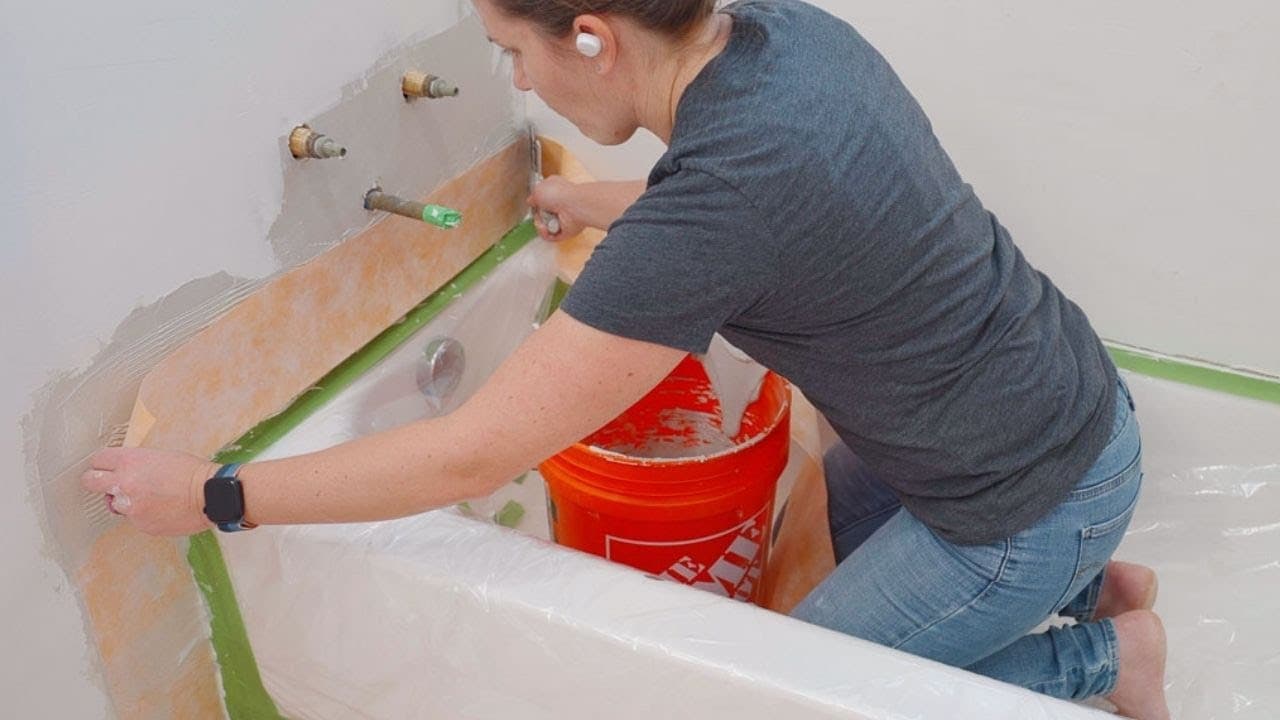
Caulk and grout get most of the credit for keeping a bathroom dry, but neither one is actually doing the real work. They're the visible finish, not the barrier — and that misunderstanding is exactly why so many tub surrounds develop hidden water damage years before anyone notices a problem on the surface.
Real bathtub waterproofing happens behind the tile, not on it. Tub surround waterproofing done correctly is the difference between a surround that lasts decades and one that's quietly rotting the wall behind it, a habit worth building alongside a broader seasonal home inspection.
Bathtub Waterproofing: The Layer You Never See
A tiled tub surround relies on a waterproof layer installed directly against the studs or backer board, before a single tile goes up — this tile backer board waterproofing step is what actually does the work. That layer is what stops water once it inevitably gets past the tile and grout, protecting the framing underneath — the whole reason waterproofing has to happen before tiling rather than as an afterthought.
The Three Real Waterproofing Methods
Whether you're using a shower membrane waterproofing approach or a rigid board system, every real method falls into one of three categories:
Method | Typical Cost | How It Works | Best For |
Sheet membrane (Kerdi, NobleSeal) | $2–$4/sq ft | Bonded to backer board with thin-set mortar | Maximum reliability, any substrate |
Liquid-applied membrane (RedGard, AquaDefense) | Lower material cost | Painted or rolled on in 2–3 coats to 30–40 mil thickness | DIYers comfortable with careful, even application |
Waterproof backer board (Kerdi-Board) | Moderate | Foam board itself is the waterproof layer | Lighter installs, fewer separate steps |
The RedGard vs Kerdi choice really comes down to installation style rather than performance — sheet membranes give you a more predictable, consistent thickness regardless of technique, while a liquid membrane asks more of the installer's own care and attention during application.
Each approach works well when installed correctly, but they're not interchangeable mid-project — mixing an incompatible mortar with a liquid membrane, for example, can undermine a system that would otherwise perform exactly as intended.
The Tub Flange Detail Most DIYers Miss
Tubs have a small lip, called a flange, where the tub meets the wall. Proper tub flange waterproofing extends the membrane down over that flange rather than stopping above it, so that any water that does get behind the tile runs down the wall and back into the tub itself instead of pooling at the wall-to-tub joint. Skipping this detail is one of the more common reasons a seemingly solid waterproofing job still leads to a slow leak right at the tub's edge.
Common Mistakes Worth Avoiding
Using the wrong mortar over a liquid membrane — not every thin-set is rated for compatibility, and using an incompatible product can compromise the whole system
Applying liquid membrane too thin — most products specify a minimum mil thickness, and eyeballing it instead of checking coverage leaves weak spots
Skipping the seam overlap — sheet membranes need roughly 2 inches of overlap at every seam; shortcuts here are where the earliest failures tend to start
Assuming caulk alone is enough — this is really a bathtub caulk vs waterproofing misunderstanding; caulk manages the visible joint, but it was never designed to be the primary water barrier on its own, and it's a core piece of any real bathroom water damage prevention plan
How Much Water This Area Actually Handles
A tub and shower area can see over 17 gallons of water exposure daily in an active household — a volume that makes clear why "mostly waterproof" isn't good enough for a surface that has to hold up to that much repeated moisture, year after year, without a single weak point in the barrier behind it.
A Simple Habit That Helps More Than People Expect
Running the bathroom exhaust fan for at least 10 minutes after a shower or bath helps clear lingering humidity before it has a chance to work into grout lines and caulk joints over time. It doesn't replace proper waterproofing, but it reduces the ongoing moisture load on a system that's already doing the harder work out of sight — a habit worth pairing with routine plumbing maintenance checks elsewhere in the bathroom, and bathroom mold prevention generally comes down to managing moisture consistently rather than reacting to it after the fact.
When the Problem Is the Tub Itself, Not the Wall
Everything above addresses the wall and surround — but if it's the tub's own surface that's chipped, dull, or wearing down rather than the surrounding structure, that's a different project entirely. How long a tub's actual finish holds up depends on different factors than wall waterproofing does, and the two problems shouldn't be diagnosed the same way.
FAQ
Is grout enough to waterproof a bathtub surround?
No — grout and caulk are the visible finish, not the water barrier. A membrane or waterproof backer board installed behind the tile is what actually keeps water out of the wall structure.
RedGard or Kerdi — which one should I actually use?
See the comparison above — the short version is liquid vs. sheet application, with sheet membranes generally costing more per square foot in exchange for more consistent thickness.
Can I waterproof over old tile instead of tearing it out?
Some liquid membrane products are rated for application directly over existing tile, which can simplify a renovation, though checking the specific product's requirements first matters.
How do I know if my current bathtub waterproofing has failed?
Soft spots in the wall near the tub, discoloration, or a musty smell are all signs water has already reached the structure behind the tile — worth investigating alongside other signs of hidden water damage common in older bathrooms.
Does a fiberglass or acrylic tub surround need the same waterproofing as tile?
No — one-piece fiberglass or acrylic surrounds are typically sealed as a unit at the seams and don't require the layered membrane system tile installations do.
About Mubashir Yaqoob
Mubashir Yaqoob researches and writes practical home repair guides for Home Repair Manual, focused on translating technical roofing, plumbing, and maintenance information into clear advice for homeowners.
View all posts by Mubashir Yaqoob