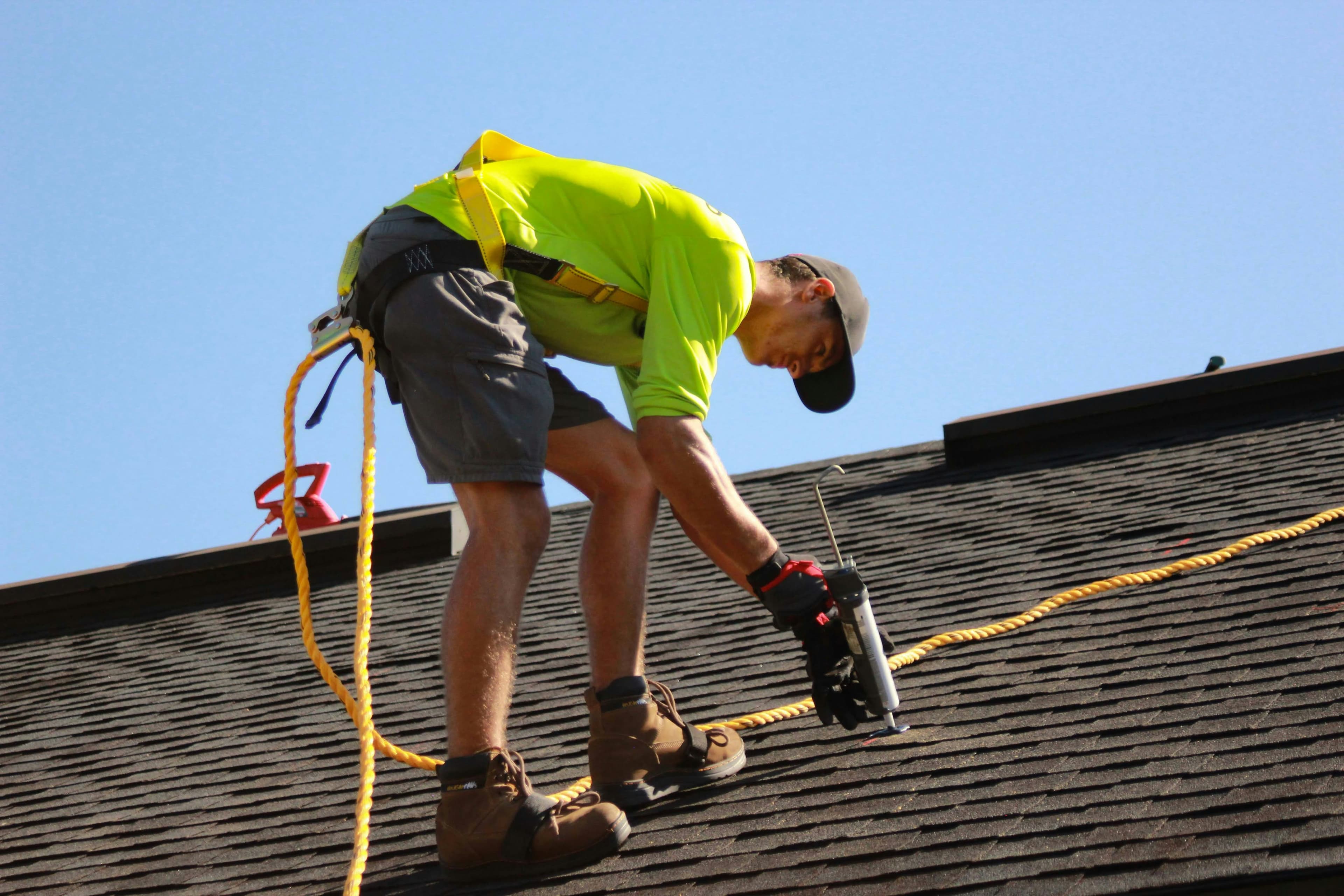
Roof deck repair deals with the structural layer underneath your shingles — not the shingles themselves — which is why it gets missed for so long. Most homeowners notice a leak or a stain long before they realize the actual damage is in the wood underneath, not the material on top.
What Is a Roof Deck
The roof deck (also called sheathing) is the layer of plywood or OSB (oriented strand board) fastened directly to your roof's rafters or trusses. It's the structural surface everything else — underlayment, drip edge, shingles — sits on top of. Most codes set a minimum sheathing thickness, with fasteners commonly spaced 6 inches on-center at panel edges and 12 inches in the field as a baseline under the IRC — though high-wind zones and some newer code adoptions call for tighter spacing, so confirm the specific requirement for your area rather than assuming the baseline applies. If the deck fails, everything above it loses its support, regardless of how new the shingles are.
Causes of Roof Deck Damage
Deck damage almost always traces back to moisture finding a way in, though the entry point varies:
Prolonged moisture exposure from a failed underlayment, missing flashing, or missing/lifted shingles letting water reach the deck directly — the same kind of intrusion covered in fixing a leaking roof from the inside
Poor attic ventilation — trapped heat and humidity condense on the underside of the deck over time, rotting it from below where it's invisible from the roof surface
Ice dams forcing water backward under shingles in colder climates
Age and material breakdown — OSB in particular can delaminate and swell once it's absorbed enough moisture repeatedly
Pest damage, especially from carpenter ants or termites drawn to softened, damp wood
Signs of Damaged Roof Decking
The tricky part is that most of these signs show up gradually, and a few are easier to spot from inside the attic than from the roof surface itself:
Soft or spongy spots when walked on (a real safety concern, not just a repair one)
Visible sagging between rafters, distinct from a broader sagging roofline caused by structural framing issues
Dark staining, water rings, or mold visible from the attic side
Shingles that look uneven or "wavy" from the ground, often a sign of an uneven deck underneath
A musty smell in the attic, usually before any visible damage shows
Step-by-Step Repair Process
Confirm the damage from the attic first. Look for daylight, staining, or soft wood between rafters — this tells you the extent before you ever remove a shingle.
Remove shingles and underlayment in the affected section, working a few feet beyond the visible damage since rot often spreads further than it appears from above.
Cut out damaged sheathing back to the nearest rafter on each side, so the new panel has full support at its edges — patching mid-span without rafter backing won't hold.
Install new sheathing matching the existing thickness, fastened per your local code spacing (commonly 6" on edges, 12" in the field, though your area may require tighter spacing), staggering seams from the row above.
Address the root cause before closing it back up — that might mean improving attic ventilation, replacing damaged flashing, or fixing the shingle issue that let water in to begin with. Skipping this step is the single biggest reason deck repairs fail again within a few years.
Re-install underlayment and shingles, matching the surrounding roof as closely as possible.
Cost of Roof Deck Repair
Costs vary by damage severity and region, but typical ranges run:
Minor patch (single sheet, easily accessible): roughly $300–$600 including materials and labor
Moderate repair (multiple sheets, some rafter work): roughly $600–$1,500
Extensive repair (large section, structural rafter/joist involvement): $1,500–$4,000+
Material cost itself is modest — a 4x8 sheet of OSB or plywood typically runs $30–$60 — so labor and access account for most of the price difference between a small patch and a major repair.
DIY vs Professional Repair
DIY is reasonable for a small, clearly bounded patch on an accessible, single-story roof, if you're comfortable with basic carpentry and roof safety. It stops being a reasonable DIY project once any of these apply:
The damage involves rafters or trusses, not just the deck surface
The affected area is large or its full extent isn't clear from the attic
The roof pitch or height makes safe access difficult
You're not confident identifying and fixing the root moisture source — a deck repair without fixing the cause is a repeat repair waiting to happen
When in doubt, a professional inspection before committing to either path is worth the cost — misjudging deck damage is one of the more expensive mistakes to walk back.
FAQ
Can I repair roof decking without removing the shingles?
Not properly. Sheathing sits directly beneath the underlayment and shingles, so accessing it requires removing both in the damaged section.
How long does a roof deck repair take?
A minor patch is often a one-day job. Larger sections involving rafter repair or extensive rot removal can take several days, depending on weather and access.
Does homeowners insurance cover roof deck repair?
Sometimes, if the damage stems from a sudden, covered event like storm damage. Damage from gradual wear, poor ventilation, or long-term neglect is typically excluded — check your policy specifics before assuming coverage.
What's the difference between OSB and plywood for roof decking?
Both meet code when installed at proper thickness. Plywood generally handles repeated moisture exposure slightly better and dries faster; OSB is more common today due to lower cost, but it swells more noticeably once saturated.
Can I just add ventilation without repairing the deck?
No — improving ventilation addresses future moisture buildup, but it doesn't reverse existing rot. Both need to happen together for a lasting fix.
About Mubashir Yaqoob
Mubashir Yaqoob researches and writes practical home repair guides for Home Repair Manual, focused on translating technical roofing, plumbing, and maintenance information into clear advice for homeowners.
View all posts by Mubashir Yaqoob