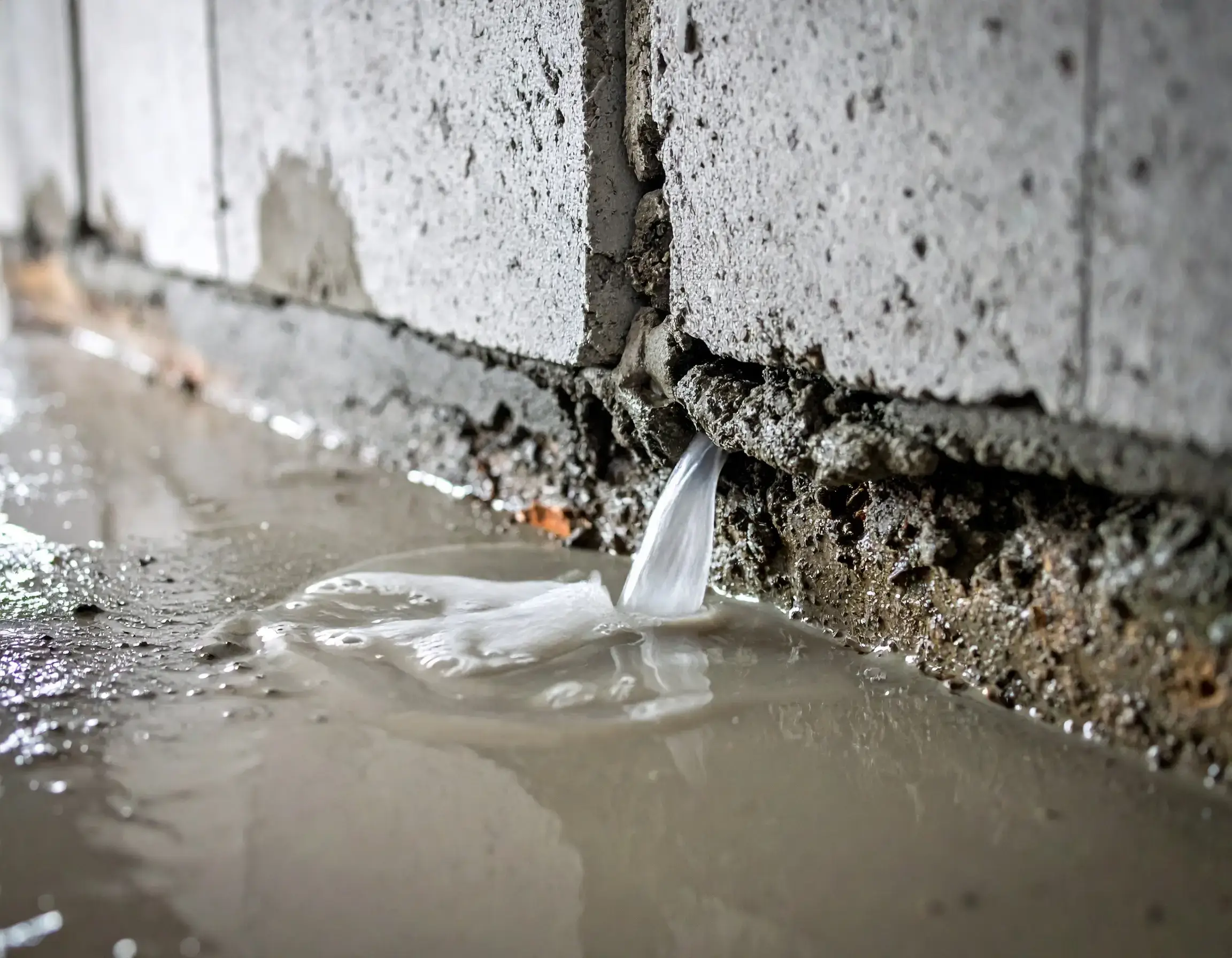
A crack in a basement wall leaking water is one of those problems that looks small right up until it isn't. A thin trickle after heavy rain can be a minor, fixable issue — or an early sign of a foundation problem that gets more expensive the longer it's ignored. The difference usually comes down to details most guides skip over.
Why Basement Wall Cracks Form
Concrete and block foundations crack for structural and environmental reasons, often both at once. As soil around your home settles unevenly over time, it puts uneven pressure on the foundation walls. Add in normal concrete shrinkage as it cures over the years, and hairline cracks are genuinely common — most homes develop at least a few. The concerning ones are the ones that keep growing, widen at one end, or show up alongside other signs like doors that stick or sloping floors.
Common Causes of Water Leakage
Water usually gets through because of pressure building up behind the crack, not because the crack itself is unique:
Hydrostatic pressure — saturated soil pushes groundwater toward any available opening
Poor exterior drainage — clogged gutters, downspouts too close to the foundation, or grading sloping toward the house
Freeze-thaw cycles — soil water freezes and stresses the wall, then thaws and leaves a larger opening
Window well drainage failures — a poorly draining well can flood and push water through nearby cracks
Basement Wall Crack Types: Hairline, Vertical, Horizontal & Stair-Step
Shape matters more than most people expect:
Hairline cracks — thin enough a credit card won't fit; usually cosmetic
Vertical cracks — most common, typically normal settling, but still a water entry point
Horizontal cracks — a bigger red flag, often signaling real structural pressure
Stair-step cracks — common in block/brick foundations, can indicate differential settling
One thing most guides skip: a crack doesn't have to be leaking to be a problem. Even a small, dry hairline crack can be an entry point for radon, separate from the interior cracking covered in what different types of drywall damage actually mean. If you have visible foundation cracks, testing for radon is worth doing regardless of whether they're leaking.
Why a Dry Crack Can Still Be Serious (And a Leaking One Might Not Be)
This trips people up constantly: a completely dry basement can still have a serious structural crack, and a basement that leaks during every storm can be structurally sound. Water intrusion and structural integrity are related but separate questions — a wide, dry crack with visible wall displacement deserves more concern than a thin crack that leaks but shows no movement over time.
How to Fix a Crack in Basement Wall Leaking Water
For a genuinely minor, non-structural crack:
Clean the crack thoroughly, removing debris and old failed patch material.
Widen hairline cracks slightly with a chisel so patching material can key in rather than sit on the surface.
Apply hydraulic cement directly into the crack — it expands as it cures and can be applied even while water is actively seeping.
For wider or active leaks, use epoxy or polyurethane injection instead — polyurethane flexes with minor wall movement, unlike hydraulic cement.
Let it fully cure, then monitor through the next few rain events.
One honest caveat from homeowners who've actually done this: hydraulic cement often doesn't hold if the foundation is still actively settling — the crack can simply reopen a few inches away within a year. If you're patching the same general area for a second or third time, that's a signal the movement hasn't stopped, and patching alone won't fix it.
Waterproofing Solutions
Sealing the crack only addresses the symptom. Longer-term fixes address the pressure causing it: interior drain tile to a sump pump, exterior waterproofing membranes applied during excavation, and improved surface drainage that keeps water away from the foundation entirely.
DIY vs Professional Repair
DIY is reasonable for a single hairline or vertical crack with no wall movement and no recurring leak history. Call a professional if the crack is horizontal, wider than about ¼ inch, part of a recurring pattern, or paired with other structural signs. Making an annual DIY home inspection part of your routine — the same way you'd check for signs of a leaking roof from the inside — is what catches this kind of thing early, before a small crack becomes a bigger structural question.
Prevention Tips
Keep gutters clean and downspouts extending several feet from the foundation, grade soil so it slopes away from the house, and consider a sump pump with battery backup in areas with a high water table. Regularly checking your foundation for new or widening cracks costs nothing and catches problems while they're still cheap to fix.
FAQ
Is a crack in a basement wall always a structural problem?
No — most are cosmetic or minor, especially thin vertical or hairline cracks. Horizontal cracks and visible wall bowing are the ones that warrant real concern.
Can I fix a leaking basement crack myself?
Yes, for small, non-structural cracks using hydraulic cement or injection kits. Recurring leaks in the same spot usually mean the underlying pressure issue hasn't been addressed.
How much does professional crack repair cost?
Basic crack injection typically runs a few hundred dollars per crack; full waterproofing systems (drain tile, sump pump, exterior membrane) can run several thousand depending on scope — for comparison, that's a meaningfully bigger job than typical drywall repair costs, since foundation work involves excavation and structural materials rather than surface patching.
Should I worry about radon from a foundation crack?
It's worth testing for, since cracks are a common radon entry point regardless of whether they're leaking water — this is a separate concern from moisture damage.
What's the difference between hydraulic cement and epoxy injection?
Hydraulic cement is faster and cheaper, good for minor, stable cracks. Epoxy or polyurethane injection handles active leaks and flexes slightly with the wall, making it a better fit for cracks that may still be moving.
About Mubashir Yaqoob
Mubashir Yaqoob researches and writes practical home repair guides for Home Repair Manual, focused on translating technical roofing, plumbing, and maintenance information into clear advice for homeowners.
View all posts by Mubashir Yaqoob