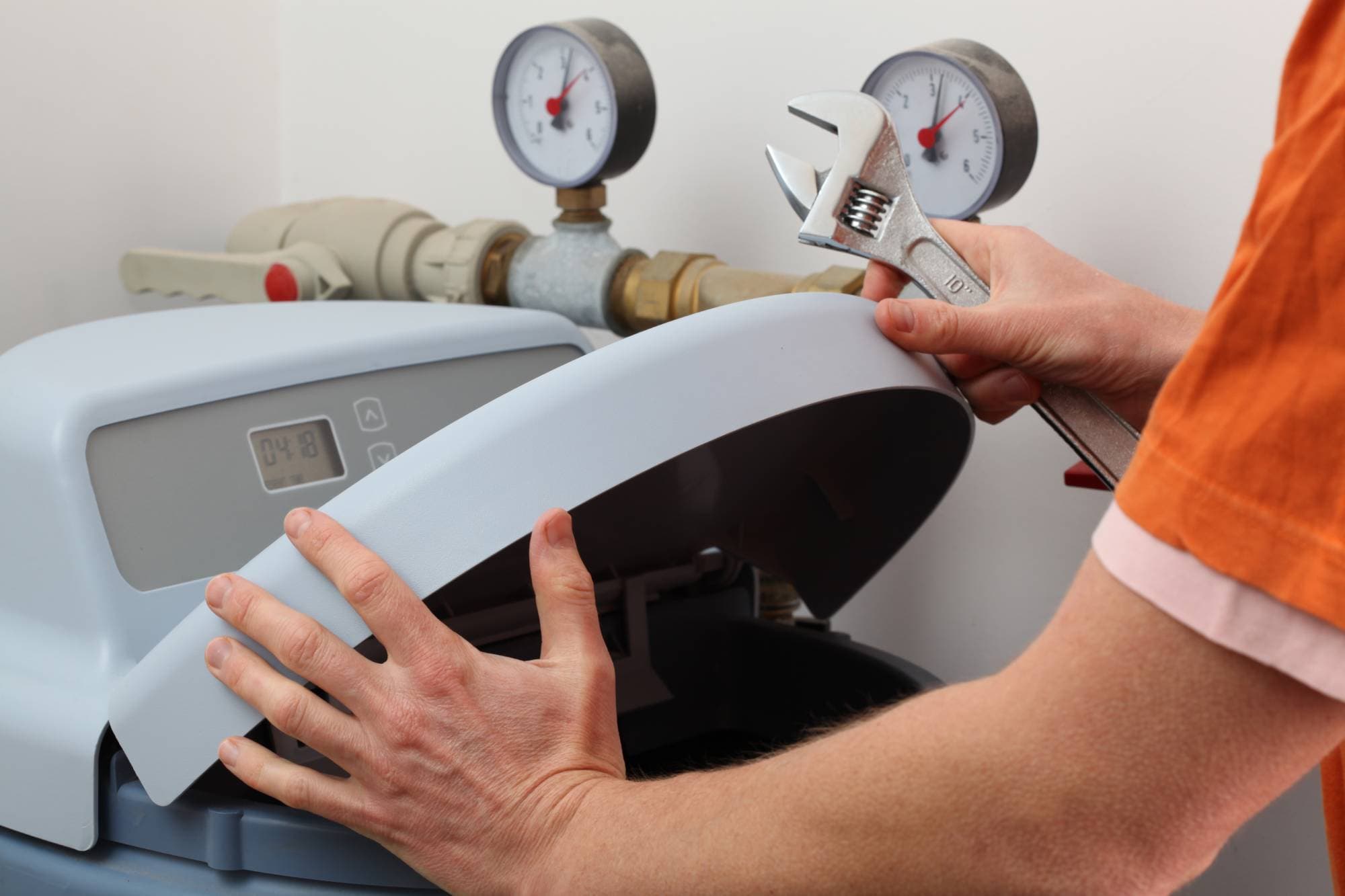
Most water softener problems get blamed on the wrong part. Homeowners assume a full resin replacement or a service call is coming, when the actual fix often takes less than five minutes and costs nothing at all. Knowing how to troubleshoot water softener issues in the right order — rather than guessing at the first thing that comes to mind — is the difference between a two-minute fix and an unnecessary repair bill.
This guide walks through that order: what to check first, what each symptom actually means, and where the line sits between a reasonable DIY fix and a job worth calling a professional for.
Every Softener Problem Traces Back to One Repeating Process
Every water softener problem eventually traces back to one part of a single repeating process: the regeneration cycle. Periodically, the system draws brine (salt water) from the tank, flushes it through the resin bed to recharge the resin's ion-exchange capacity, then rinses everything and resets for normal use. Hard water, salty water, a flooded brine tank, or a softener that won't regenerate at all are all just different points where that cycle broke down.
Knowing this doesn't require memorizing every internal part — it just means that when you troubleshoot water softener symptoms, you're really asking "which stage of this cycle failed?" rather than treating each symptom as an unrelated mystery.
Troubleshoot Water Softener Problems: The One Check Almost Every Guide Skips
Before checking salt, resin, or anything mechanical, check one thing first: the bypass valve. This single component is responsible for more "my softener suddenly stopped working" situations than almost anything else, and it's the step most guides — including some from major brands — skip entirely.
The bypass valve lets water skip the softener completely, usually so a technician can service the unit without shutting off water to the house. It's easy to bump, easy to leave in the wrong position after maintenance, and easy to forget about entirely — which means hard water can be flowing straight past a perfectly functional softener for weeks before anyone thinks to check. If your water suddenly feels hard with no other explanation, confirming this valve is fully in the "service" position, not "bypass," takes under a minute and rules out the most common cause first.
Match What You're Noticing to What's Actually Wrong
What You're Noticing | What's Actually Behind It | Effort to Fix | What To Do |
Hard water suddenly returned | Bypass valve open or partially open | Easy | Confirm valve is fully in service position |
Hard water returned | Salt bridge or salt mushing in brine tank | Easy | Break up bridge with a broom handle; clean out mushing |
Hard water returned | Resin bed fouled or exhausted | Moderate | Clean with resin cleaner; replace if degraded |
Water tastes salty | Incorrect control head settings | Easy | Verify and adjust hardness/regeneration settings |
Water tastes salty | Not enough water reaching brine tank | Easy | Check for salt bridge blocking brine formation |
Brine tank has too much water | Float valve set too high, or faulty | Moderate | Adjust float valve; replace if faulty |
Brine tank has too little water | Clogged brine line | Easy | Remove, flush, and reconnect the line |
Low water pressure throughout house | Sediment or scale buildup in resin bed | Moderate | Clean brine tank and resin tank; use resin cleaner |
Low water pressure | Clogged venturi or injector | Moderate | Clean or replace the injector |
System is leaking | Loose fittings or worn seals | Easy to Moderate | Tighten fittings; replace worn seals |
Discolored water, odor | Sediment or bacterial growth in tank | Moderate | Clean and sanitize the entire system |
No regeneration happening | Power disconnected, or timer/control failure | Easy to Moderate | Confirm unit is plugged in; check control settings |
Why These Problems Actually Happen
1. Salt Bridging
A hard, crusted layer forms across the top of the salt in the brine tank, leaving an empty pocket underneath. It usually happens in overly humid conditions or when a tank is overfilled. It looks intact from above, but it blocks the water underneath from ever forming usable brine. Breaking it up with a broom handle and confirming it doesn't reform is a genuinely easy fix.
2. Salt Mushing
Related to bridging but different in texture — instead of a hard crust, the salt breaks down into a thick, sludge-like layer at the tank's bottom. It's often caused by using the wrong type of salt for your system. Clearing it out usually means emptying the tank and manually removing the sludge.
3. Resin Bed Fouling
Iron, sediment, or chlorine exposure over time can coat the resin beads, reducing their ability to exchange minerals even though the system is otherwise running normally. A resin cleaner formulated for your system type can restore some capacity; resin that's been fouled for years may need outright replacement.
4. Bypass and Control Valve Issues
Beyond simply being left open, a bypass valve can also stick, corrode, or seat unevenly over time — especially on well water systems with more sediment and mineral content. A valve that looks parallel to the pipe isn't always fully open; if hard water symptoms persist after confirming the position, physically cycling the valve a few times can dislodge minor buildup.
What Does It Sound Like? Let the Noise Point You in the Right Direction
Sound is one of the most overlooked diagnostic tools for a struggling softener. A water softener making unusual noise during or between regeneration cycles often points to the exact same root causes covered above — a salt bridge straining a cycle it can't complete, a stuck bypass valve, or a resin bed working harder than it should. If you're not sure whether what you're hearing is a sign of one of these problems or just normal operation, that's the fastest way to narrow it down before touching anything.
Bigger Than a Broom Handle Can Fix
Most of what's covered above is genuinely reasonable to handle yourself. A few situations are worth handing off instead:
The unit is more than 10 years old and showing multiple symptoms at once, rather than one isolated issue
Error codes on a digital control head that don't match anything in the manual
The system continues failing to regenerate after confirming power, salt, and bypass valve position
Visible leaking combined with any electrical component nearby
Resin that's visibly discolored or degraded after a cleaner hasn't restored performance
None of these mean something catastrophic has happened — they just mean the remaining likely causes require tools or expertise beyond a broom handle and a garden hose.
Keeping This From Happening Again
Most of the problems in the table above are preventable with a routine that catches them early rather than reactively. A regular water softener maintenance checklist covers exactly this — checking salt levels and bridges before they cause symptoms, rather than troubleshooting after the fact. If you're not sure what your specific system's settings should be, your unit's manual is worth tracking down by model number rather than guessing. And folding softener checks into a broader home plumbing maintenance routine means one less system to remember separately.
FAQ
Can a water softener problem cause low water pressure everywhere in the house, or just at one fixture?
Whole-house pressure loss usually points to the softener itself — a fouled resin bed or clogged injector restricts every fixture equally. Pressure loss at a single fixture is more likely unrelated to the softener, worth checking with a quick pressure test at that specific location first.
Is it normal for a water softener to need troubleshooting a few times a year?
Occasional salt bridges or a forgotten bypass valve after maintenance are common enough not to worry about. Needing to troubleshoot the same underlying issue repeatedly usually means something (resin condition, valve wear, water quality) needs a more permanent fix rather than a repeated quick one.
Does well water make troubleshooting different from municipal water?
Yes — well water introduces iron, sediment, and sometimes bacteria that municipal water rarely does, which means resin fouling and valve wear tend to show up faster and more often on well systems than on city water.
If I fix the cause, will the softener recover on its own, or does it need a manual reset?
Most causes (salt bridges, bypass valve position, low salt) resolve as soon as the next regeneration cycle runs normally. If you want softened water immediately rather than waiting for the next scheduled cycle, most systems allow a manual regeneration to be triggered directly from the control panel.
Can hard water damage happen fast enough to matter while I'm still troubleshooting?
A few days of hard water while you diagnose the issue won't meaningfully damage appliances or plumbing — the effects of hard water build up over months and years, not days, so there's no need to rush a diagnosis out of concern for immediate damage.
About Mubashir Yaqoob
Mubashir Yaqoob researches and writes practical home repair guides for Home Repair Manual, focused on translating technical roofing, plumbing, and maintenance information into clear advice for homeowners.
View all posts by Mubashir Yaqoob