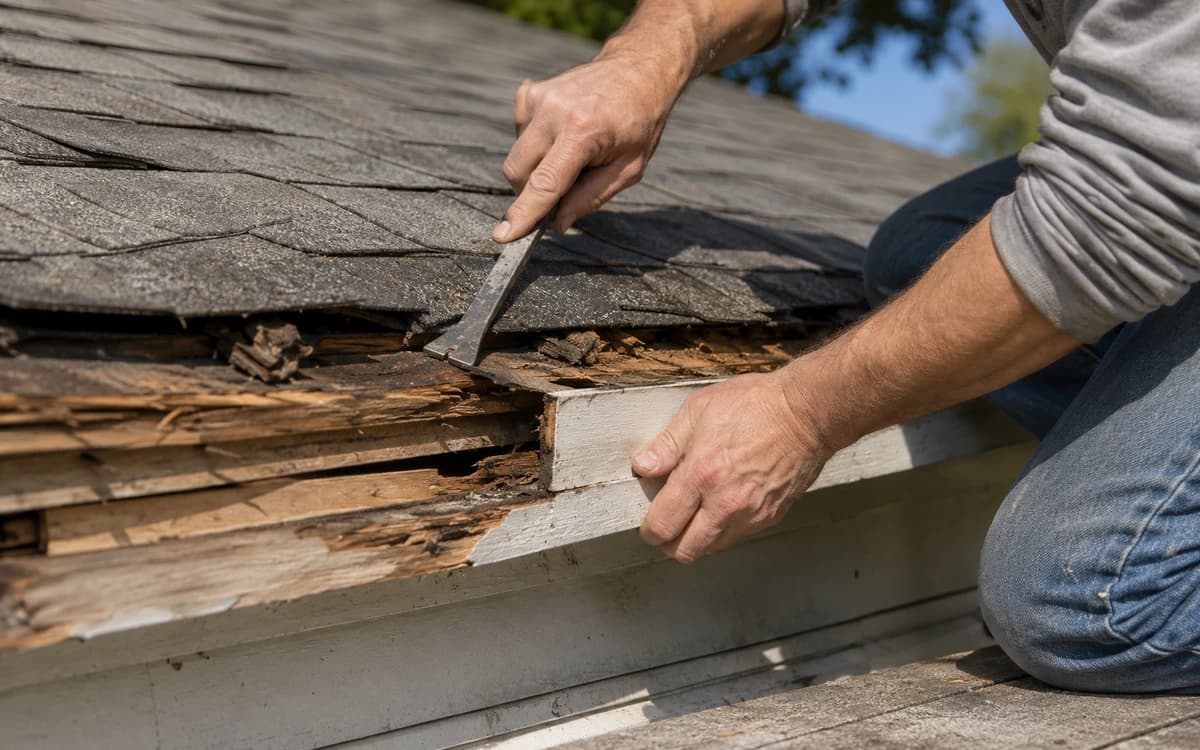
Sagging roof repair is not something homeowners should ignore. A roof that dips, bows, or looks uneven may be caused by something as simple as moisture-damaged decking or something more serious, such as damaged rafters or roof trusses. Finding the cause early can help prevent further structural damage and potentially reduce repair costs.
A sagging roof does not always mean the entire roof needs to be replaced. The right solution depends on what caused the sagging and how much of the roof structure has been affected.
Sagging Roof Repair: What Causes a Roof to Sag?
There are several common roof sagging causes, and more than one problem can sometimes be involved.
Water damage is one of the most common. A long-term roof leak can allow moisture to reach the decking, rafters, or other framing. Over time, wet wood can weaken, rot, and lose its ability to support the roof properly.
Other possible causes include:
Damaged roof rafters or trusses
Excessive roof weight
Poor roof construction
Aging structural materials
Inadequate drainage
Damaged roof decking
Storm or snow damage
Foundation movement or structural settling
Clogged gutters and poor drainage can also contribute to moisture problems by allowing water to remain around vulnerable parts of the roof.
If you discover an active roof leak while investigating the problem, deal with the immediate water intrusion first. A guide to making a temporary fix for a leaking roof can help limit further damage until a permanent repair is possible.
Warning Signs of Roof Structural Damage
The most obvious warning sign is a visible dip or uneven section along the roofline. However, structural problems may show up inside the house first.
Look for:
Cracks in ceilings or walls
Brown or yellow water stains
Bowed areas in the attic
Damp or rotting wood
Damaged roof decking
Missing or displaced shingles
Persistent roof leaks
Unusual gaps around doors or windows
These signs do not automatically mean the roof is close to collapsing, but they deserve attention.
If you notice significant movement, severe sagging, cracking, or other potential roof collapse warning signs, avoid walking on the affected roof and arrange for a professional inspection.
How Serious Is a Sagging Roof?
The seriousness depends on the location and cause of the sag.
A small localized dip caused by damaged decking may require a relatively limited repair. Sagging caused by broken rafters, damaged trusses, widespread wood rot, or excessive structural loads can be much more serious.
The key question isn't simply “How much does the roof sag?” It is “Why is it sagging?”
A qualified roofing professional can inspect the roofing materials, attic framing, roof supports, and surrounding areas to determine whether the problem is cosmetic, moisture-related, or structural.
How Is a Sagging Roof Repaired?
There isn't one universal method for fixing a sagging roof. The repair depends on the underlying problem.
A typical repair process may include:
1. Find the cause.
The first step is identifying whether water intrusion, damaged framing, excessive weight, or another issue caused the sag.
2. Stop active water intrusion.
If a leak is responsible, the source needs to be corrected before structural repairs are completed. If water is already entering the home, homeowners can learn more about how to fix a leaking roof from the inside while arranging a permanent repair.
3. Inspect the framing.
Rafters, trusses, roof beams, and decking are checked for cracking, rot, or other damage.
4. Reinforce or replace damaged components.
Depending on the situation, damaged rafters may be reinforced or replaced. More extensive problems may require professional roof support repair or structural reinforcement.
5. Repair the roofing system.
Damaged decking, underlayment, flashing, and roofing materials may need replacement.
6. Correct the underlying problem.
Drainage, ventilation, moisture intrusion, or excessive roof loads should be addressed so the problem doesn't return.
Structural repairs such as roof jacking, rafter reinforcement, or truss repair should generally be performed by qualified professionals rather than treated as routine DIY projects.
How Much Does Sagging Roof Repair Cost?
The roof repair cost can vary considerably.
A small area of damaged decking may be relatively inexpensive to repair, while extensive water damage, structural reinforcement, damaged trusses, or major roof replacement can cost substantially more.
Factors that affect the final price include:
Size of the damaged area
Type of roofing
Extent of structural damage
Accessibility
Water or mold damage
Required roof reinforcement
Local labor costs
Whether a partial or complete roof replacement is necessary
Getting an inspection and written estimate is more useful than relying on a generic online price.
DIY vs. Professional Repair
Homeowners can safely perform some basic checks from the ground or from other accessible areas.
You can look for visible roofline changes, damaged shingles, clogged gutters, ceiling stains, and obvious signs of water intrusion.
However, roof structural damage is different from replacing a shingle or cleaning a gutter.
If rafters, trusses, roof beams, or other load-bearing components are involved, professional evaluation is the safer approach. A structural engineer may also be appropriate when there are significant concerns about the building's structural integrity.
If you're dealing with a recreational vehicle rather than a house, the repair approach is different. An RV roof has different materials, construction methods, and sealing requirements, so homeowners should follow guidance specifically intended to repair a leaking RV roof rather than applying residential roofing methods.
When Should You Replace the Roof?
A sagging roof does not automatically require complete replacement.
Replacement may make more sense when the roof has widespread structural deterioration, extensive water damage, severely damaged decking, repeated leaks, or aging roofing materials combined with major repair requirements.
If the structural damage is localized and the remaining roofing system is in good condition, targeted repair may be possible.
The best decision should be based on the roof's condition rather than age alone.
FAQ
Can a sagging roof be repaired?
Yes. Depending on the cause, repairs may involve replacing damaged decking, reinforcing rafters, repairing trusses, correcting water intrusion, or replacing sections of the roofing system.
Is a sagging roof dangerous?
It can be. Sagging may indicate weakened structural components. Severe or rapidly worsening sagging should be professionally inspected rather than treated as a cosmetic issue.
Can water damage cause a roof to sag?
Yes. Persistent moisture can weaken roof decking, rafters, and other wood framing, eventually contributing to roof deflection and structural problems.
Does a sagging roof always need to be replaced?
No. Some roofs can be repaired or reinforced if the damage is localized. Extensive structural deterioration may make replacement the more practical option.
Final Thoughts
A sagging roof is a warning sign worth investigating, but it doesn't automatically mean you're facing a complete roof replacement.
The most important step is identifying the cause of the sagging. Water damage, deteriorated framing, excessive loads, drainage problems, and construction issues can all affect the roof's structural integrity.
If the problem involves significant sagging, damaged framing, or possible structural failure, have it assessed by a qualified professional before attempting repairs yourself. Catching the problem early can make sagging roof repair simpler, safer, and potentially less expensive.
About Mubashir Yaqoob
Mubashir Yaqoob researches and writes practical home repair guides for Home Repair Manual, focused on translating technical roofing, plumbing, and maintenance information into clear advice for homeowners.
View all posts by Mubashir Yaqoob