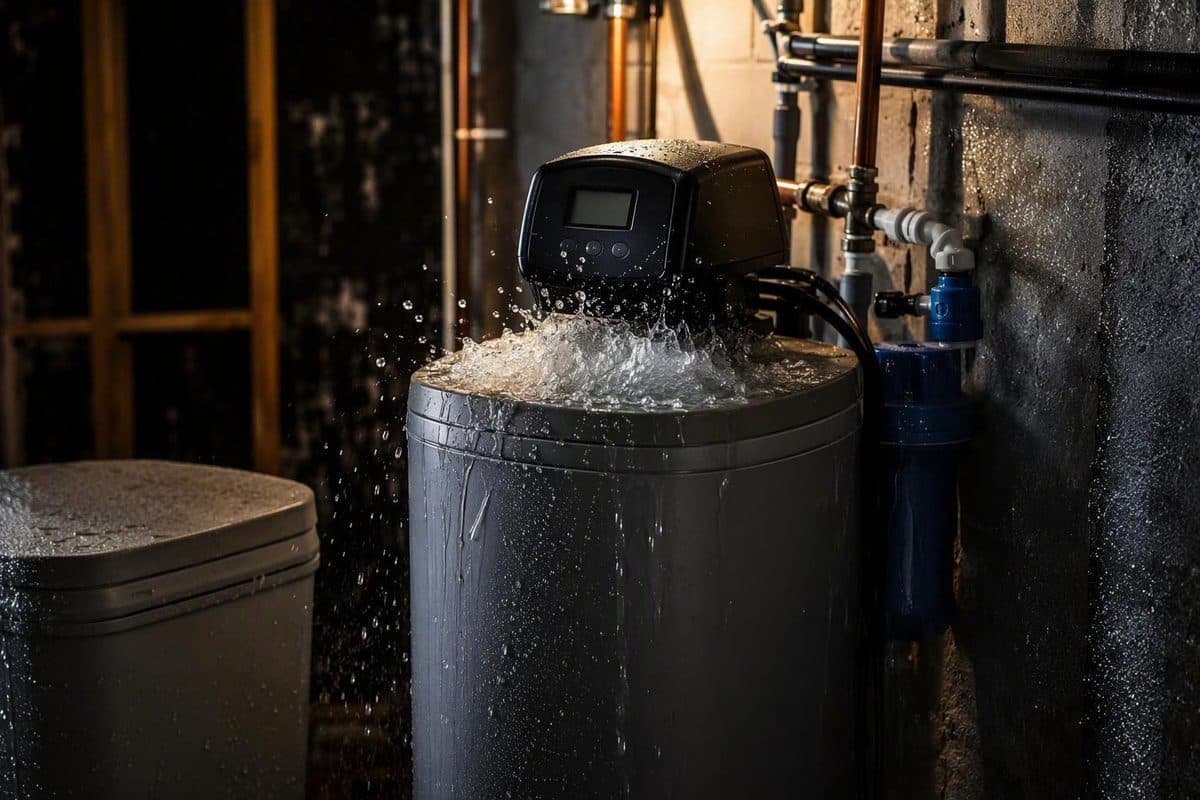
A water softener is not a silent appliance, and expecting total silence from one is actually the root of a lot of unnecessary worry. It hums, clicks, and gurgles by design during a normal cycle. The real question isn't whether it makes noise — it's whether the specific noise you're hearing falls inside that normal range or signals something starting to fail.
That distinction is the fastest way to actually answer why is my water softener making noise, rather than guessing based on how alarming the sound feels in the moment.
Why Is My Water Softener Making Noise? Normal vs. Not
Every water softener runs a regeneration cycle periodically — typically every few days — where it flushes accumulated minerals out of the resin bed using a brine solution, then rinses and resets itself. That process alone produces a predictable set of sounds:
A steady motor hum as the control valve cycles through stages
Periodic gurgling as water and brine move through the tanks
Soft clicking or ticking as the timer or valve shifts positions
A normal regeneration cycle can briefly register up to around 80 decibels during the brine draw phase — roughly comparable to a running garbage disposal — so a short, louder burst during that specific stage isn't cause for alarm on its own. None of that is water softener making noise in a concerning way — it's the appliance doing exactly what it's supposed to do. What crosses into "not normal" territory is grinding, loud banging, persistent hissing or squealing, or any sound that's noticeably louder or different from what you're used to hearing during a regular cycle.
Water Softener Making Noise at Night? Here's the 2 AM Explanation
If the noise seems to happen at almost the same time every night, that's not a coincidence. Most residential softeners are factory-programmed to regenerate around 2:00 AM specifically because that's when water demand in a typical household is lowest — nobody's running a shower or dishwasher to compete with the cycle. Hearing water running to a drain or a motor humming at that hour is, in the vast majority of cases, completely normal operation, not a sign of a problem. If the timing genuinely disrupts sleep, most units let you adjust the regeneration schedule to a different hour rather than eliminate the noise entirely, since the cycle itself has to happen regardless of when.
No Water Softener Making Noise At All? That's Worth Checking Too
It's easy to assume silence means everything's fine, but the absence of water softener making noise on its usual schedule can be just as telling as an unusual sound is. If it's been two weeks or more without hearing a regeneration cycle that normally runs every few days, that's worth investigating rather than treating as a good sign. A unit that's stopped cycling isn't quietly working better — it's often stuck, out of salt, or dealing with a failed timer, and skipping regeneration means it's not actually softening your water even though nothing sounds wrong.
Sound-by-Sound: What Each Noise Actually Means
Sound | Likely Cause | Normal or Concerning |
Humming | Motor running during regeneration | Normal |
Gurgling | Water/brine moving through tanks | Normal |
Soft clicking | Timer or valve shifting stages | Normal |
Hissing or whistling | Restricted valve, air trapped, or pressure issue | Investigate |
Banging or knocking | Water pressure spike, loose parts, or water hammer | Investigate |
Squealing or grinding | Worn motor, damaged gear, or failing valve | Address promptly |
Loud rattling | Loose brine tank lid, bypass valve, or mounting bracket | Easy DIY fix |
No noise for 2+ weeks | Stuck cycle, empty salt, or failed timer | Investigate |
What Actually Causes a Water Softener Making Loud Noise
1. A Salt Bridge in the Brine Tank
A hardened crust of salt can form above the water level in the brine tank, creating a hollow space underneath. This blocks proper brine flow and can cause the system to strain and make noise as it tries to complete a cycle it can't fully finish. Breaking up the bridge (carefully, without damaging the tank) usually resolves it.
2. Trapped Air in the Resin Tank
Air pockets in the resin tank cause hissing or sizzling sounds as water moves past them, especially noticeable right after installation or maintenance work on the system.
3. Water Pressure That's Too High — or Too Low
Household water pressure above roughly 80 PSI puts real stress on a softener's internal components, causing rumbling or vibration that wouldn't happen at normal pressure. This is worth checking with the same pressure test covered here — a pressure-reducing valve is the fix if your home is running high. But pressure that's too low causes its own distinct issue: below roughly 20 PSI, a softener can struggle to move water through its normal stages, producing irregular cycling or hollow knocking rather than a steady hum. If a water softener making loud noise coincides with generally weak water pressure elsewhere in the house, low incoming pressure is worth ruling out before assuming a mechanical failure.
4. Worn or Failing Internal Components
Squealing or grinding, specifically, often points to a worn motor bearing, a damaged gear, or a control valve nearing failure — these tend to get louder and more frequent over time rather than appearing once and going away.
5. Loose Mounting Hardware
Vibration during normal operation can gradually loosen screws, brackets, and connections holding the unit in place, turning what should be a quiet hum into an amplified rattle.
6. Cracked Fittings or Drain/Brine Lines
A cracked or loose fitting on the drain line or brine line lets water escape where it shouldn't, and the resulting drop in system pressure can produce hissing, sputtering, or inconsistent flow noise during a cycle. This is one of the more overlooked reasons water softener making noise happens inconsistently rather than sounding the same every time — a steady leak changes the pressure dynamics differently depending on how full the tanks are at that moment.
7. Low Salt Levels
Running low on salt doesn't just reduce softening effectiveness — it can change the sound of a cycle too. With too little brine solution available, the system can strain slightly as it tries to draw solution that isn't fully there, sometimes producing a thinner, higher-pitched version of the normal cycling sound instead of the usual steady hum. Keeping the brine tank reasonably full avoids this entirely.
A Simple Checklist Before Assuming the Worst
Check that the brine tank lid is seated properly and not vibrating loose
Confirm the bypass valve is fully open (not partially closed, which restricts flow and can cause noise)
Inspect mounting brackets and screws for anything that's worked loose over time
Test your home's water pressure if you haven't recently, especially if the noise coincides with any water use in the house, not just regeneration cycles
Check the salt level in the brine tank — running low can itself change the sound of a cycle
Note whether it's been more than 1-2 weeks since you last heard a regeneration cycle at all
Fold a quick softener check into your regular plumbing maintenance routine so loose parts get caught before they turn into a persistent rattle
Maybe It's Not the Softener at All
Before assuming the softener itself is the problem, it's worth ruling out nearby appliances — a water heater, dishwasher, or even general household plumbing can produce sounds that get misattributed to whichever unit is closest or most noticeable. Whistling or humming water heaters are a common source of confusion here, especially in a utility room or basement where multiple systems sit close together.
Water Softener Making Loud Noise? When to Stop Troubleshooting and Call a Pro
Grinding or squealing that's getting progressively louder, banging that happens outside of regeneration cycles, or any noise paired with visible leaking or a softener that's no longer producing soft water are all signs worth a professional look rather than continued troubleshooting on your own. A unit over 10 years old showing multiple issues at once is also a reasonable point to weigh repair against replacement, similar to the age-and-symptom framework worth applying to other aging home systems before sinking more money into repeated fixes.
FAQ
Why does my water softener make noise at almost the exact same time every night? That's the regeneration cycle, commonly scheduled around 2 AM when household water demand is lowest — normal operation, and the schedule can usually be adjusted if it's disruptive.
Is some noise from a water softener actually normal, or should it run silently? Some noise is expected — humming, gurgling, and soft clicking are all part of a healthy cycle. What's worth investigating is anything that sounds notably harsher (grinding, persistent hissing) or a cycle that's gone unusually quiet for weeks at a time.
What's most likely behind a sudden, loud noise from the unit? A handful of common culprits: a salt bridge, trapped air, pressure running too high or too low, a worn component, or a cracked fitting on the drain or brine line — the specific sound usually narrows it down.
Does water pressure being off actually affect how the softener sounds? Yes, in both directions — pressure above about 80 PSI stresses internal components, while pressure below about 20 PSI can cause irregular cycling and knocking as the unit struggles to move water properly.
When should I stop troubleshooting myself and call someone? Loose parts, a salt bridge, low salt, or a partially closed bypass valve are reasonable DIY checks. Grinding, worsening noise, a cracked line, or noise paired with a leak is worth professional attention.
About Mubashir Yaqoob
Mubashir Yaqoob researches and writes practical home repair guides for Home Repair Manual, focused on translating technical roofing, plumbing, and maintenance information into clear advice for homeowners.
View all posts by Mubashir Yaqoob