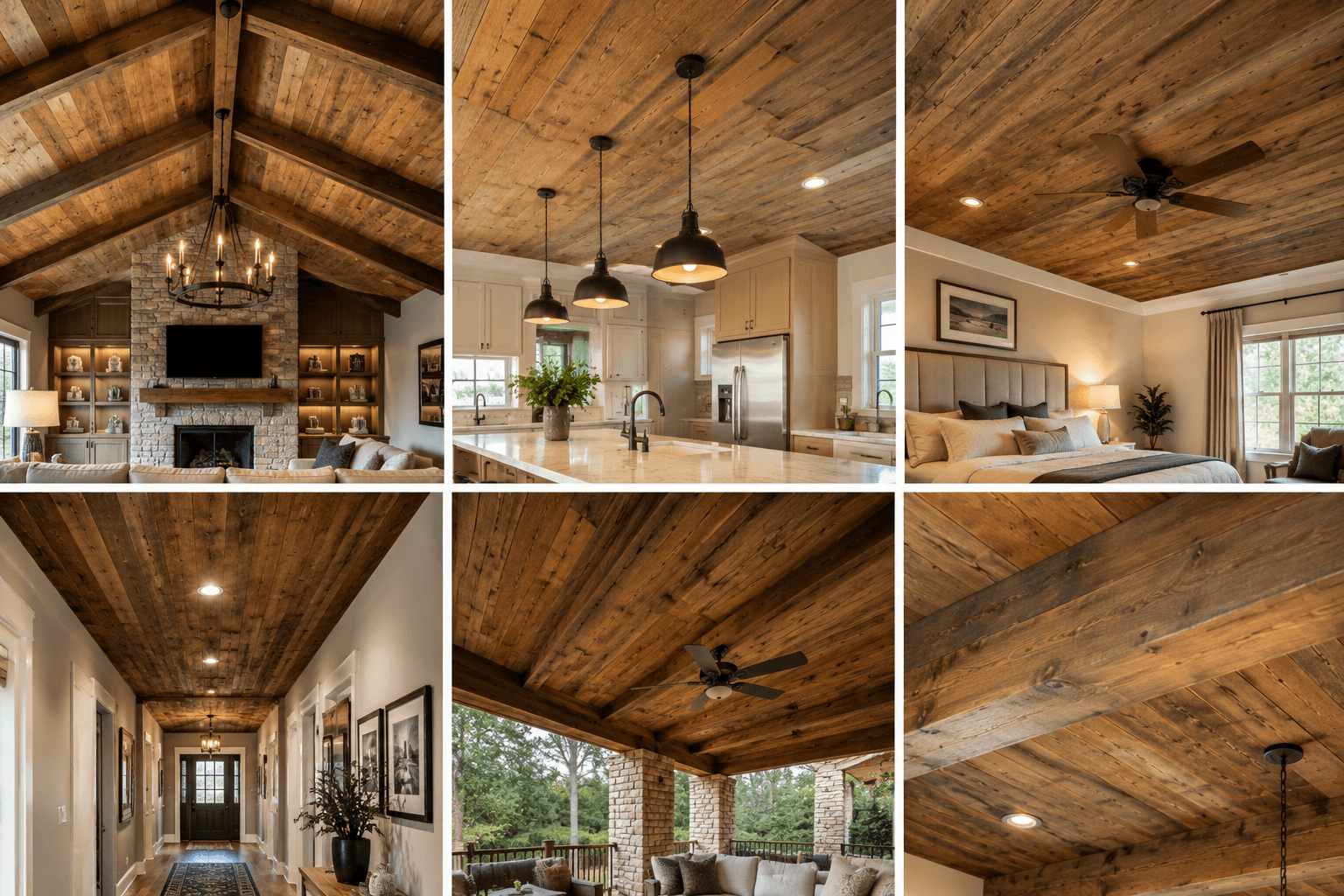
A wood ceiling can turn a plain box of a room into a cabin, a barn or a quiet lodge. It can also make a room feel like a cave if the choice doesn't suit the space. Most photo galleries show the winners and hide the questions that decide the outcome: how tall is the room, how much daylight does it get and what can the framing above it carry?
This guide to rustic wood ceiling ideas starts with those questions. It then covers planks, beams and reclaimed boards, finishes and lighting, fire safety, real costs and the prep work that keeps a wood ceiling looking good for decades.
Scope: this covers interior residential ceilings. Structural changes, electrical work and fire-code questions vary by location, so confirm requirements with your local building department.
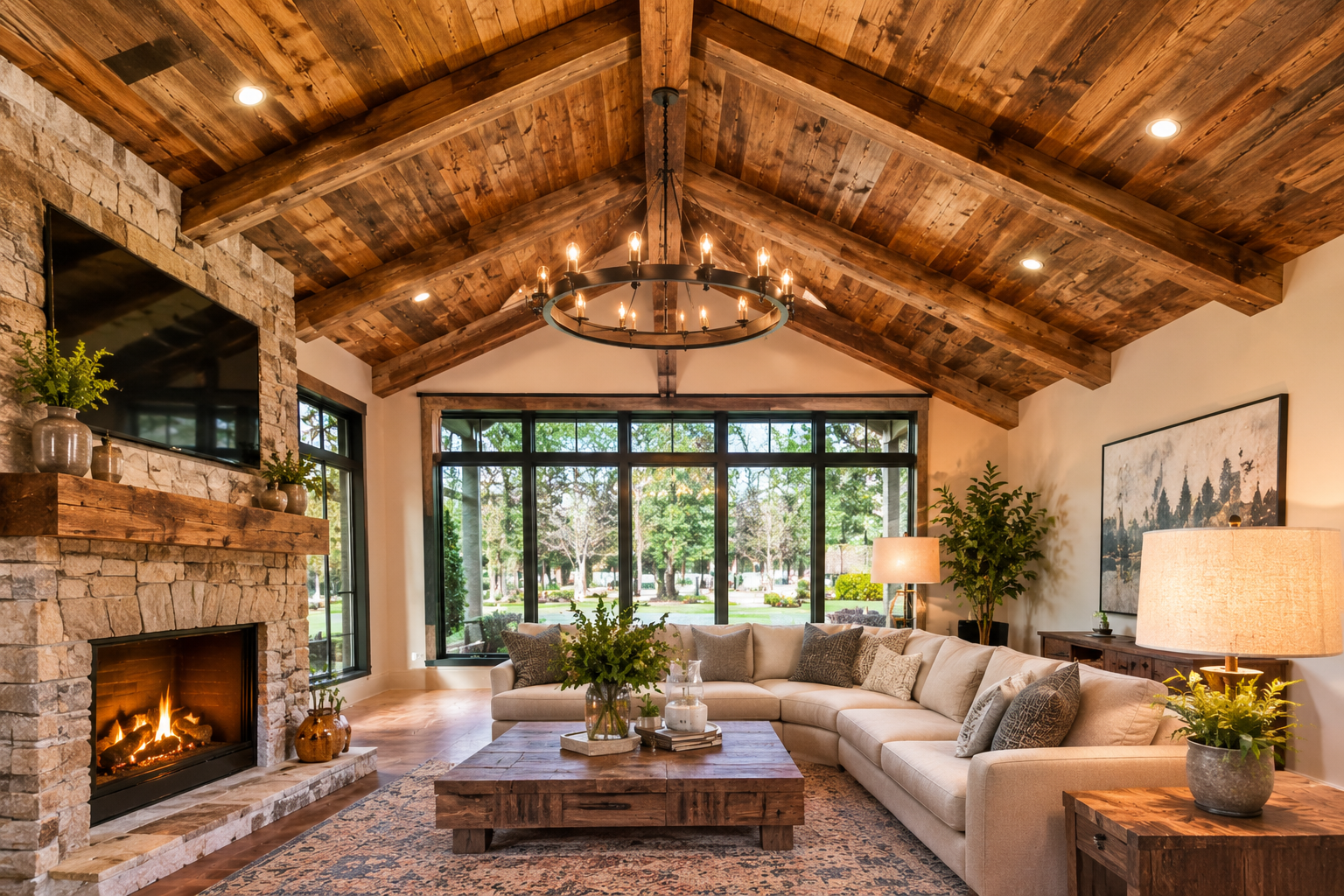
Rustic Wood Ceiling Ideas, Sorted by What Your Room Can Handle
Choose by room conditions first and style second:
Your room | Best bet | Why |
Ceiling under 8 feet | Narrow, light-toned planks, no heavy beams | Keeps the ceiling from pressing down |
8 to 9 feet, decent daylight | Medium-toned planks, slim beams | Adds warmth without crowding |
Vaulted or cathedral | Full-length planks, bold beams | The height can carry weight and drama |
Dark or north-facing room | Whitewashed or pale boards | Wood absorbs light, so lighter stains help |
Kitchen or bathroom | Sealed boards or moisture-resistant wood-look planks | Steam and splashes punish bare wood |
Basement | Lightweight planks on furring strips | Easy to install and easy to reach pipes |
If two rows describe you, trust the stricter one. Height and light cause most regrets.
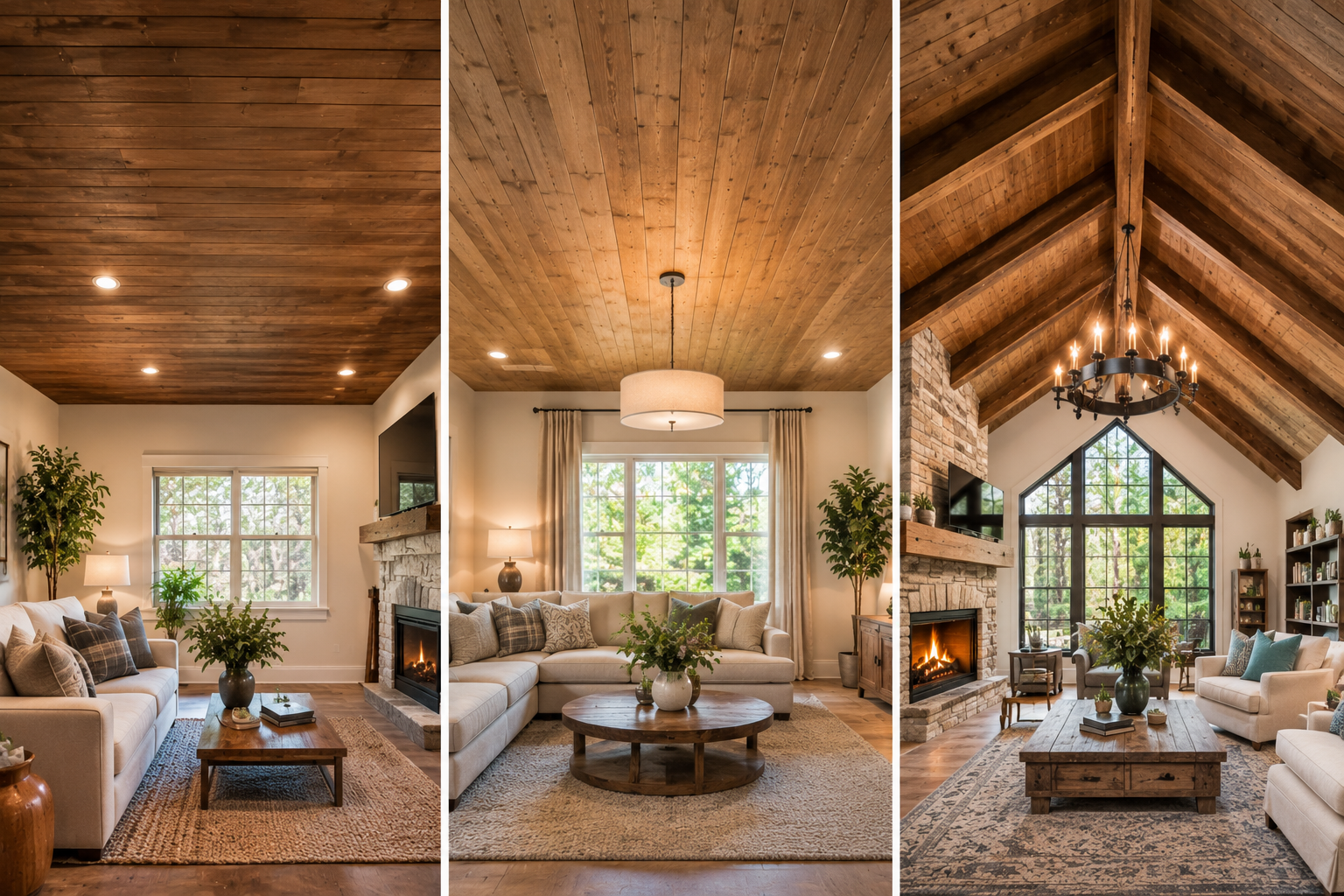
Plank Ceilings: Shiplap, Tongue-and-Groove and Beadboard
Planks are the easiest way to add a wood ceiling. Shiplap leaves a deliberate small gap between boards, while tongue-and-groove locks together for a tight, gap-free line. Beadboard adds a narrow groove for a cottage feel.
Pine and knotty pine: Affordable and friendly, with plenty of grain and knots for a rustic look.
Cedar: Aromatic, naturally resistant to moisture and higher in price.
Oak and other hardwoods: Sturdier and more formal, with tighter grain.
Wide boards feel cabin-like and modern, while narrow boards feel traditional. Run planks along the longest wall to make a room look longer, and stagger the end joints from row to row, because lined-up seams look like a zipper across the ceiling.
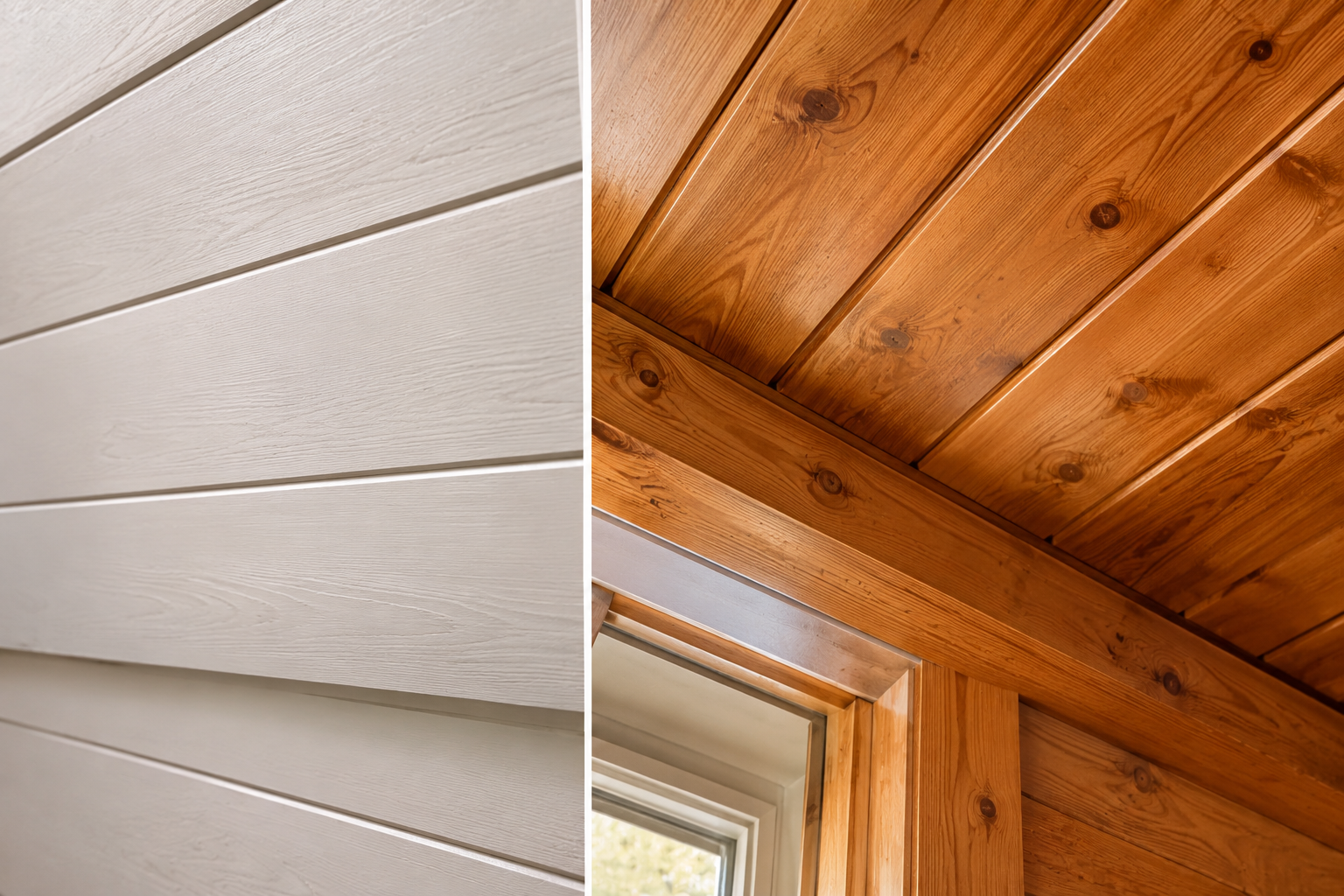
Beams: Solid, Hollow and Box
Beams add rhythm and shadow. Solid timber is heavy and usually belongs in structural work, so most homeowners choose hollow or box beams, which are lightweight and attach to joists or blocking. Space them evenly, and align them with the framing above. Proportion matters: beams that are too slim look stuck on, while deep ones crowd a low room. Mock one up with cardboard and tape before you buy.
Reclaimed Wood, Barnwood and Log Looks
Reclaimed boards bring real age, with nail holes, saw marks and color shifts that new wood can't copy. Salvage yards and deconstruction sales are good places to look. Ask about moisture content, and check old painted boards for lead paint if they came from a house built before 1978. Pests and old fasteners need attention too.
If your home is true log construction, our guide to log home maintenance costs explains what the finish and upkeep demand.
Solid Wood, Veneer, PVC or Foam: Which Material Fits?
Real wood isn't the only route to rustic wood ceiling ideas that look right:
Material | Look | Weight | Typical cost | Best for |
Solid wood planks | Authentic grain and aging | Heavy | About $2.50 to $7 per sq ft for shiplap | Living areas and long-term homes |
Thin veneer or peel-and-stick panels | Convincing from a distance | Light | Varies by brand | Renters and quick updates |
PVC wood-look planks | Clean, uniform | Light | About $2.50 per sq ft | Kitchens, baths and damp spaces |
Foam planks | Basic, less durable | Very light | Roughly $0.50 to $2 per sq ft in retailer listings | Staging and low-budget spaces |
Finishes and Color Choices
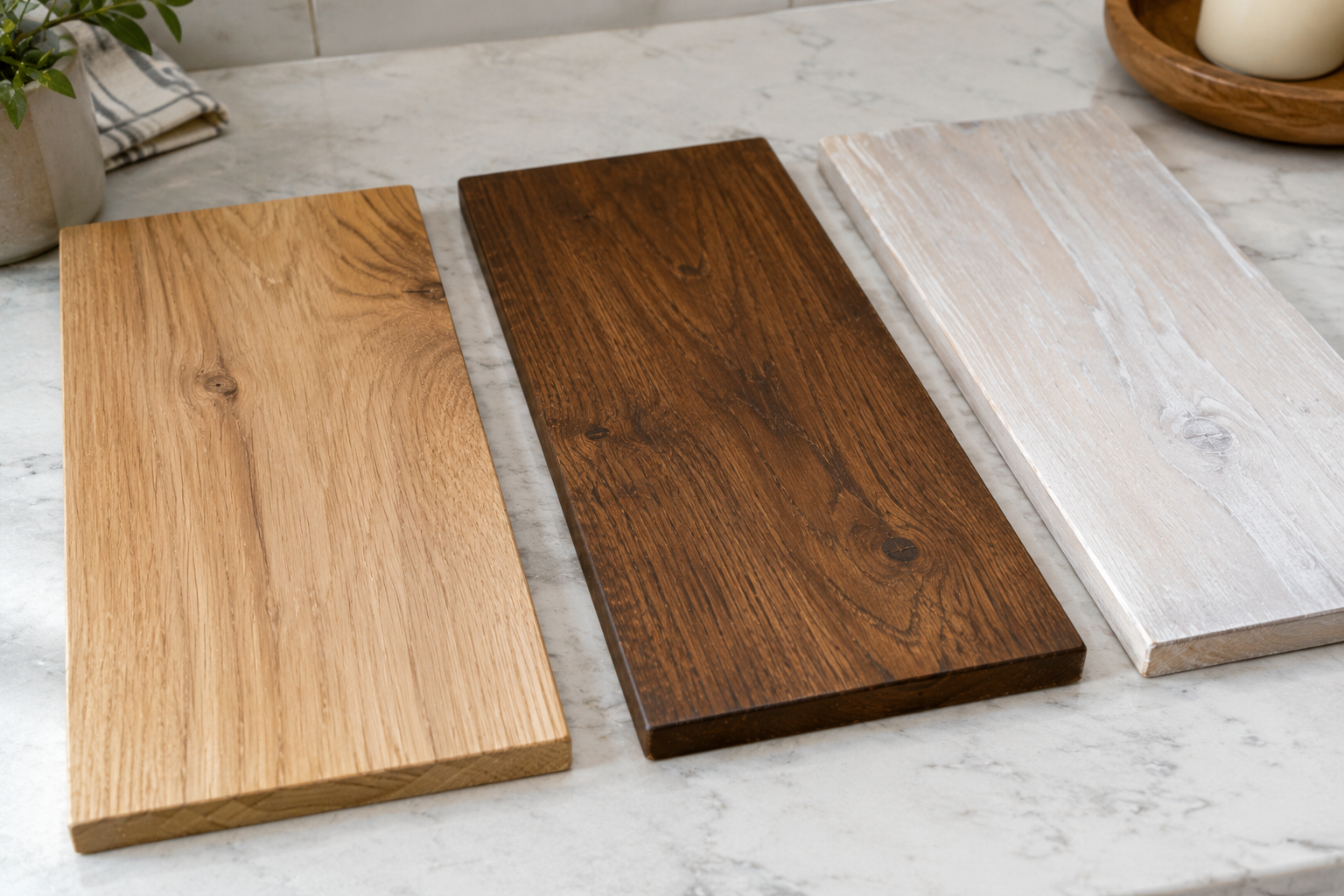
Finish decides whether rustic wood ceiling ideas read cozy or heavy, so test a sample on a spare board and view it at noon and in the evening.
Clear coat: Keeps the natural color and deepens the grain.
Stain: Adds warmth, from honey to espresso.
Whitewash or limewash: Softens dark wood and brightens a small room.
Wax or oil: Gives a low-sheen, hand-worn look but needs reapplying.
Pre-finishing boards before installation saves ladder time and avoids drips on the walls.
Lighting a Wood Ceiling
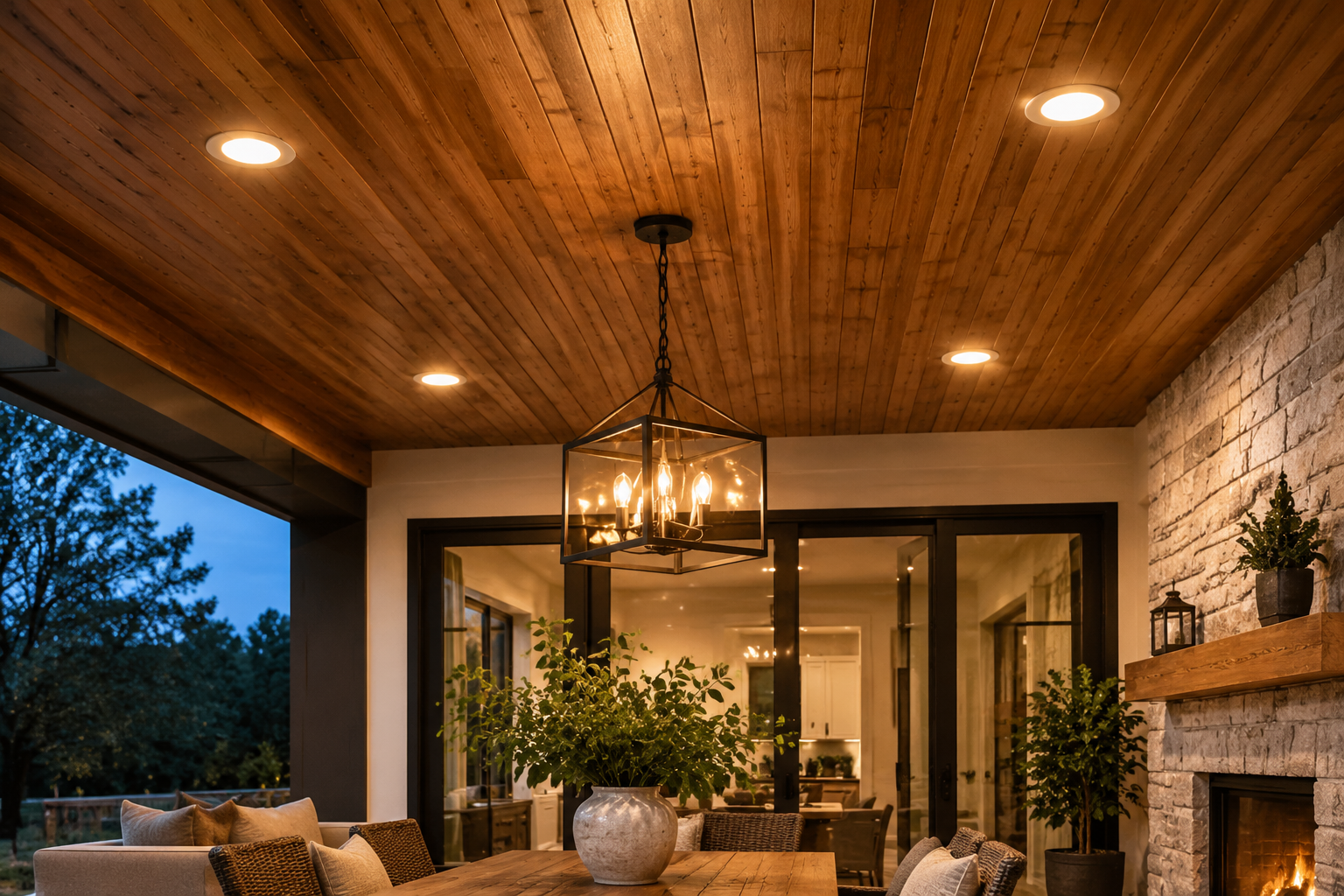
Dark wood soaks up light, so plan for more fixtures than you would under white drywall. Warm LED bulbs flatter the grain, and a dimmer lets the wood glow softly at night. Choose recessed fixtures made for your ceiling type, and use IC-rated ones where insulation sits above. For pendants and chandeliers, our guide to steampunk lights covers listing marks, bulb choices and weight limits.
Fire Safety and Code Notes
Wood burns, and codes treat ceiling finishes accordingly. The International Residential Code limits wall and ceiling finishes to a flame spread index of 200 and a smoke-developed index of 450, tested to ASTM E84 or UL 723. Many common wood products meet that, but the number depends on the product, so ask for the rating before you buy. The American Wood Council publishes flame spread data for wood products. Keep fixtures, vents and heaters clear of boards by following each manufacturer's clearance instructions, and make sure smoke alarms are working. Local codes can differ, so confirm with your building department.
Cost of Rustic Wood Ceiling Ideas: What You'll Pay Per Square Foot
Prices vary with wood species, board size and your region, so treat these as published ballparks.
Item | Typical range |
Shiplap materials | About $2.50 to $7 per sq ft |
A flat 200 sq ft ceiling, materials | About $1,000 |
Tongue-and-groove, installed | About $4 to $10 per sq ft |
Carpenter labor | About $35 to $100 per hour |
Ranges come from Bob Vila's shiplap ceiling cost guide and HomeAdvisor. Hardwood and cedar sit at the high end, and pine sits in the middle.
Before You Cover Anything: Prep Checks
Once the boards go up, flaws hide behind them, so inspect first.
Check for moisture. Stains, soft spots or musty smells mean trouble. Our guide to fixing a leaking roof from the inside and our checklist for hidden water damage help you decide whether to fix leaks first.
Let the wood acclimate. Stack boards in the room for several days.
Locate the joists. Mark them, and add furring strips if the ceiling is uneven.
Plan the edges. Leave a small gap for seasonal movement and hide it with trim.
How the Installation Goes
Switch off power at the breaker, and remove or cover fixtures.
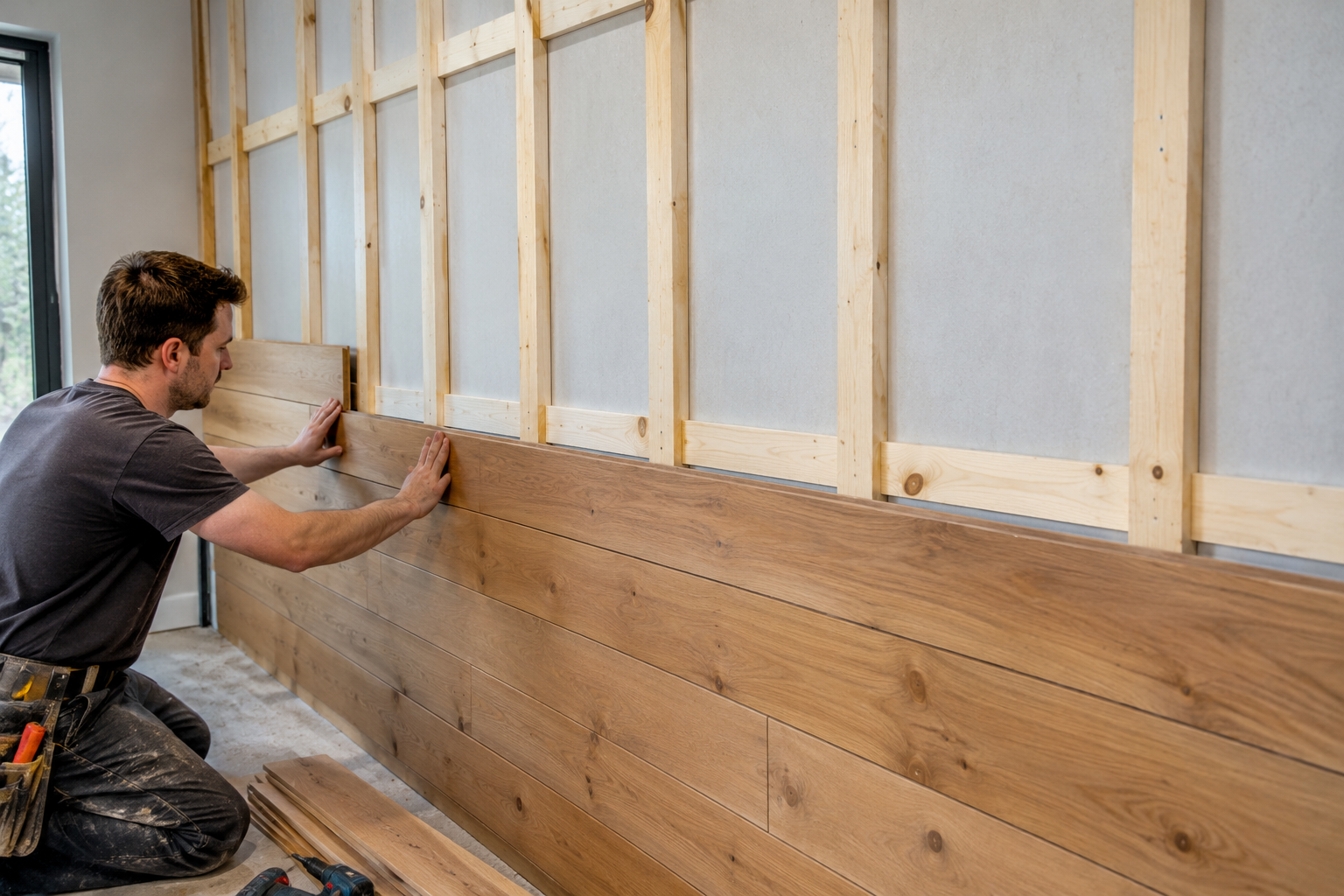
Fasten furring strips across the joists if needed.
Start along the straightest wall with a full board, tongue side facing out.
Nail or screw into joists or furring, staggering end joints.
Cut neat openings around lights and vents.
Add trim, then restore power and test fixtures.
DIY or Hire a Pro?
Rustic wood ceiling ideas range from a weekend project to a job for a crew.
Good DIY: a basement or small room, pre-finished planks and hollow beams fastened to joists.
Hire a pro: vaulted or high ceilings that need scaffolding, solid timber beams, moved wiring, and any ceiling with suspected water damage.
Get at least two written quotes, and ask who handles the electrical work.
Keeping a Wood Ceiling Looking Good
Rustic wood ceiling ideas stay handsome with light care. Dust with a soft duster each season, and watch for stains that signal a leak above. Keep humidity moderate, since swelling and gaps usually follow damp air. Our DIY home inspection checklist is a handy place to add a yearly ceiling look.
FAQs
1. Can I install a wood ceiling over drywall?
Often, yes, if the drywall is sound. Fasten into the joists, not just the drywall, and check for hidden wiring or pipes before you drive anything long.
2. Which wood is best for rustic wood ceiling ideas?
Knotty pine and cedar are popular, and reclaimed boards give the most character.
3. Do wood ceilings make a room darker?
They can, so choose lighter tones and add lighting. A white or light-stained ceiling reflects far more light than dark boards.
4. Are faux beams okay?
Yes. Hollow beams give the look without the weight. For solid timber, ask a structural pro first.
5. Can I use wood in a bathroom?
Only sealed or moisture-resistant options, and with good ventilation.
The Takeaway
The best rustic wood ceiling ideas respect the room: the height, the light and the framing above. Choose a style that fits, plan the lighting, check fire ratings and leaks first, and budget for real costs.
About Mubashir Yaqoob
Mubashir Yaqoob researches and writes practical home repair guides for Home Repair Manual, focused on translating technical roofing, plumbing, and maintenance information into clear advice for homeowners.
View all posts by Mubashir Yaqoob