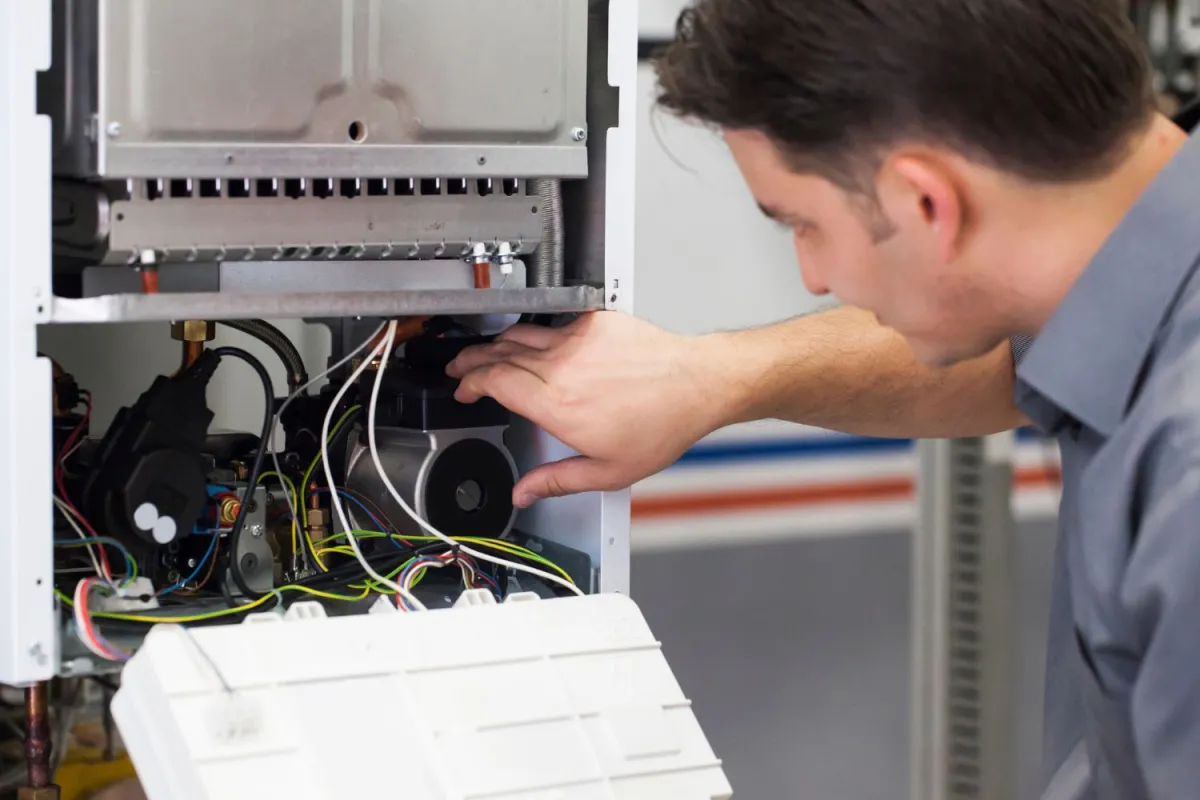
Two technicians can both call it a "furnace tune-up" and hand you nearly identical invoices, while one of them spent fifteen minutes and the other spent an hour actually testing the system. The furnace tune-up cost on the receipt doesn't tell you which one you got. The checklist does.
Professional trade checklists for a full furnace inspection often run 15 to 20 line items, covering everything from wire terminal corrosion to flue slope. Most homeowners will never see that full list, and don't need to. What actually protects your safety and your wallet comes down to five categories, each one covering several of those professional checkpoints at once. Here they are, with what should happen inside each one.
What a Real Furnace Tune-Up Must Include to Justify the Furnace Tune-Up Cost
1. A Heat Exchanger Inspection, Not Just a Glance
The heat exchanger is the metal chamber that separates burning gas from the air blowing through your ducts. A hairline crack in it lets combustion byproducts, including carbon monoxide, mix into that airflow.
A technician doing this properly will:
Access the heat exchanger directly rather than checking it through an access panel from a few feet away
Look specifically for cracks, rust, and soot buildup, sometimes using a camera or dedicated leak detector
Tell you what they found in specific terms, not just "it looks fine"
If a technician can describe the heat exchanger's actual condition in more than one sentence, that's a good sign they genuinely looked.
2. A Combustion and Carbon Monoxide Test With Numbers, Not a Verbal "You're Fine"
A proper visit includes an actual combustion analysis, measuring flue gas and confirming carbon monoxide levels with a calibrated meter.
You should walk away with:
A specific CO reading, not just a reassurance
Confirmation the burner flame is burning steady blue, not yellow or flickering
A check that gas pressure matches the manufacturer's specification
This single test is the difference between a tune-up that's a genuine safety check and one that's just a cleaning service wearing a safety-sounding name.
3. Blower Motor and Belt Condition, Checked Under Load
A blower motor that's starting to fail often still runs, just less efficiently, which is why a visual glance while the system is off tells you very little.
A thorough check includes:
Running the system and listening to the blower assembly while it's actually working
Checking belt tension and wear on older systems
Confirming the motor isn't drawing more current than it should
Lubricating moving parts where the manufacturer calls for it
This is one of the most commonly rushed steps on a quick visit, because it takes several extra minutes the technician has to actually wait through.
4. Ignition Components and Flame Sensor, Cleaned and Tested
The flame sensor is a small, inexpensive part that fails often and causes a disproportionate share of "furnace won't stay on" service calls.
A complete check covers:
Cleaning the flame sensor rather than just visually confirming it's present
Testing the full ignition sequence, not just confirming a flame exists once
Inspecting and tightening electrical terminals and wiring near the ignition system
This step alone prevents a meaningful share of mid-winter no-heat calls, and it takes only a few minutes to do properly.
5. Airflow and Thermostat Calibration Across the Whole System
A furnace can be mechanically perfect and still perform poorly if airflow through the ducts is restricted or the thermostat isn't reading temperature accurately.
A complete tune-up checks:
Static pressure or airflow at both the return and supply sides, not just at the unit
Thermostat accuracy against an independent thermometer
A full heating cycle, confirming the system starts, runs, and shuts off correctly
Skipping this step is why some furnaces pass a tune-up with a clean bill of health and still run inefficiently or unevenly room to room. If you want to know what you should reasonably budget for a comprehensive system assessment versus a basic one-time service visit, check out our companion breakdown on yearly furnace maintenance costs.
Why Skipping Any of These Five Isn't a Real Discount
A tune-up missing one or two of these isn't a cheaper version of the same service. It's a different, lesser service sold under the same name, no matter what furnace tune-up cost appears on the invoice. The heat exchanger and combustion checks exist for safety, not comfort, and a technician who skips them to finish faster is cutting the part of the visit that actually justifies calling it a safety inspection. If a price seems low for your area, ask directly which of these five categories are included before assuming you're getting a deal. The same logic behind a thorough water softener maintenance checklist applies here: a maintenance visit is only worth what it actually checks, not what it's called.
Questions That Expose a Rushed Tune-Up
You don't have to take it on faith. A few direct questions tell you almost everything:
"What was the actual CO reading?" A number, not a reassurance.
"Walk me through what the heat exchanger looked like when you checked it."
"Did you run the blower under load, or just look at it?"
"What's the static pressure reading, and is it within spec?"
A technician confident in their own thoroughness will usually welcome these questions and answer with specifics. One who seems annoyed, or can't explain what a reading means, is a signal worth acting on before you pay the invoice, not after.
Treat this the same way you'd treat any other item on a seasonal home inspection: know what should be checked before the appointment, so you can tell whether it actually was.
The Parts You Genuinely Can Check Yourself
Between professional visits, a few things are safe and useful to monitor on your own:
Filter condition, swapped on schedule
Any new or unusual noise from the unit
Whether the thermostat's schedule still matches how the household actually uses the space
None of this replaces the five checks above, and none of it should be used to negotiate down a fair furnace tune-up cost. It just means problems are less likely to sit unnoticed for months between appointments. Developing a habit of routine self-checks between professional visits works just as well for your HVAC system as it does for general home plumbing maintenance. Staying proactive helps you spot minor warning signs early, keeping your long-term annual heating system upkeep expenses predictable rather than reactionary.
Common Questions
If a tune-up includes all five categories, does that guarantee no problems later in the season?
No. A tune-up confirms the system is safe and operating correctly at the time of the visit. It can't predict a part that fails weeks later, though a thorough visit does catch components already showing early wear.
Should I expect a written report after a proper tune-up?
Many companies provide one, and it's reasonable to ask for the actual combustion analysis numbers and measurements taken, not just a checklist with boxes ticked.
Does a more expensive tune-up always mean a more thorough one?
Not automatically, but a visit priced far below the norm for your area is more likely to be skipping one or more of these five categories to save time, which is the real question worth asking before booking on price alone.
Can I ask for these specific checks when booking?
Yes. A company that gives a clear yes when you ask about combustion testing, heat exchanger inspection, and blower motor checks under load is generally a good sign of how the rest of the visit will go.
About Mubashir Yaqoob
Mubashir Yaqoob researches and writes practical home repair guides for Home Repair Manual, focused on translating technical roofing, plumbing, and maintenance information into clear advice for homeowners.
View all posts by Mubashir Yaqoob