Ever taken a sip of water from a newly plumbed house and caught a faint plastic taste? It's one of the first things people notice about PEX plumbing problems — and also one of the most misunderstood, since it's usually harmless and temporary, not a sign something's actually wrong.
What Is PEX Plumbing?
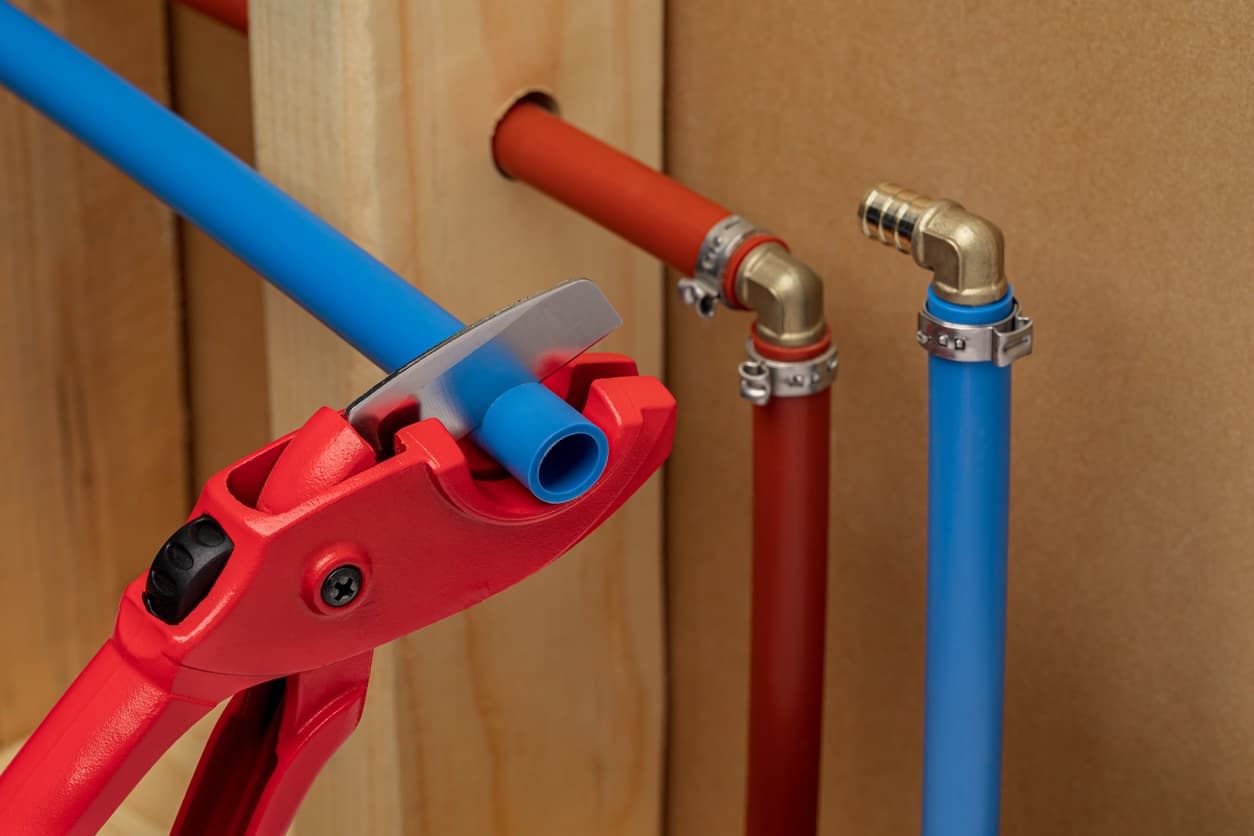
PEX (cross-linked polyethylene) is flexible plastic tubing that's become the material behind roughly 60% of new residential water supply systems, prized for being easier and cheaper to install than copper. That popularity means most PEX pipe issues people search for fall into two very different buckets: genuine PEX installation problems worth fixing, and normal characteristics mistaken for defects. Telling those apart is most of the battle.
The Real Issues Behind PEX Plumbing Problems
These plastic pipe problems and plumbing material issues come up more than any others when a PEX system starts acting up:
1. Dezincification in Brass Fittings
This is the most well-documented PEX issue, serious enough to have triggered real litigation. Certain brass fittings react with water chemistry over time, losing zinc and weakening until they leak or fail outright — and it's tied to specific brands, not the material as a whole. PEX-A fittings from Uponor and Rehau, PEX-B fittings from Zurn and Viega, and PEX-AL-PEX fittings from Kitec have all faced documented dezincification issues; Kitec's case ended in a full product recall and settled class-action claims. It's a fitting problem, not a PEX tubing problem — worth knowing if you're troubleshooting a leak at a connection point rather than the pipe itself.
2. UV Degradation
PEX breaks down with prolonged sun exposure, and the damage is permanent once it happens. Standard PEX has a typical exposure limit of around 30 days before real damage sets in; UV-stabilized versions can extend that to roughly 6 months, but no PEX is meant for permanent outdoor or sun-exposed use. This mostly matters during storage and installation — tubing left outdoors before being run through walls is the real risk, not properly installed indoor lines.
3. Rodent Damage
The same flexibility that makes PEX easy to install also makes it easy for mice and rats to chew through, especially in crawlspaces and attics. A single chewed line can cause a serious leak with no warning, which is part of why PEX runs in unfinished spaces are worth an occasional visual check.
4. Chlorine and Water Chemistry Sensitivity
This is the one water quality actually controls directly. PEX performs best with water pH at or above 6.5 and chlorine concentration at or below 4.0 ppm; water outside that range accelerates degradation and contributes to both cracking and chemical leaching over time, affecting pex pipe durability. If you're on municipal water with heavy chlorination, a whole-house filter genuinely extends PEX system life, not just water taste.
5. That Plastic Taste or Smell
This is the one most often mistaken for a defect, and it has real data behind how temporary it is. New PEX systems can release a mild plastic taste into water as the tubing off-gasses compounds from manufacturing — one independent study measured contaminant levels dropping from 175 parts per billion to 74 ppb, a 57% reduction, within 30 days of normal flushing and use. It fades on its own; it isn't a sign of a failing system.
PEX-A vs. PEX-B vs. PEX-C: Does the Type Matter?
Yes, and the common assumption — that pricier, more flexible PEX-A is simply "better" — doesn't fully hold up. The three types are manufactured differently:
PEX-A — the most flexible and kink-resistant, but testing has shown it can leach up to 200% more contaminants into water than PEX-B under identical conditions, due to its less dense structure
PEX-B — the most common type in residential use, stiffer and more prone to kinking, but denser and generally more chemically stable
PEX-C — the least expensive and least flexible, with a higher tendency to crack under stress over time
If you're troubleshooting recurring kinks, cracks, or a persistent taste issue, it's worth finding out which type is actually in your walls before assuming the whole material is the problem — and before assuming the most expensive option was automatically the safest choice.
PEX vs. Copper vs. CPVC: A Real Plumbing Pipe Comparison
Feature | PEX | Copper | CPVC |
Freeze resistance | Good — flexes under pressure | Poor — prone to splitting | Fair |
Installation cost | Lowest | Highest | Moderate |
Expected lifespan | 25–50 years | 50+ years | 25–40 years |
UV sensitivity | High (indoor use only) | None | Moderate |
Water taste/odor risk | Temporary, early on | None | Low |
PEX's flexibility is a genuine advantage in freeze-prone climates, expanding under pressure rather than splitting the way rigid copper can. That flexibility is also why proper installation matters: PEX expands and contracts roughly 1 to 2.5 inches per 100 feet of run for every 10°F swing in water temperature, which is why pipe expansion issues are usually an installation mistake, not a material flaw — pipes pulled too tight during installation can't accommodate that movement and end up overstressed. This ties into the same freeze-related pressure issues worth understanding if you've dealt with low water pressure after a cold snap. Complete freezing can still burst any pipe material, PEX included.
Fixing PEX Issues: Step by Step
These PEX repair solutions cover the water line problems that come up most often, roughly in order of how frequently they occur:
1. Confirm It's the Fitting, Not the Pipe
Most PEX leaks happen at connection points, not along the tubing itself. Dry the area, run water, and watch specifically where moisture first appears before assuming you need to replace a whole section.
2. Cut Out and Reconnect the Bad Section
A failed fitting is usually a simple cut-and-reconnect job with a new crimp or clamp fitting, not a full repipe — genuinely doable for a comfortable DIYer with the right crimping tool, calibrated correctly before use.
3. Flush the System for Taste or Odor Complaints
Run every fixture at full flow for several minutes, repeated over a few days if needed. Based on the real numbers above, most of the improvement happens within the first month regardless.
4. Protect Against Freezing and UV
Insulate any PEX run through outside walls (a minimum R-value of 3.0 is standard, with some areas recommending 4.0), keep runs away from exterior walls where possible, and never leave PEX in direct sunlight before or after installation — the same kind of prevention that pairs well with routine plumbing maintenance checks each season.
When It's Time to Replace, Not Repair
A single fitting failure is a repair. Multiple unrelated leaks across the system, especially if your home uses fittings from a brand with documented dezincification issues, points toward a broader problem worth having a plumber assess system-wide rather than chasing leaks one at a time — the same pattern worth watching for if you've also noticed other water heater or supply line issues around the same time. This is the same kind of judgment call worth applying to any older home's plumbing system — isolated issues get patched, but a pattern of failures is a different conversation.
FAQ
Is PEX plumbing actually bad?
Not inherently — most PEX problems are either fitting-specific (dezincification, tied to certain brands) or normal, temporary characteristics like new-pipe taste, not flaws in the tubing itself.
How long does PEX piping last?
Typically 25–50 years depending on type and water chemistry, generally shorter than copper but longer than CPVC.
Why does my water taste like plastic after a PEX repipe?
This is common and measurably temporary — studies show contaminant levels drop by over half within 30 days of normal flushing and use.
Can PEX pipes freeze and burst?
PEX resists freeze damage better than rigid copper due to its flexibility, but complete freezing can still cause a burst, same as any pipe material.
Is PEX-A really better than PEX-B?
Not automatically — PEX-A is more flexible and kink-resistant, but testing shows it can leach more contaminants than PEX-B, so "premium" doesn't always mean better on every measure.
About Mubashir Yaqoob
Mubashir Yaqoob researches and writes practical home repair guides for Home Repair Manual, focused on translating technical roofing, plumbing, and maintenance information into clear advice for homeowners.
View all posts by Mubashir Yaqoob