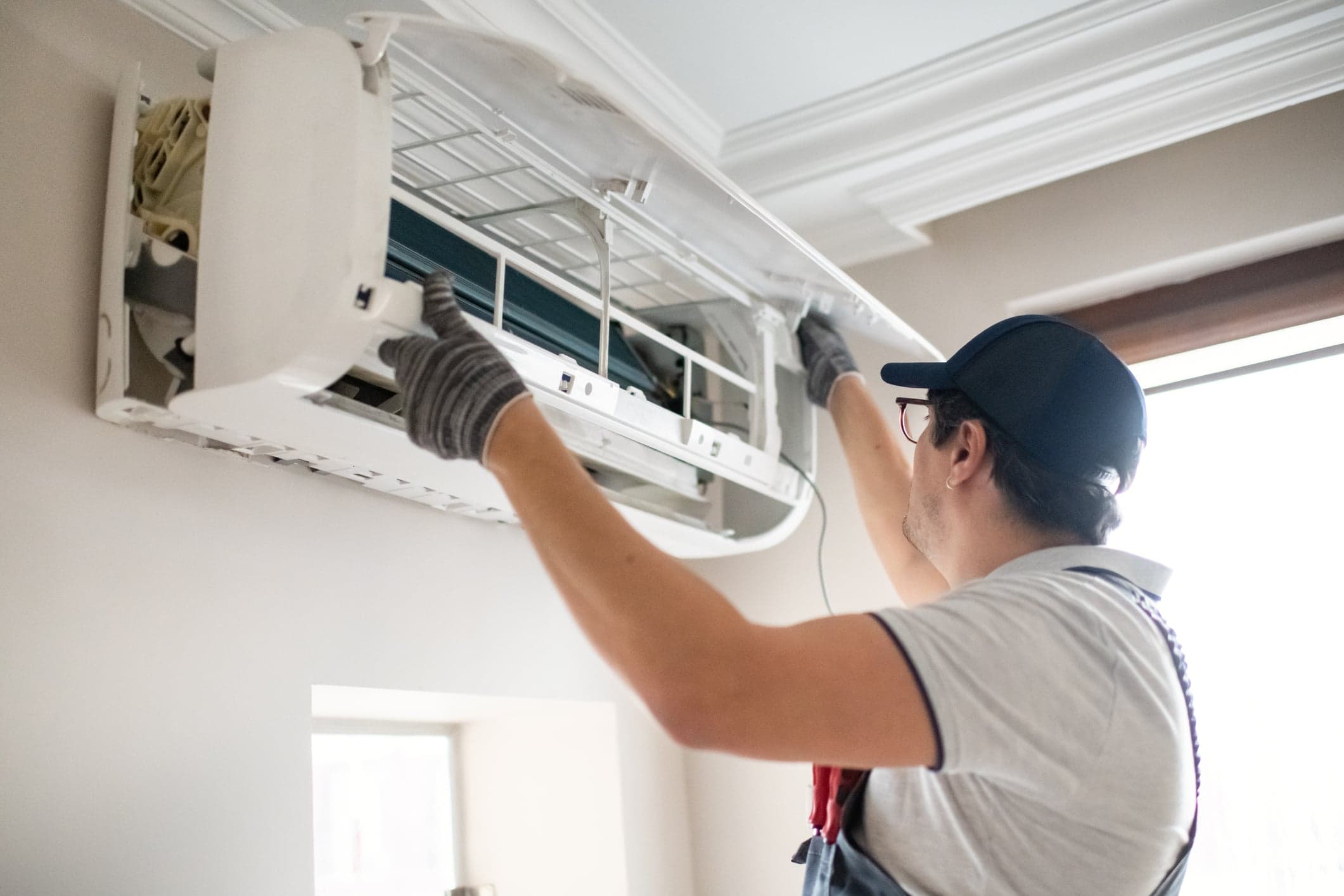
Mini split repair cost is one of those questions where the honest answer is "it depends" — but that's not very useful when you're staring at a broken unit in July. The real range runs from under $100 for a simple fix to well over $1,500 for a major component failure, and where you land depends almost entirely on what's actually wrong, not just the size of your system.
Mini Split Repair Cost by Problem Type
Instead of one vague range, here's what specific repairs actually tend to run:
Repair Type | Typical Cost |
Clogged condensate drain line | $75–$200 |
Dirty filter or coil cleaning | $100–$250 |
Capacitor replacement | $150–$350 |
Sensor or control board issue | $150–$450 |
Electrical/wiring repair | $150–$500 |
Refrigerant leak (diagnosis + repair) | $250–$1,200+ |
Compressor replacement | $600–$2,200 |
Labor alone typically runs $75–$150 an hour, and that's before parts. The wide range on refrigerant and compressor work isn't padding — leak location and compressor access genuinely vary a lot job to job, which is why those two line items carry the biggest spread. Location matters too: homeowners in the rural Midwest often see costs run 5-15% below these figures, while high-cost metro areas like the West Coast or Northeast can run 10-25% higher for the same repair.
What Actually Moves the Price Up or Down
A few things explain why two people can get very different quotes for what sounds like the same problem:
System age — older units often use discontinued refrigerant types or parts that are harder to source, which drives labor and material costs up
Number of zones — multi-zone systems mean more potential failure points and more diagnostic time if the issue isn't obvious
Access difficulty — a unit mounted high on an exterior wall or in a tight space adds labor time regardless of what's actually broken
Warranty status — parts still under manufacturer warranty can cut costs significantly, though labor is often still billed separately even when parts are covered
Time of year — emergency repairs during peak summer heat often carry a premium over the same job scheduled in shoulder season
Repair or Replace? The 50% Rule
Here's a decision framework worth knowing before you approve any repair: if the quoted repair cost comes in at more than about half the price of a new comparable system, replacement is usually the better financial move. A mini split that's more than 10-12 years old and needs a major repair like a compressor replacement is a classic case where this rule applies — you could spend $1,500+ fixing a unit that's already lost efficiency, when a new system would cost only somewhat more and come with better performance and a fresh warranty. This is the same kind of cost-versus-value math worth applying to other major repair cost decisions around the house, not just HVAC.
Systems under 8 years old with a minor, isolated issue are usually worth repairing outright — the math rarely favors replacement that early.
What You Can Actually Do Yourself
This is where most guides get vague, so here's the real split. Genuinely safe DIY territory includes cleaning or replacing filters, wiping down the indoor unit's coil, and clearing a clogged condensate drain line — these are maintenance tasks, not repairs, and doing them yourself regularly is part of what keeps you out of the repair column in the first place, similar in spirit to catching small issues during a routine home inspection before they become bigger ones.
What's not DIY territory, and this matters more than most articles let on: handling refrigerant without EPA Section 608 certification is federally illegal in the US, not just inadvisable. This isn't a liability-avoidance suggestion — it's the law, and it's why refrigerant leak diagnosis and repair always shows up as a professional-only line item. Electrical and control board work also generally falls outside safe DIY range, since misdiagnosing these can damage the unit further or create a real safety hazard.
Keeping the Cost Down Without Cutting Corners
A few habits actually move the needle on your long-term repair spend: scheduling annual professional maintenance (which catches minor issues before they become expensive ones), cleaning filters yourself every 1-2 months during heavy use, and not ignoring early symptoms like unusual noises or related airflow and condensation issues, which often start small and get more expensive the longer they're left alone — the same pattern worth watching for as part of broader home maintenance habits. Getting multiple quotes for anything beyond a basic filter or drain issue is also worth the extra day it takes, given how much repair pricing varies by contractor.
FAQ
How much does it cost to repair a mini split AC unit?
Most repairs fall between $75 and $500, with refrigerant leaks and compressor issues pushing well past $1,000 in more serious cases.
Is it worth repairing an old mini split system?
It depends on the repair cost relative to replacement cost — the 50% rule is a reasonable guide, alongside the system's age and how well it's been maintained.
Can I recharge my mini split's refrigerant myself? No — handling refrigerant without EPA Section 608 certification is illegal in the US, regardless of how simple the job looks.
Why do refrigerant leak repairs cost so much more than other fixes?
Locating the leak itself is often the most time-consuming part, and the repair has to be sealed and pressure-tested properly before refrigerant is recharged, which adds both labor and material cost.
How much does mini split maintenance cost compared to repair?
Routine maintenance typically runs $140–$380 per visit, considerably less than most repairs, which is part of why regular maintenance tends to pay for itself over time.
About Mubashir Yaqoob
Mubashir Yaqoob researches and writes practical home repair guides for Home Repair Manual, focused on translating technical roofing, plumbing, and maintenance information into clear advice for homeowners.
View all posts by Mubashir Yaqoob