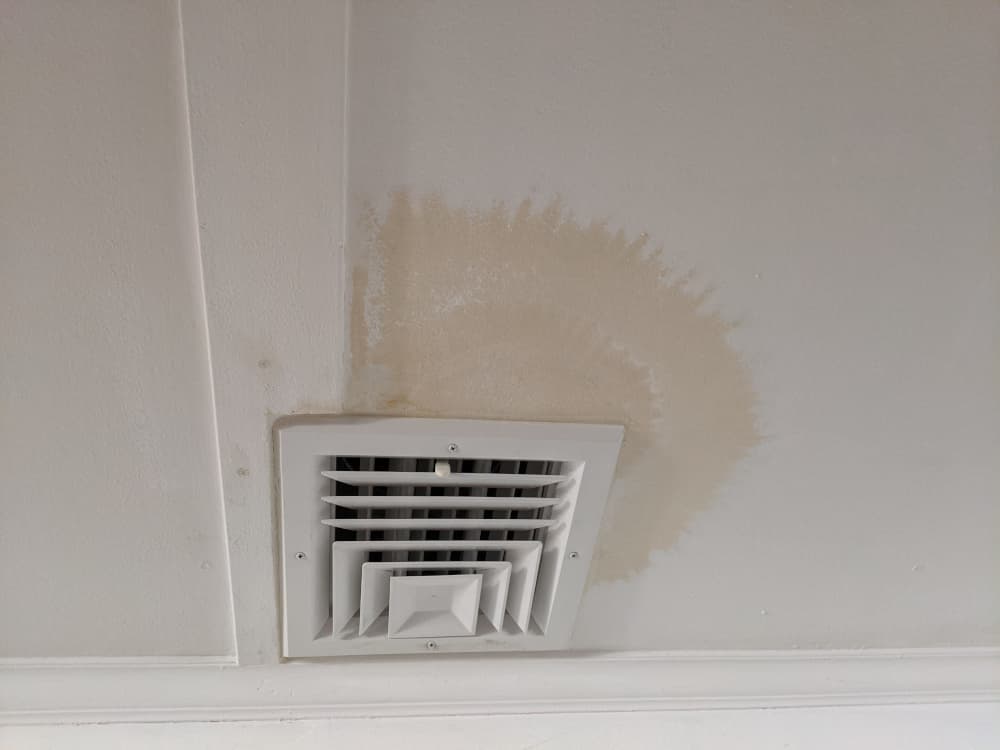
Noticing water dripping from your ceiling vent can feel unexpected and a little worrying. You turn on your AC to cool your home, but instead, you’re dealing with moisture, stains, or even visible dripping.
If you’re facing an AC vent leaking water, it’s usually a sign that something inside your cooling system isn’t working the way it should. The good news is that most of the time, the problem starts small and can be fixed quickly if you catch it early.
It’s actually a fairly common situation in many homes, especially during hot and humid months when your AC is working harder than usual.
What This Problem Usually Means
Your air conditioning system doesn’t just cool the air, it also removes humidity from your home. As warm air passes over the evaporator coil, moisture is pulled out and turned into condensation.
That water is supposed to flow through a drain pan and exit safely through a condensate drain line.
But when that process gets interrupted, whether due to a blockage, poor airflow, or damage, water starts building up inside the system. Once it has nowhere to go, it begins to leak through the easiest path, which is often your air vents or ceiling.
In simple terms, your AC is still doing its job, but the drainage system isn’t keeping up.
Why You Shouldn’t Ignore It
A few drops of water might not seem like a big issue at first, but over time it can create much bigger problems.
Moisture trapped in ceilings or ducts can lead to mold growth, which not only damages your home but can also affect indoor air quality. You might also start noticing stains, peeling paint, or a musty smell in the room.
In some cases, continuous leaking can weaken ceiling materials or damage insulation, leading to more expensive repairs later on.
Fixing the issue early is always easier and much cheaper than dealing with long-term damage.
Common Causes of an AC Vent Leaking Water
Let’s look at what typically causes this problem in real homes not just theory.
1. Clogged Condensate Drain Line
This is by far the most common reason.
Over time, your AC drain line can collect dirt, dust, algae, and even small debris. As this buildup increases, it slows down or completely blocks the flow of water.
When that happens, condensation has nowhere to go. Instead of draining out, it backs up into the system and eventually leaks through vents or nearby areas.
Many homeowners don’t realize this is happening until they see water stains or dripping.
2. Dirty or Clogged Air Filter
A dirty air filter might not seem like a big deal, but it can affect your entire system.
When airflow is restricted, the evaporator coil can become too cold and start to freeze. After the system shuts off or the ice melts, it produces excess water more than the drain system can handle.
That extra water often ends up leaking where it shouldn’t.
Replacing or cleaning the filter regularly is one of the simplest ways to prevent this.
3. Frozen Evaporator Coil
A frozen coil is usually a sign that something else is wrong often airflow issues or low refrigerant.
When the coil freezes, ice builds up over time. Once it melts, it creates a sudden surge of water that overwhelms the drainage system.
This is why you might notice leaking shortly after the AC has been running for a while.
4. Damaged or Rusted Drain Pan
The drain pan is designed to collect condensation before sending it out through the drain line.
But over time, especially in older systems, the pan can rust, crack, or shift out of position. Even a small crack can allow water to escape and travel through ducts or ceiling vents.
This type of issue is easy to overlook because the damage isn’t always visible from the outside.
5. Poor Insulation Around Ducts
In humid conditions, temperature differences between cold air inside ducts and warm air outside can cause condensation to form.
If the ducts aren’t properly insulated, that moisture can build up and drip through vents.
This is especially common in attics or areas where insulation has worn down over time.
6. Low Refrigerant Levels
Low refrigerant doesn’t just affect cooling—it can also lead to moisture problems.
When refrigerant levels drop, the pressure inside the system changes. This can cause the evaporator coil to freeze, leading to the same melting and leaking issue.
If this is the cause, it usually requires professional repair.
How to Fix an AC Vent Leaking Water
Instead of trying random fixes, it’s better to approach the problem step by step.
Step 1: Start With the Air Filter
Check your air filter first. If it looks dirty or clogged, replace it.
This simple step can restore airflow and prevent the coil from freezing.
Step 2: Clear the Drain Line
If you suspect a blockage, clearing the condensate drain line can solve the problem quickly.
In many homes, this single fix stops the leaking completely.
Step 3: Turn Off the System and Let It Thaw
If your AC has been running continuously and you suspect a frozen coil, turn it off and give it time to defrost.
Running the system while frozen can make the problem worse and lead to more water buildup.
Step 4: Inspect for Visible Issues
Look around your vents, ducts, and AC unit for any signs of water pooling, rust, or damage.
Even small signs can help you identify the source of the leak.
Step 5: Call a Professional if the Issue Persists
If the problem keeps coming back, it’s likely something deeper like refrigerant issues or internal damage.
At that point, it’s best to have the system inspected properly rather than guessing.
Related Problems You Might Notice
AC issues often don’t happen in isolation. You might also experience uneven cooling, weak airflow, or higher indoor humidity.
In some homes, moisture imbalances can even affect other systems. For example, pressure and airflow changes can contribute to issues like a gurgling toilet problem or situations where a sink gurgles when flushing the toilet, especially if ventilation isn’t working properly.
Warning Signs of a Bigger Problem
Pay attention if you start noticing recurring leaks, strong odors, or visible water damage around vents.
If your AC shuts off unexpectedly or struggles to maintain temperature, the issue may be more serious than it appears.
These signs usually mean the problem has been building for a while and needs immediate attention.
How to Prevent AC Vent Leaks
Preventing this issue comes down to simple, consistent maintenance.
Change your air filters regularly, keep the drain line clean, and schedule routine AC servicing. Also, make sure your ducts are properly insulated, especially in high-humidity areas.
Taking care of these small tasks can help you avoid much bigger problems later.
Practical Insight
In many homes, an AC vent leaking water isn’t caused by a single failure. It’s often the result of small issues—like airflow restriction and minor blockages—building up over time until the system can no longer handle moisture properly.
FAQ
Why is water dripping from my AC vent?
It’s usually caused by a clogged drain line, frozen coil, or airflow problem.
Is this dangerous?
It can lead to mold and structural damage if ignored.
Can I fix it myself?
Yes, minor issues like clogged filters or drain lines are often easy to fix.
Should I turn off my AC if it’s leaking?
Yes, especially if you suspect a frozen coil.
How much does it cost to fix?
Minor fixes are inexpensive, but major repairs depend on the cause.
What This Means for Your Home
If you’re dealing with an AC vent leaking water, it’s your system’s way of signaling that something isn’t draining or flowing as it should.
The key is not to ignore it. Most causes are manageable, but waiting too long can lead to mold, structural damage, or costly repairs.
Taking action early keeps your system running efficiently and your home protected.
About HomeRepairManual Team
The HomeRepairManual Team is a group of experienced technicians and DIY experts dedicated to making repairs easier. They provide clear, reliable guidance and practical resources to help users confidently fix and maintain their equipment.
View all posts by HomeRepairManual Team